

Eco Friendly Kitchen Decor Rules Designers Follow
In a 9-by-10-foot kitchen, every object fights for counter space, so eco friendly kitchen decor has to earn its footprint. The short answer to what it means: materials that last decades, finishes low in VOCs, secondhand or salvaged pieces, and objects that do a daily job.
Below are 25 rules that designers lean on, translated into specific pieces, measurements and trade-offs. Skim the headings, take what fits your room, and ignore the rest.
The Professional Rules Behind Eco Friendly Kitchen Decor
Eco friendly kitchen decor starts with an unglamorous fact: the greenest object is the one that never needs replacing. Every rule here is an established design guideline, filtered through that idea.
Limit each counter run to one anchor object

A standard counter is 36 inches high and about 25 inches deep, and every object parked on it steals working surface. Pick one anchor, such as a 10-inch stoneware crock holding wooden spoons, and leave the rest of the run bare.
This suits galley kitchens under 120 square feet, where clear counter is the real luxury. Three standing objects per run is the ceiling before the whole thing reads as clutter.
Cork underfoot for long hours at the sink
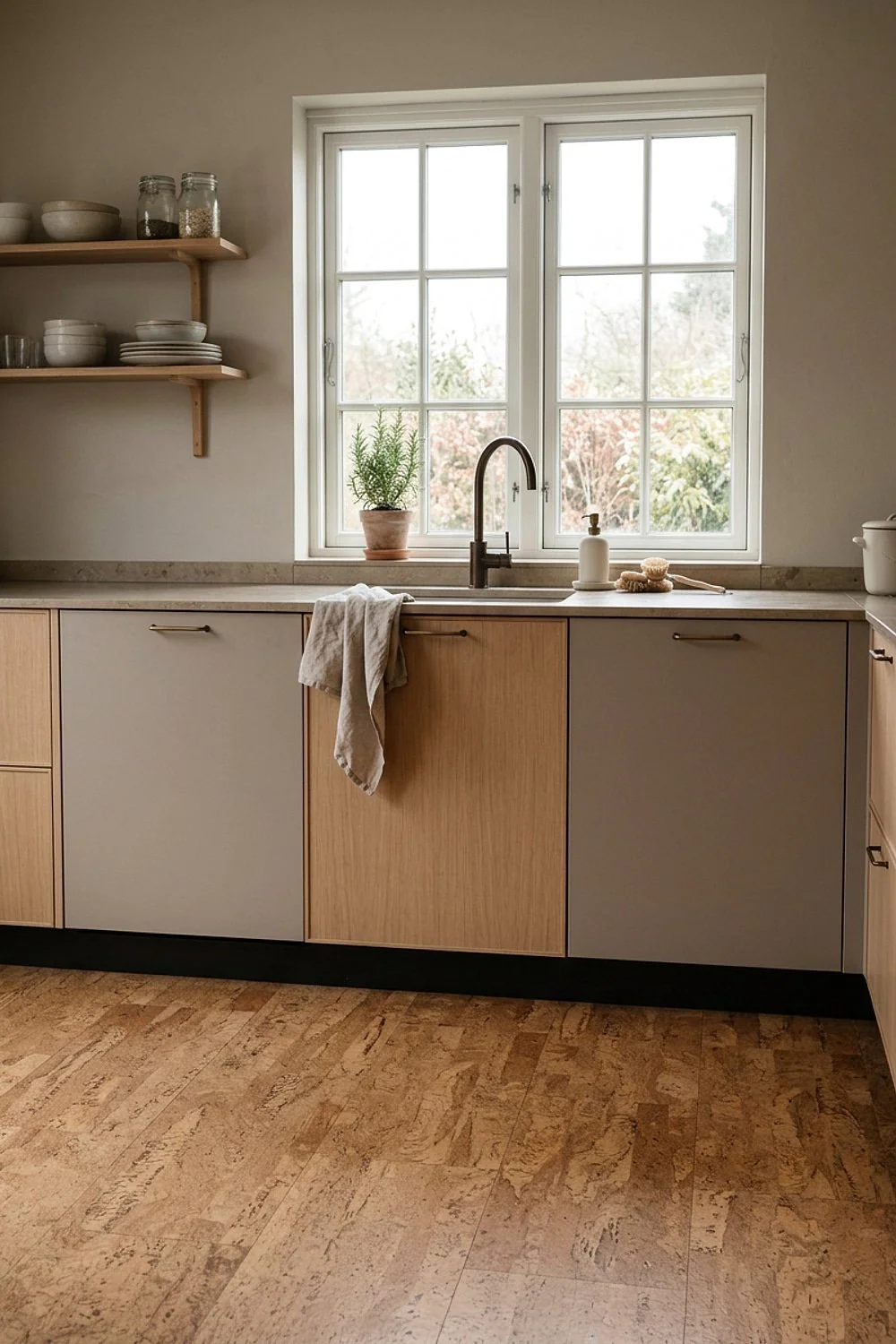
Cork tiles compress slightly under a heel, which is why a half-inch cork floor or a thick cork mat feels easier on the lower back than bare tile. The bark is harvested without felling the oak, and it regrows in roughly nine years.
It fits households that stand at the counter for long stretches. Seal it with water-based polyurethane, because unsealed cork drinks up spills beside the dishwasher and stains for good.
Recycled glass tile for the backsplash
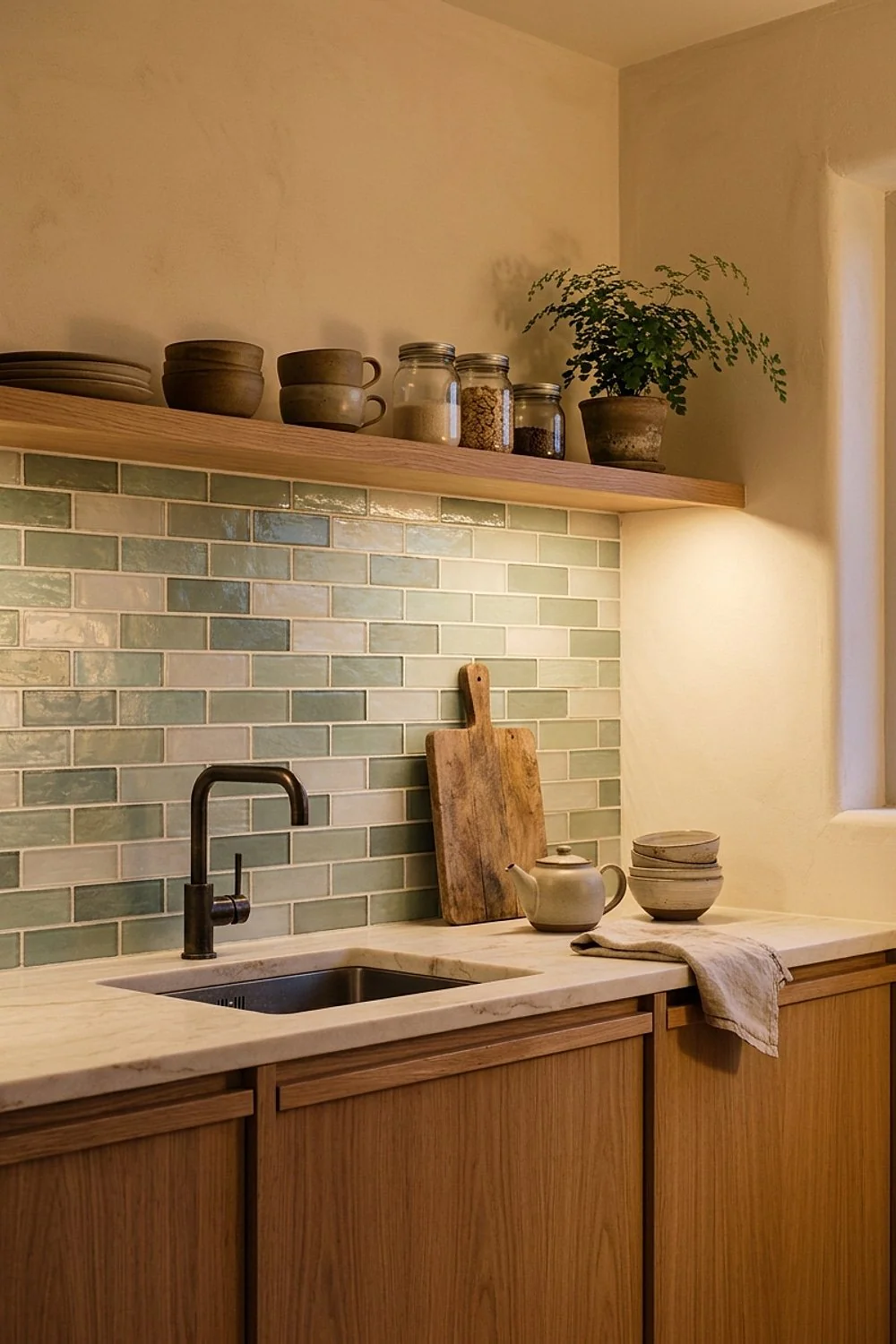
Recycled glass tile in a 3-by-6-inch subway format bounces light onto the counter and wipes clean with a damp cloth, since glass isn’t porous. Expect roughly $20 to $40 per square foot, so a 30-square-foot backsplash lands between $600 and $1,200 in tile alone.
Choose it when the kitchen is dim and you plan to stay for a decade. Grout is what ages first, so specify sealed or epoxy grout and skip the cheap sanded kind.
Split color 60-30-10 and keep trends in the 10
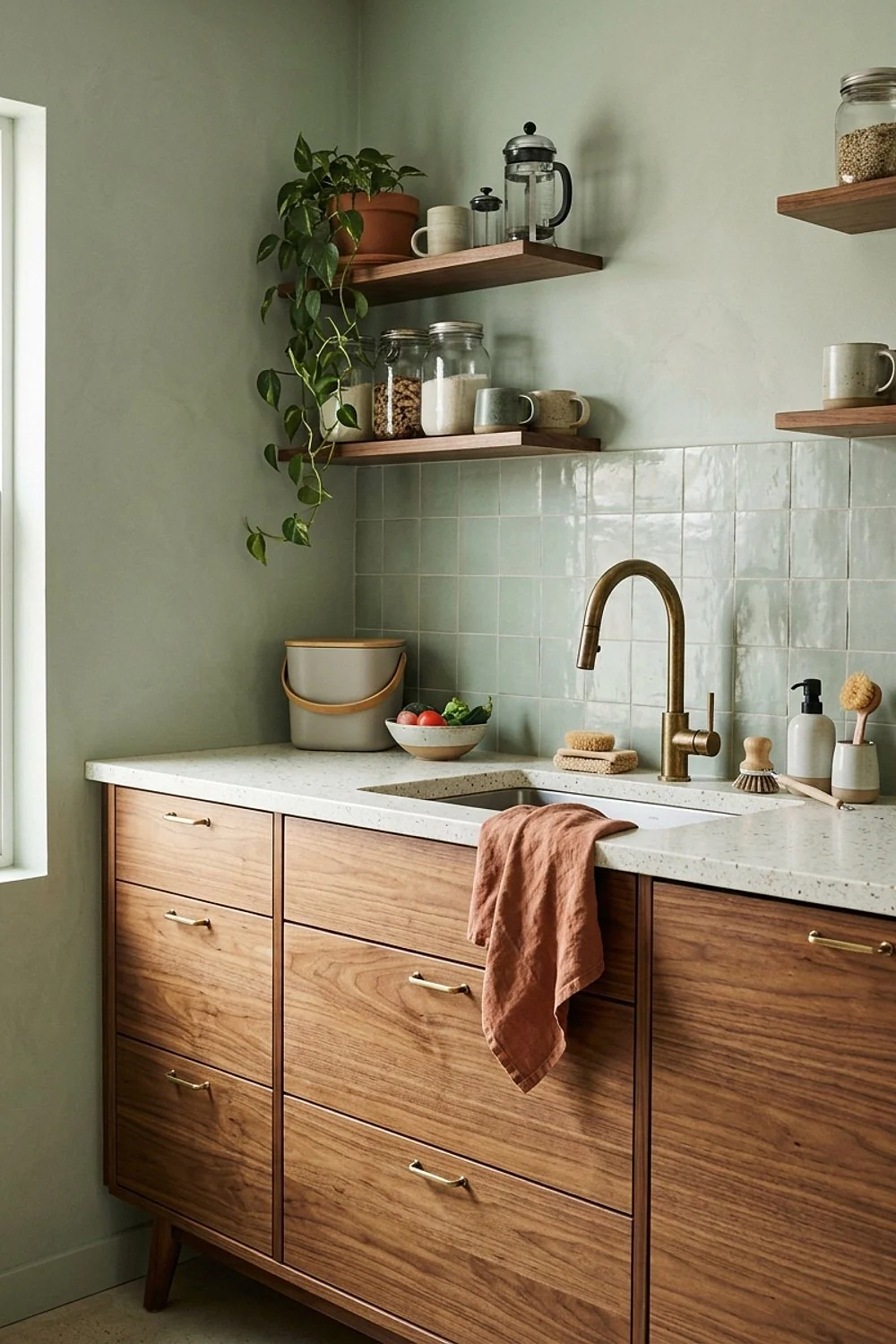
The 60-30-10 rule gives 60 percent of the room to walls, 30 percent to cabinets or large furniture, and 10 percent to accents. Use low-VOC paint in a muted clay or putty for the 60, and let anything trendy live in the 10 where it costs almost nothing to change.
Brush a 24-by-24-inch swatch on two different walls and look at it at 4pm, when light turns yellow and shifts every undertone. Paint chosen under showroom fluorescents rarely survives a real afternoon.
Group objects in odd numbers

Three glass jars of different heights on an open shelf read as arranged, while two read as a matched pair that has lost its third. Vary the heights by 2 to 3 inches and stagger the depth so nothing forms a military line.
This works best on a shelf at eye level, roughly 54 to 60 inches from the floor. Avoid grouping more than five objects, because past that the eye stops reading a group and starts reading a pile.
Warm 2700K LED bulbs with a high CRI

A 2700K LED bulb with a color rendering index of 90 or higher makes oak look like oak instead of dishwater gray. LEDs draw about 80 percent less energy than incandescents and last 15,000 hours or more.
On a gray November afternoon, this is the difference between a kitchen that feels lived in and one that feels like a waiting room. Skip anything rated 4000K or cooler unless the room is a lab.
Keep the work triangle clear

The sink, the range and the fridge form the classic work triangle, and designers want each leg between 4 and 9 feet, with the three legs totaling 13 to 26 feet. Decor that sits inside those paths slows you down every single day.
A freestanding plant stand or a floor basket belongs outside the triangle, near a window or a corner. If something forces you to step around it twice a day, it’s in the wrong place.
Choose pieces that work for a living

A 12-inch cast iron skillet hung on a wall rail is decor that also earns its place daily. A new Lodge runs about $35, and secondhand ones turn up for $15 to $20 and only need stripping and re-oiling.
It suits anyone who dislikes dusting ornaments. Anchor the rail into studs, not drywall, because a loaded skillet weighs around 8 pounds and tears out plain anchors.
Skip the matching bamboo set

Bamboo canister sets and utensil bundles are the trend that early shoppers fall for, buying six matching pieces in one trip. It backfires because bamboo items are usually strips glued with adhesive, and the cheap finishes crack in the dishwasher and head to landfill within two years.
One thick end-grain maple board, around 1.5 inches deep, outlasts the entire set and gets better with oiling. Buy the single piece you will touch daily and nothing else.
Open shelves 10 to 12 inches deep
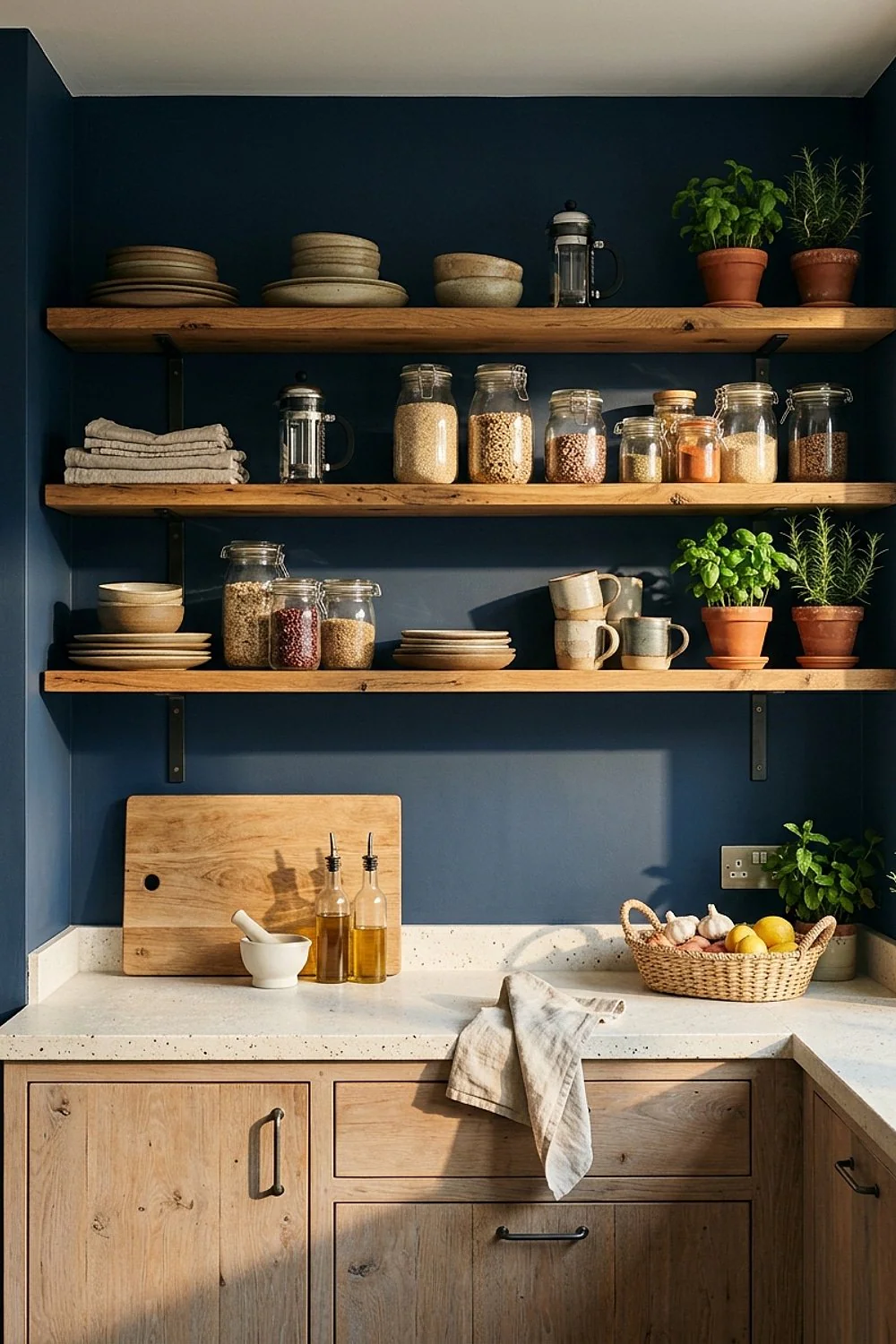
Open shelves at 10 to 12 inches deep hold standard 10.5-inch dinner plates without overhang, so nothing juts out to be bumped. A 1.5-inch-thick reclaimed board can span 36 inches before it starts to sag, so fewer brackets are needed.
This suits small kitchens without wall cabinets and households that use the same dishes daily. Stock them with daily-use items only, since anything that sits for months collects dust. Keep them away from the wall directly beside the range, where a grease film settles on everything.
Two 14-inch salvaged pendants over the island

Over a 72-inch island, two pendants about 14 inches across, with centers 24 to 30 inches apart, balance the length without blocking sightlines. The bottom edge should hang 30 to 36 inches above the counter.
Salvaged enamel or factory shades are the sustainable pick, but rewire them with a new UL-listed cord and socket. With a standard 8-foot ceiling, hang them at the 30-inch end so heads stay clear.
Linen panels at the window
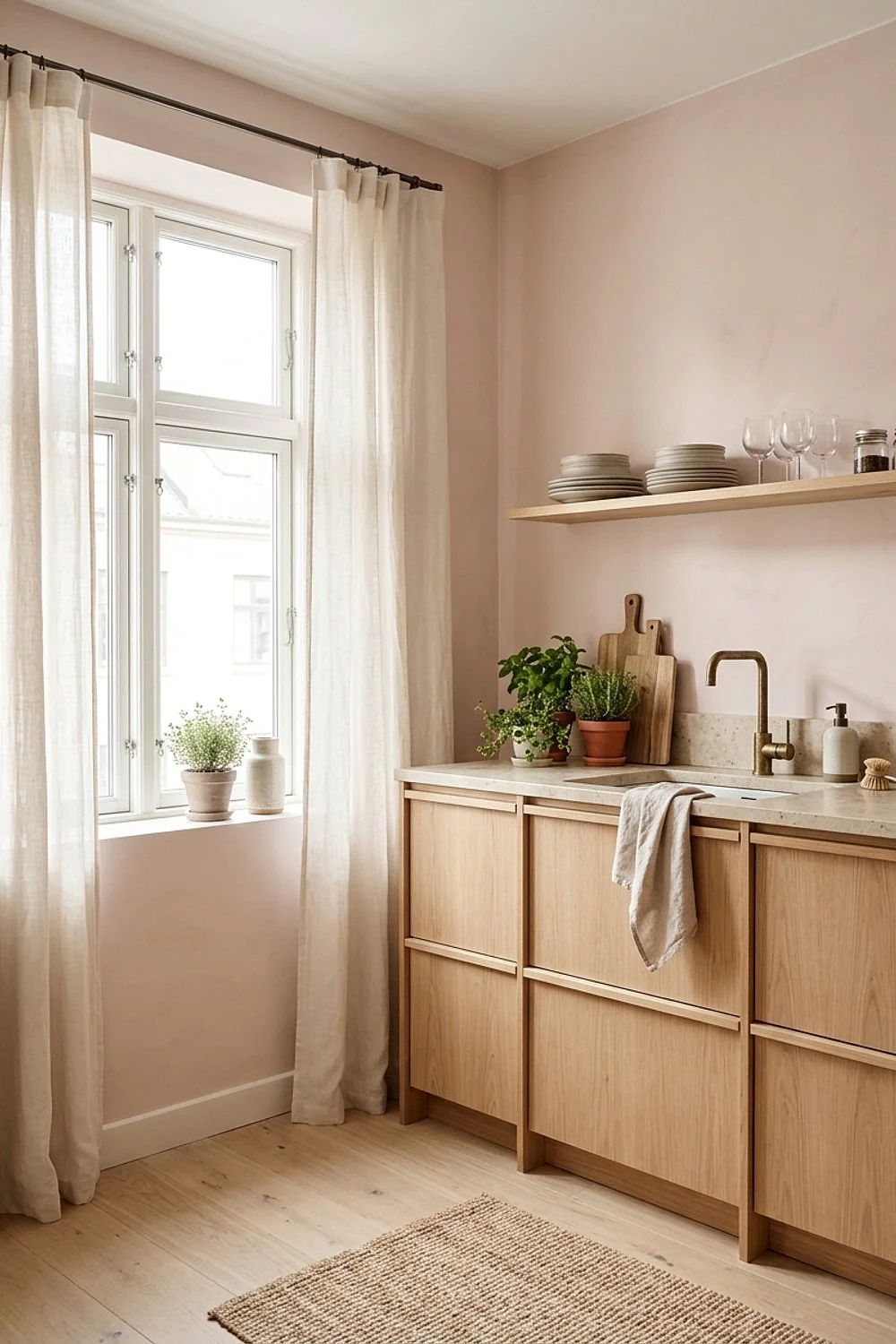
Linen panels diffuse harsh sun into a soft glow and feel dry and slightly nubby under your hand. Flax generally needs less water and fewer pesticides than cotton, and ready-made pairs run about $40 to $70.
Mount the rod 4 to 6 inches above the window frame so the glass looks taller. Keep hems at least 12 inches from any open flame on a gas range, or choose a café curtain that stops at the midpoint.
Linoleum, not vinyl, for the floor
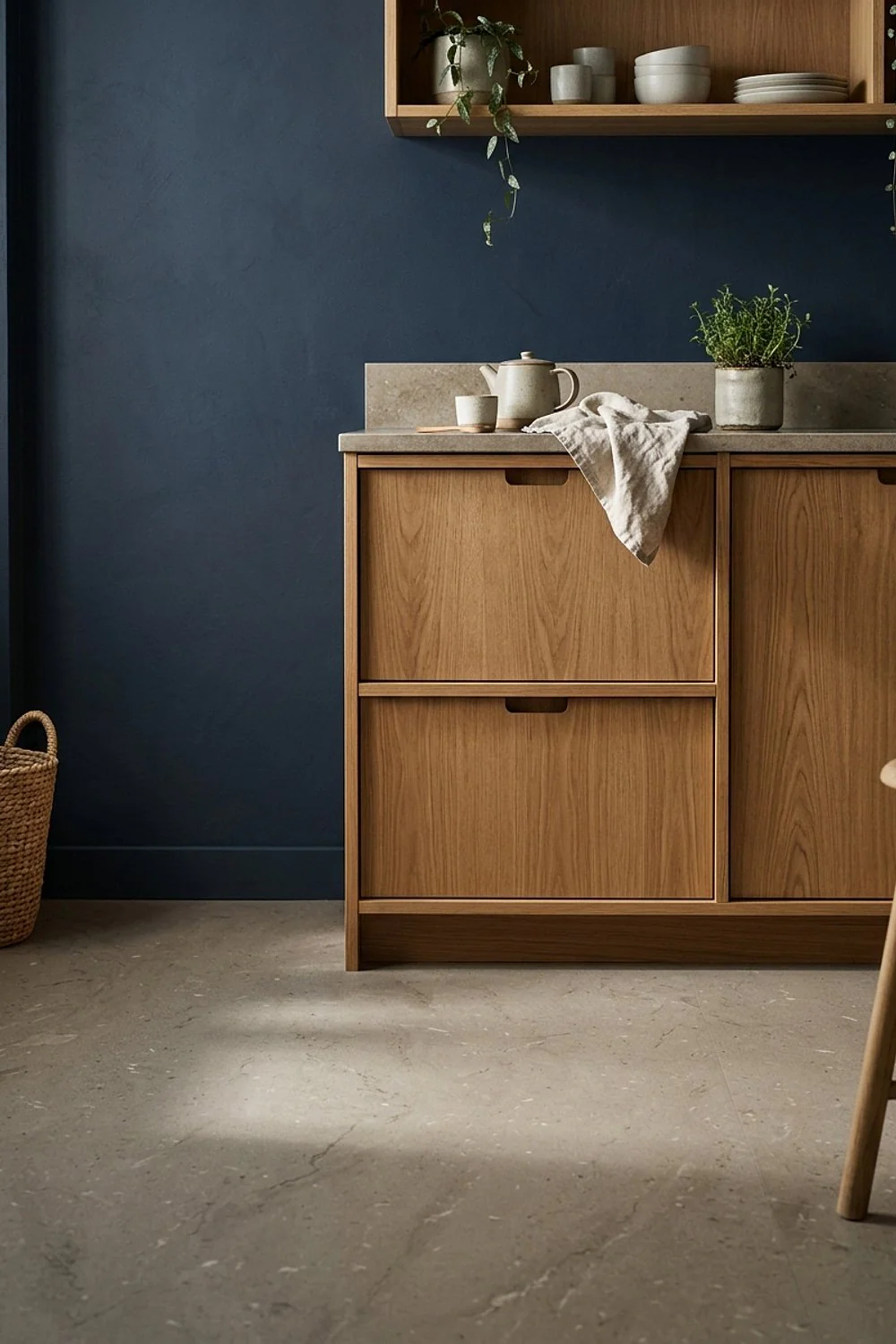
Linoleum is made from linseed oil, wood flour and jute, while vinyl is PVC, and the two get confused constantly. Real linoleum at about 2.5 millimeters thick lasts 25 to 40 years and breaks down at the end of its life.
It suits busy households with kids or dogs because scratches buff out. Hire an installer who knows welded seams, since a poorly sealed seam is where water gets under.
Unglazed terracotta for herbs

Unglazed terracotta pots in 4-inch and 6-inch sizes bring a burnt orange that echoes the warm tones in wood. Repeating a hue in two or three places is a basic color-balancing move, and clay is fired earth with nothing synthetic in it.
The pot breathes, so herbs like thyme and rosemary dry out between waterings and don’t rot. Always add a saucer, because seeping moisture leaves white rings on a wood counter.
Layer one rough, one smooth, one shiny

A nubby wool runner against a smooth oak counter and a glazed ceramic pitcher gives a vignette three textures, which is what makes it feel finished. Leave at least 8 inches of bare floor visible on each side of a runner.
Pick wool or flatweave cotton over jute near the sink. Jute stains from water and takes forever to dry, which is the sort of detail product photos never show.
Under-cabinet LED strips for task light
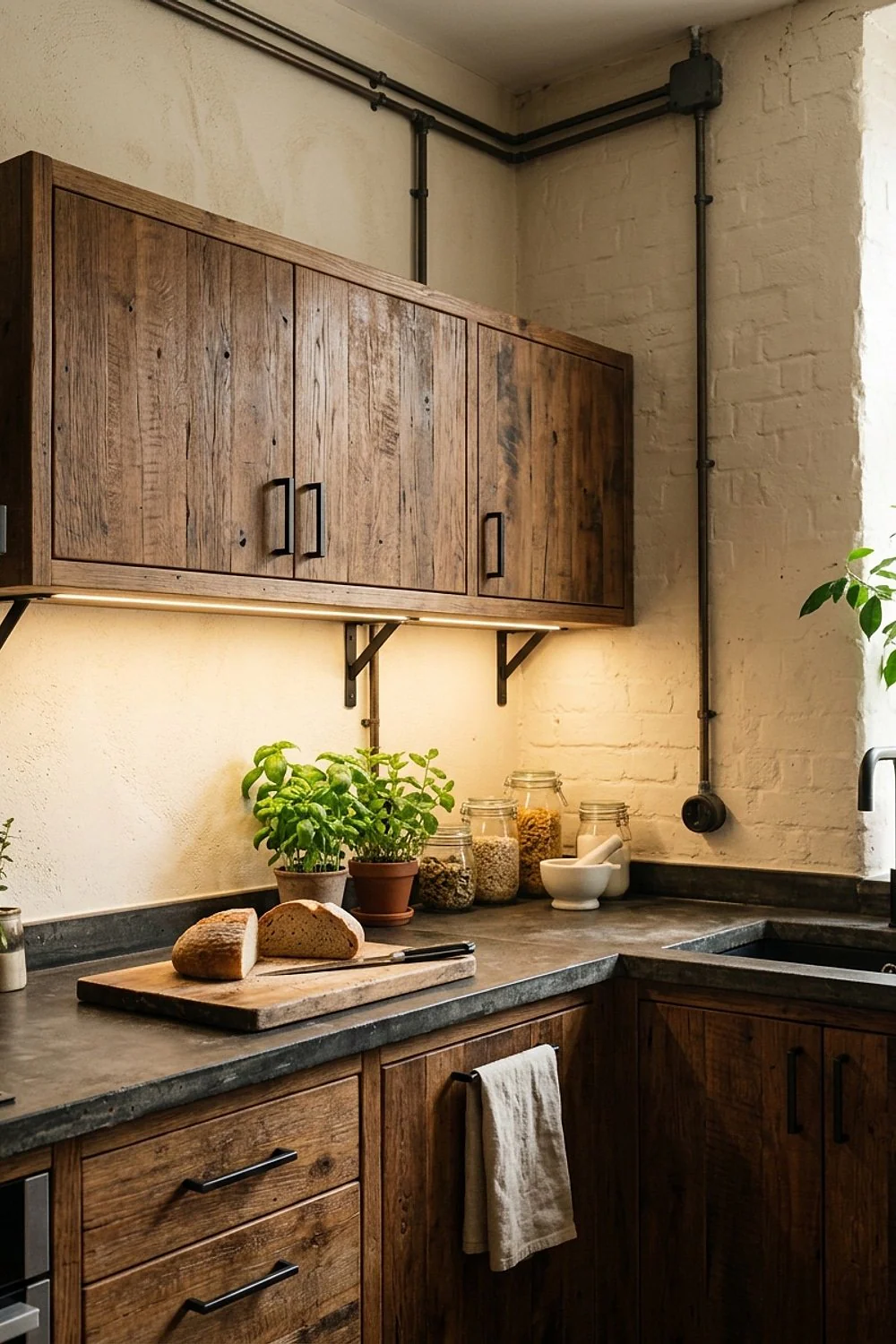
Under-cabinet strips at about 300 lumens per foot fill the shadow your own body casts when you work at the counter. Designers allow 15 to 18 inches between counter and wall cabinets, and that gap is where the strip belongs. Plug-in dimmable runs cost $30 to $60.
Set the strip in an aluminum channel with a diffuser, or you’ll see glare dots reflected on a polished counter. Choose 3000K so it blends with the overhead bulbs.
Forty-two inches of clear aisle
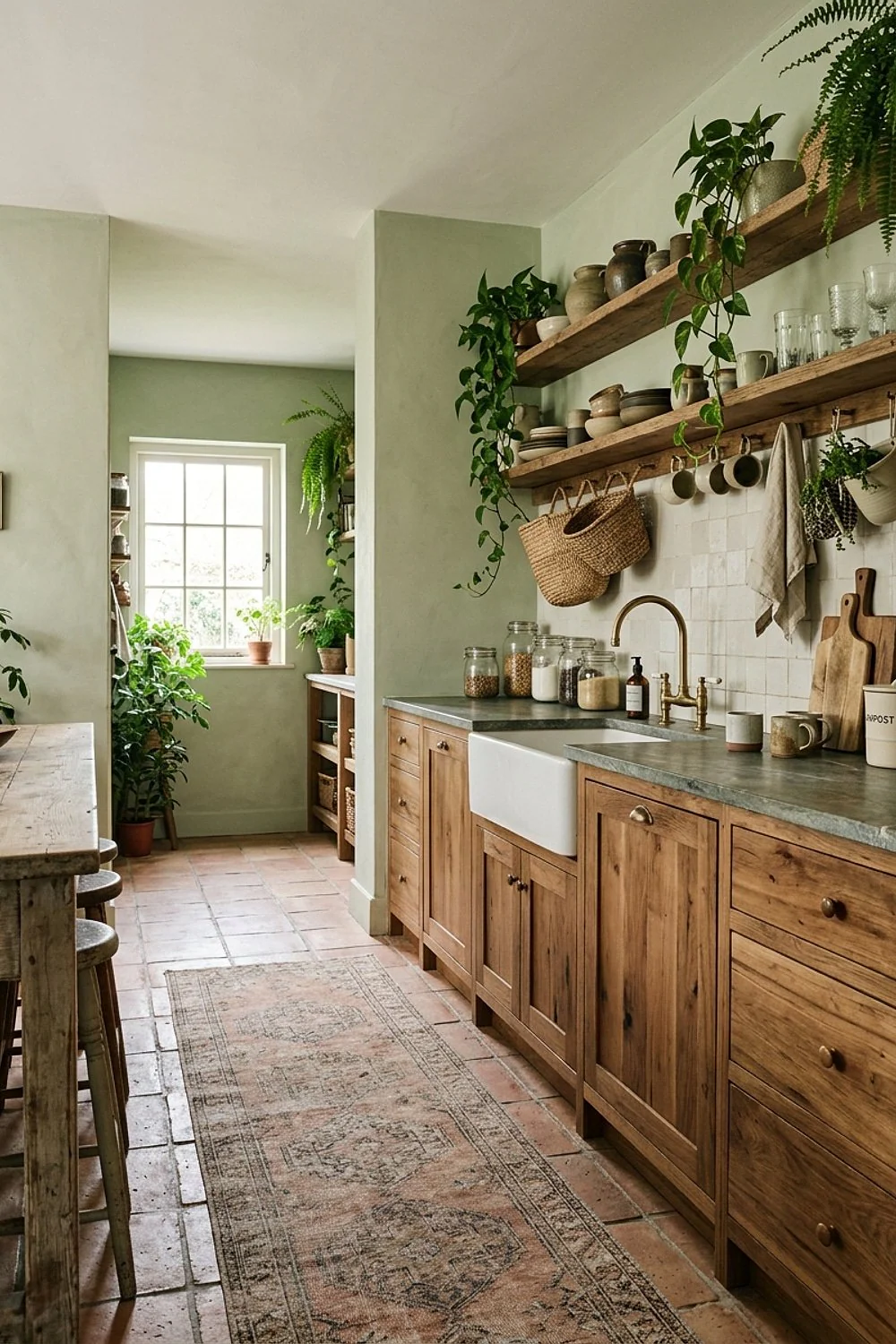
Forty-two inches is the commonly cited minimum work aisle for a one-person kitchen, and 48 inches for two. A rolling cart or a basket of firewood pushed into that aisle makes the room feel smaller than its square footage.
A secondhand cart 18 inches deep fits a 60-inch gap well, and it saves buying new. Measure the aisle with the cart in place, then open every door and drawer to check.
A one-gallon compost crock with a charcoal filter
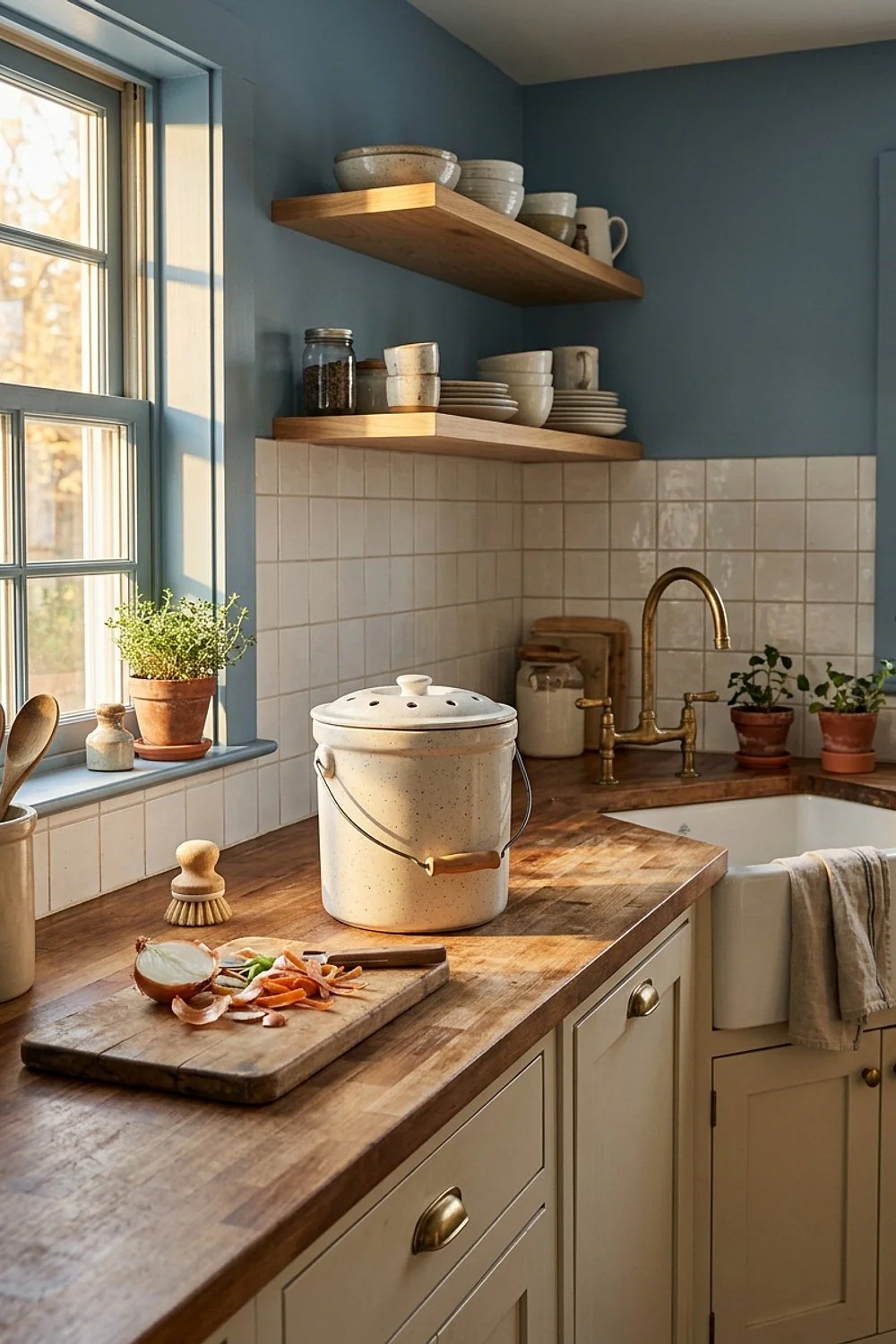
A one-gallon ceramic or stainless crock with a charcoal filter keeps scraps contained and odor low. Replace the filter every 3 to 6 months, and empty the crock every 2 or 3 days.
This only makes sense if you have a municipal pickup or a backyard bin to feed. Otherwise it’s a decorative bucket of rot, so check your collection rules before buying.
Cabinet paint in the color of the year
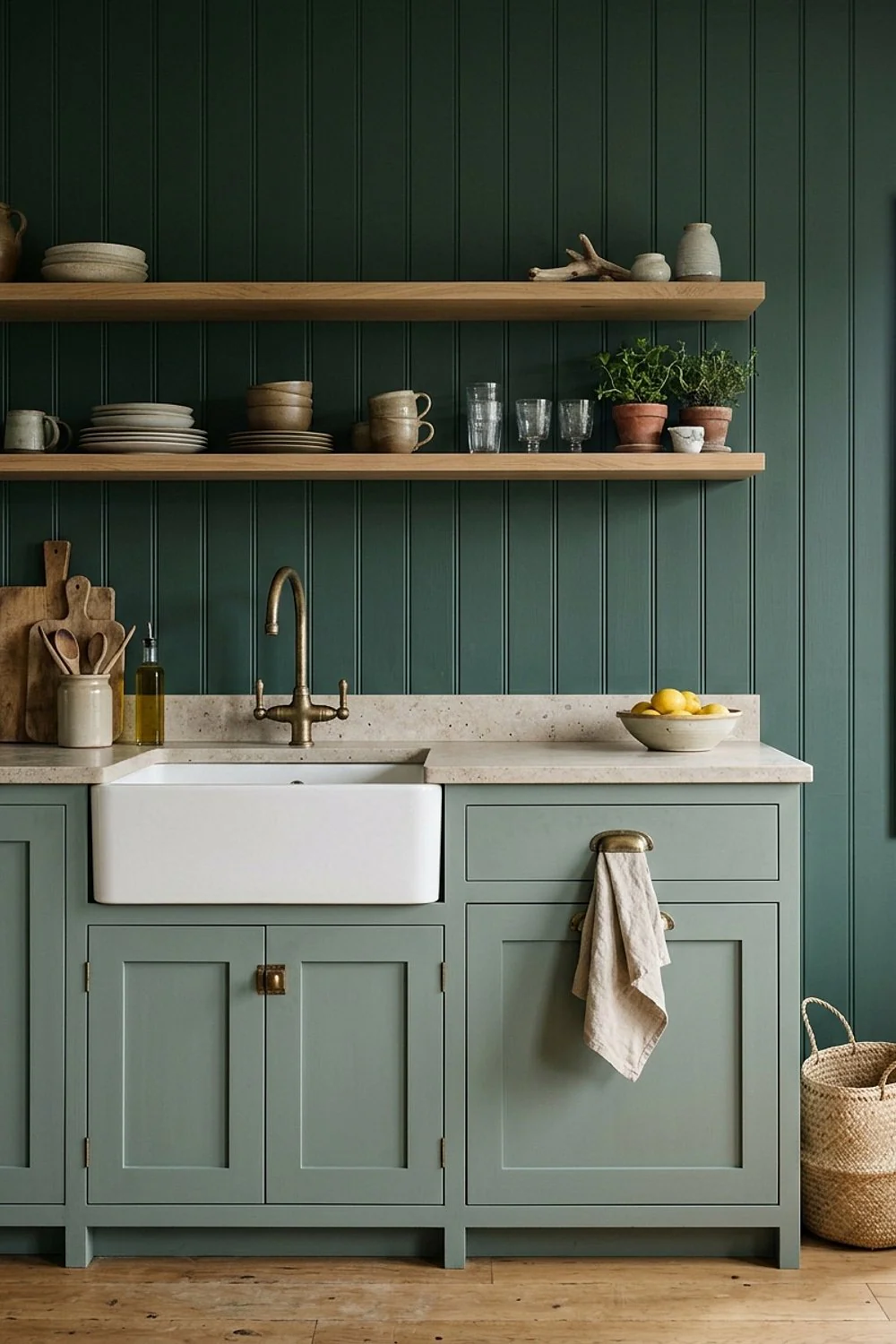
Repainting cabinets to match this year’s color is the early mistake that costs the most. It backfires because the trend turns in three to five years, and then the cabinets need sanding, priming and another full coat.
Better to keep sound boxes in a neutral and change hardware, since new pulls are a ten-minute swap (this only works if the cabinet boxes are solid wood or plywood rather than swollen particleboard). Save the bold color for something removable.
Glass jars for dry goods
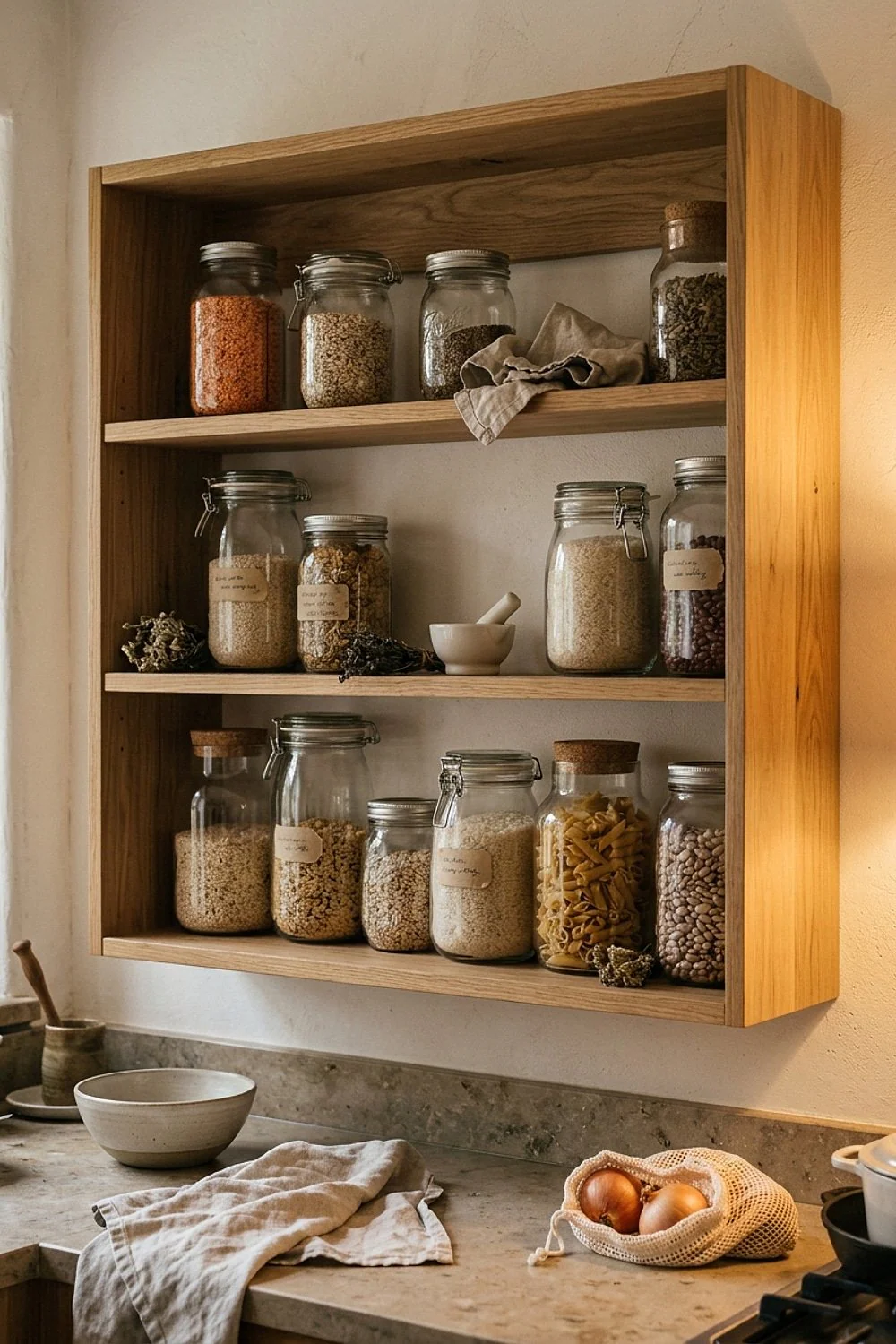
Glass jars holding oats, beans and flour are storage that doubles as display, and glass holds no odors and leaches nothing. Weck jars cost about $6 each, while a 32-ounce sauce jar from the recycling bin costs nothing.
Label with a chalk pen so the writing wipes off when contents change. Never line them on the shelf directly above the range, because rising heat degrades the contents faster.
Size plants to the surface
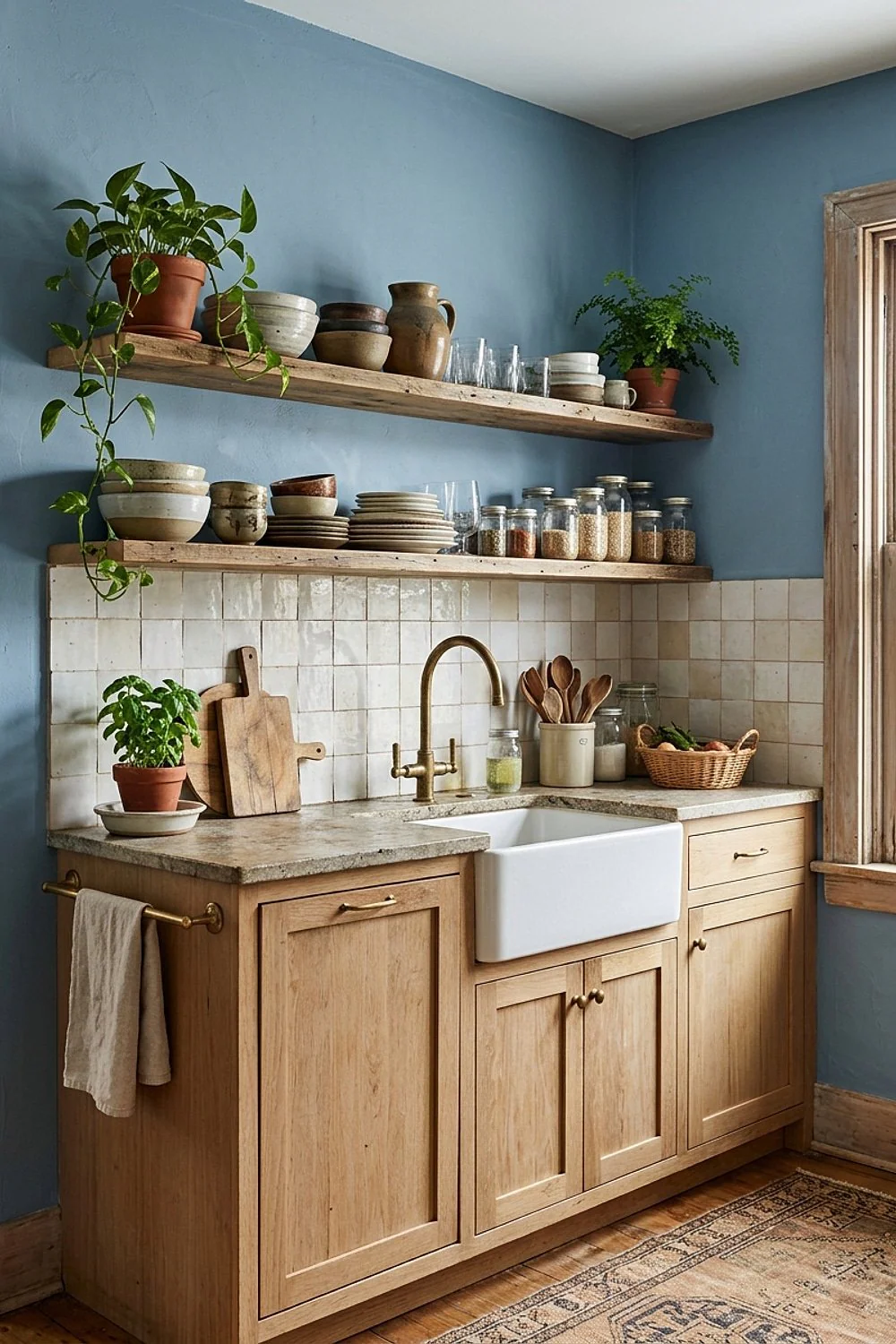
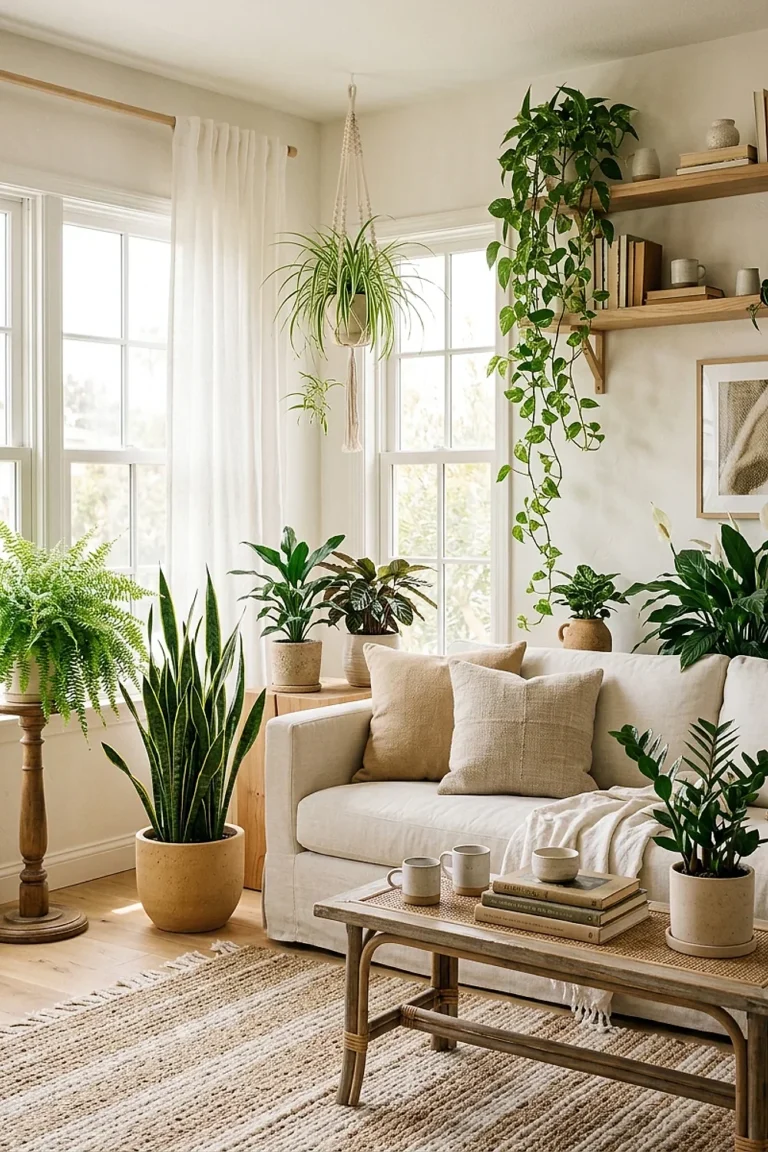
A trailing pothos in a 6-inch pot looks right on a shelf 60 inches up because the pot is roughly one-third the height of the plant. Pothos and snake plants tolerate kitchen humidity and low light, while basil wants six hours of sun.
Pick based on the window you actually have. Pothos is toxic to cats and dogs, so pet households should choose spider plant instead.
Swedish dishcloths and waffle-weave linen towels
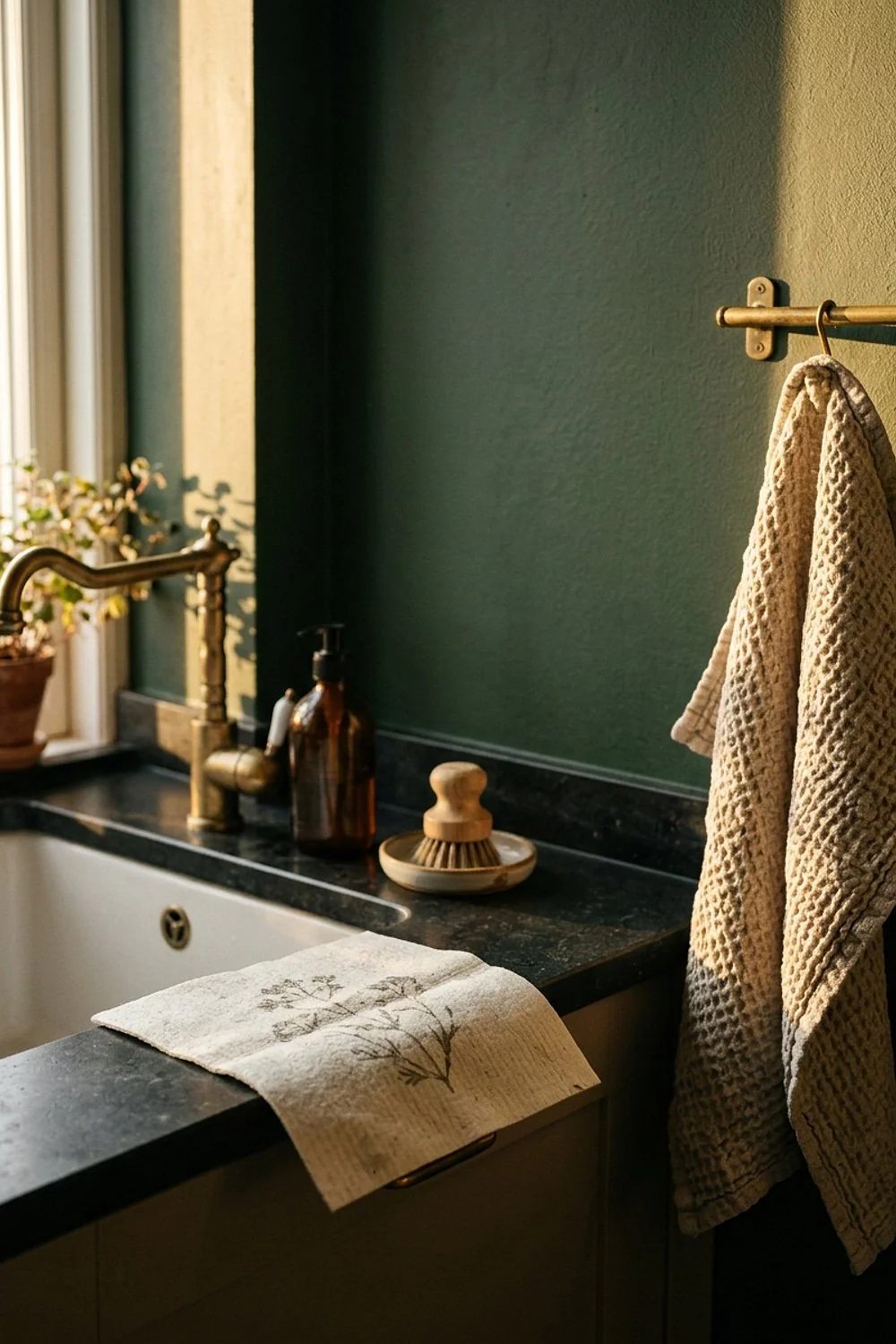
Swedish dishcloths, made from cellulose and cotton, go soft after the first wash and one cloth replaces many rolls of paper towels. Because the fabric absorbs spills quickly and air-dries within hours, it can be rewashed for months instead of being thrown away. A waffle-weave linen towel looped through a drawer handle dries glass without lint.
These suit anyone trying to quit paper towels, especially households that already run a regular laundry cycle. Avoid microfiber, which sheds plastic fibers in the wash.
Solid-wood stools from a thrift shop
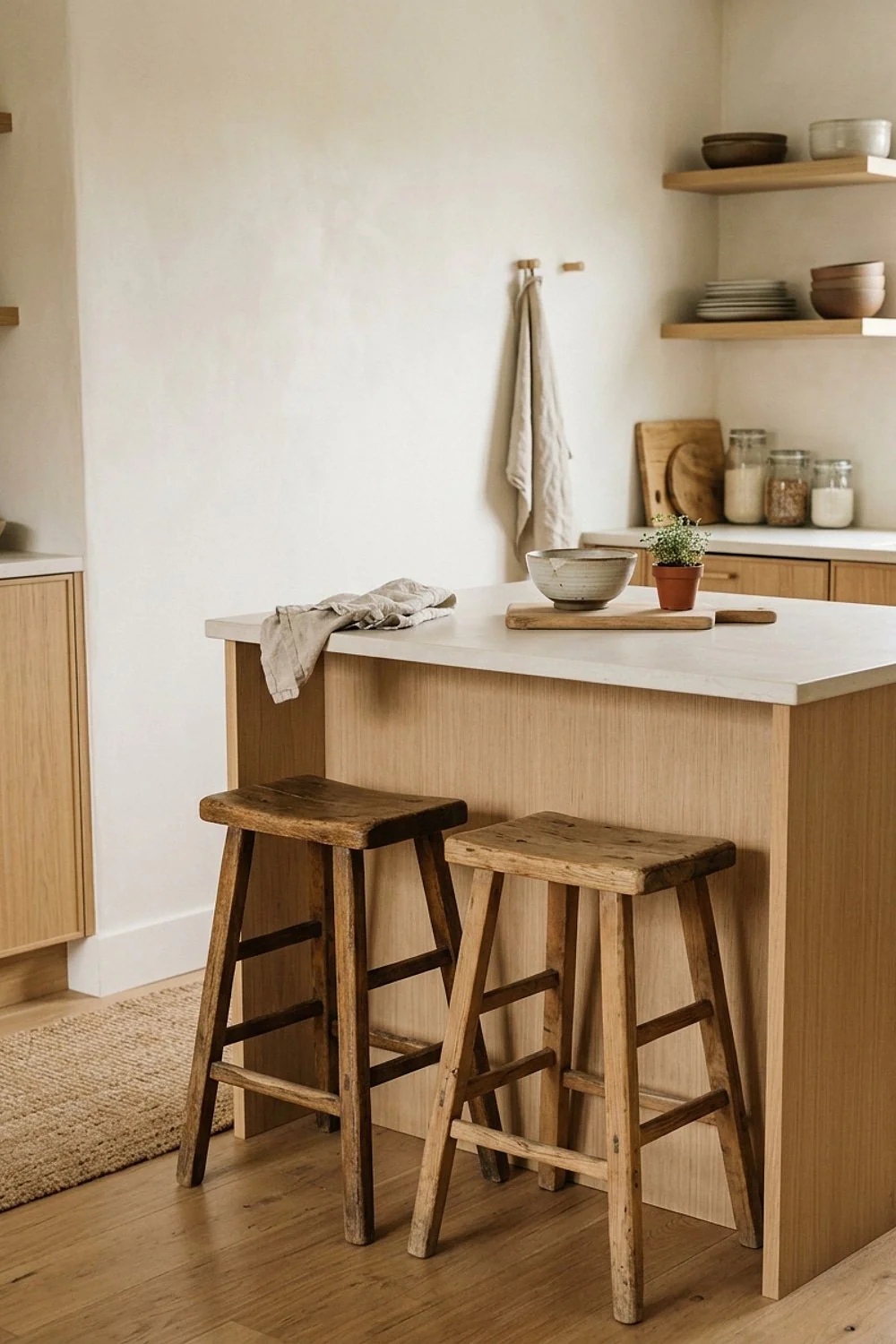
Solid-wood stools from a thrift shop usually cost $25 to $60 each and hold up better than veneered particleboard, whose adhesives can off-gas. Counter stools should have a seat height of 24 to 26 inches under a 36-inch counter.
Here’s the counterintuitive part: a used oak stool is greener than a new one sold as sustainable, because no new resources were spent. Wobble-test every joint, and re-glue loose ones with hide glue.
An island base in deep navy

An island base painted in a deep navy such as Benjamin Moore Hale Navy grounds the room because dark colors add visual weight low down, where it steadies the eye. Dark inky colors have been used in kitchens for generations, so they date slowly.
Use it on a single element in kitchens under 100 square feet. Painting all the upper cabinets this dark in a north-facing room turns it gloomy by 3pm.
One handmade ceramic piece
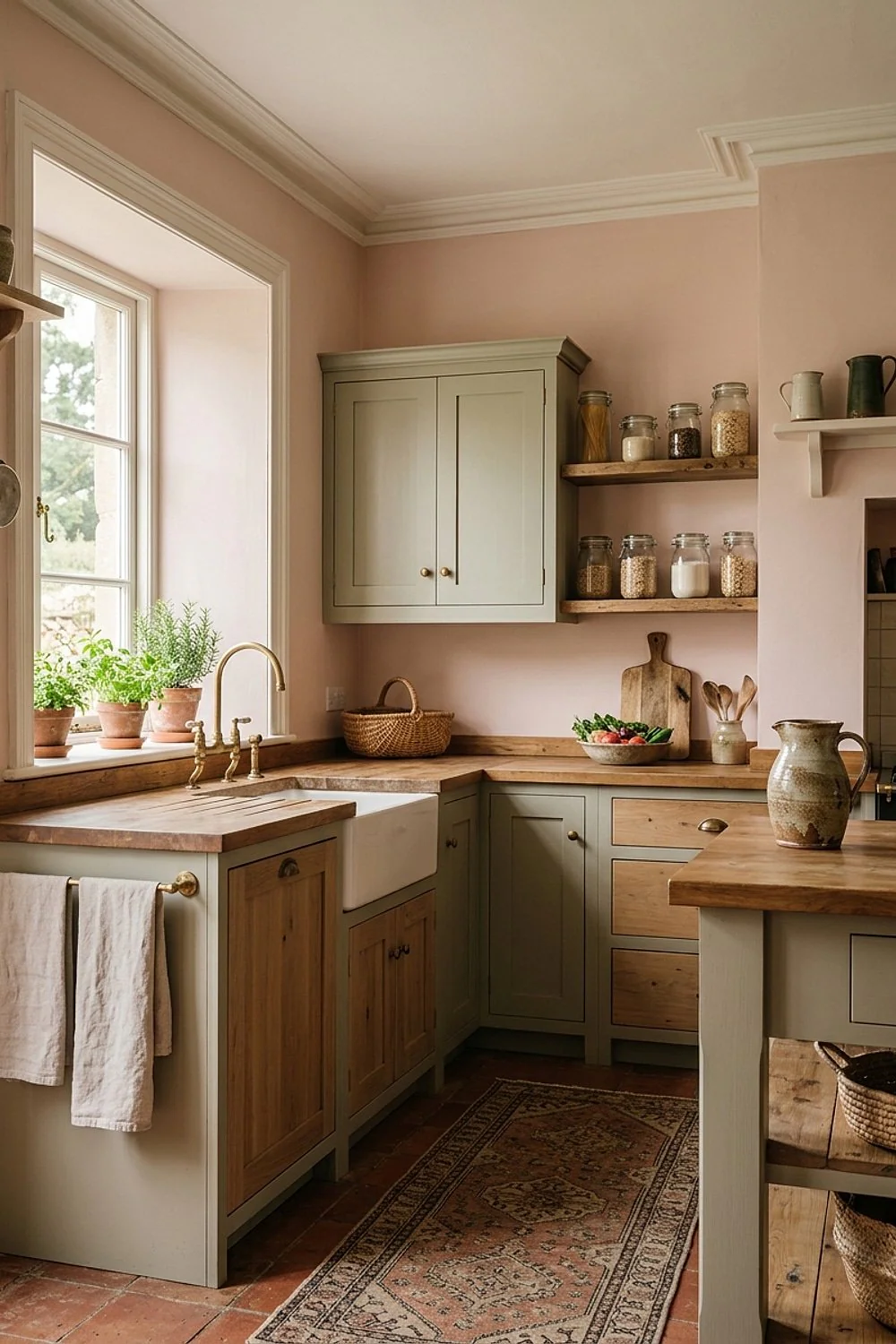
One handmade stoneware pitcher, about 8 inches tall, on a windowsill gives the room a focal point. Buying from a local potter keeps shipping short and means the piece is made in small batches.
Leave about one-third of the shelf empty around it so it can breathe. Ask the potter whether the glaze is food-safe before it holds anything you’ll eat from.
Breaking the Rules on Purpose
Eco friendly kitchen decor allows exceptions, and some of them are the smartest moves in the room. A rule exists to prevent a common failure, so break it only when that failure can’t happen.
Keep what already works.
A plastic spice rack that’s still sturdy is greener than a new wooden one, because the footprint of making it has already been paid. Replace it when it cracks, not when a trend says so.
- Crowd the counter if the objects are a real collection you use, like six copper pots.
- Mix finishes freely when everything is secondhand, since age blends mismatched metals.
- Go bright with paint on a wall you can repaint in an afternoon.
- Use a cool 4000K bulb in a pantry or closet where you only look for labels.
What went wrong
Eco friendly kitchen decor goes wrong in predictable ways, and most of them involve buying fast. Trend-driven purchases rarely age well, so durability and flexibility should win every close call.
- Buying a full matching “green” set, which locks the room into one look and one failure date.
- Trusting a zero-VOC label without checking the tint, since colorants can add VOCs back in dark shades.
- Tossing working items to replace them with eco versions, which wastes the embodied energy already spent.
- Choosing a finish that can’t take a spill, such as unsealed cork or raw jute near the sink.
- Skipping a measuring tape and ending up with a cart or stool that fights the aisle.
The fix in every case is slower buying. Live with the room for two weeks, note what you reach for, and then fill the gaps one piece at a time.
Where to start
Eco friendly kitchen decor works best when the first purchase is a replacement for something that’s actually failing, not an upgrade for its own sake. Swap the bulbs, add one salvaged or thrifted piece, and measure your aisle before you buy anything with legs.
Save or pin this list so it’s handy the next time you shop. Then pick one rule, measure the spot it would go, and try it before touching anything else.
Frequently Asked Questions
What is the quickest way to start with eco friendly kitchen decor in a rental?
Change what lifts out without tools: bulbs, curtains, plants, cork mats, glass jars and a thrifted stool. Nothing touches the walls, and every piece moves with you when the lease ends.
Is bamboo actually greener than hardwood for kitchen pieces?
Bamboo grows fast, but finished products are often laminated strips bonded with adhesive and shipped from far away. A secondhand hardwood piece or a single FSC-certified board usually has the lower footprint over its life.
How much should eco friendly kitchen decor cost to get started?
A useful starting set of LED bulbs, a few jars, a terracotta pot and a thrifted stool can come in under $100. Spend more only on items that wear daily, like flooring or a good board.
Does low-VOC paint still smell?
Low-VOC paint has far less odor than conventional paint, though some smell remains while it dries. Dark colors may carry more VOCs from the tint, so ask for a zero-VOC colorant and ventilate for 48 hours.

One Comment