

Air Purifying Indoor Plants for Renters
Most people expect a few leaves to scrub a room like a filter, but the honest payoff of air purifying indoor plants is smaller and nicer than that. You get soft green edges, a little extra humidity, and a room that looks lived in when the 4pm light turns amber and slants across the floor.
All of it works with zero drill holes, zero paint, and a deposit that comes back whole.
Air Purifying Indoor Plants Without Losing Your Deposit
The famous NASA Clean Air Study from 1989 showed plants removing chemicals like formaldehyde and benzene, but it used sealed chambers the size of a lab box. A later review of the research, published around 2019, estimated you’d need anywhere from 10 to 1,000 plants per square meter to match what an open window does.
So here’s the counterintuitive part: open the window for ten minutes, and keep the plants for what they do well. They soften hard rental surfaces, hold a bit of moisture, and make a beige box feel intentional.
Proportion is the first test for every idea below. Check the plant’s height against the wall, the pot’s width against the shelf, and the whole group against the furniture beside it. A plant that’s too small looks lost, and one that’s too big swallows the room.
- Every item here stands, sits, leans, clips, or hangs from something you already own.
- Nothing needs a nail, a screw, or a can of paint.
- Pet safety is flagged wherever it matters.
A snake plant tucked beside the sofa arm

A snake plant in a 10-inch pot, standing 30 to 36 inches tall, fills the dead gap between a sofa arm and the wall without stealing floor. Its leaves grow straight up, so the footprint stays about the size of a toaster.
It suits beginners and dim rooms, since watering every two to three weeks is plenty. The catch is that it’s toxic to cats and dogs, so skip it if a curious chewer lives with you.
A pothos trailing off the top of a bookcase

Late-afternoon light slanting across a bookcase top is what a pothos wants: bright but filtered, never a midday blast. Set a 6-inch pot at the edge and let the vines spill down the side.
It fits renters with tall, freestanding shelves and no wall space to spare. Trim any vine before it reaches the floor, because trailing leaves collect dust and get stepped on. Pothos is toxic to pets too.
A spider plant on a freestanding hanging stand

Spider plant leaves arch like soft grass and feel almost silky under your fingers. A shepherd’s hook stand, about 60 to 72 inches tall with a weighted base, lets the plant hang without a ceiling hook.
It’s one of the friendliest picks for homes with cats and dogs, since it’s non-toxic. Keep the stand out of walkways, because a hanging basket at head height is an elbow magnet.
A peace lily in a glazed ceramic pot

A glazed ceramic pot, 8 to 10 inches wide, holds moisture longer than terracotta, which suits a peace lily’s thirsty habit. Expect to pay about $20 for a decent one with a matching saucer.
The plant droops dramatically when dry and perks up within hours of watering, so it forgives forgetful owners. It’s toxic to pets, and the white blooms need bright, indirect light to keep appearing.
A four-foot rubber plant in the emptiest corner

A rubber plant with glossy leaves the size of a shoebox lid should stand roughly half to two-thirds as tall as the wall behind it. In a room with 8-foot ceilings, that means about 4 to 5 feet.
Anything under 3 feet looks stranded in a big corner. Wipe the leaves with a damp cloth monthly, because a dust film blocks light and dulls the shine.
A leaning ladder shelf for plants at three heights

A 5-tier ladder shelf, about 60 inches tall and 12 inches deep at the base, leans against the wall and holds eight to ten small pots. Expect to spend $60 to $90, and no anchor is needed because the angle does the work.
Put the heaviest pot on the bottom step, since top-heavy loads are what tip these over. Use saucers on every tier, or water will drip onto the plants below.
A Boston fern on a stool beside the tub

A Boston fern on a 16-inch wooden stool lifts its fronds to a height where shower steam actually reaches them. Ferns love that humidity, and the arching shape softens a hard tub-and-tile corner.
This works only in a bathroom with a window, since ferns sulk in darkness. Boston ferns are non-toxic to pets, which makes them a solid bathroom pick.
Aloe vera on the kitchen windowsill

Aloe in a 6-inch terracotta pot on a bright kitchen sill earns its space twice, because the gel soothes minor burns from the oven rack. Measure the sill first, since many are only 3 to 5 inches deep.
On a shallow sill, drop to a 4-inch pot so the rim doesn’t overhang. Aloe needs about six hours of bright light and rots fast if overwatered, so let the soil dry fully between drinks.
A decorative cache pot over the ugly nursery pot

Look, the plastic nursery pot a plant arrives in is ugly, but it’s also the part with drainage holes. Slip it inside a decorative cache pot about an inch wider, and the plant looks styled while the roots stay healthy.
The common mistake is planting directly in a pot with no hole, which leaves roots sitting in water. Lift the inner pot out to water in the sink, and the swap is fully reversible on move-out day.
A pink-veined Chinese evergreen against beige walls

Rental walls are usually builder-grade beige, and silver or pink-veined Chinese evergreen leaves pop against that flat backdrop. The plant brings the color you aren’t allowed to paint.
Pink varieties need brighter light to hold their tint, so a dark corner turns them dull green. They’re mildly toxic to pets, and a 6- to 8-inch pot is plenty for a side table.
An areca palm as a studio room divider
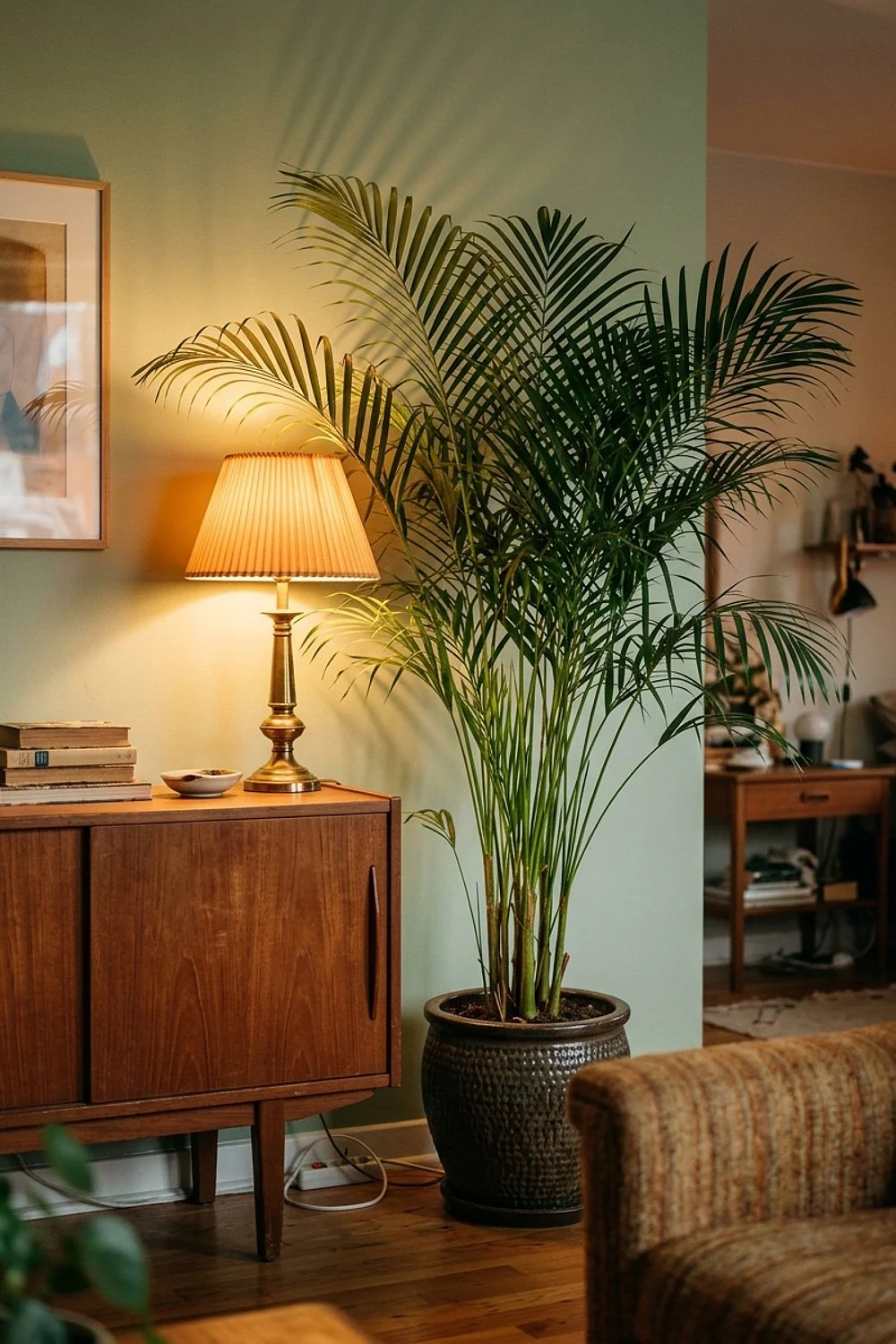
An areca palm at 5 feet tall, set about 3 feet from the foot of the bed, draws a soft line between sleeping and living zones in a studio. Its feathery fronds let light through, so the room doesn’t feel chopped in half.
It spreads roughly 3 feet wide, so leave that clearance or the fronds will brush every passerby. It needs bright light and is non-toxic to pets.
A parlor palm by the north-facing window

North-facing windows give flat, cool light with no harsh patches, and a parlor palm at 18 to 24 inches handles it happily. Set it on a side table within three feet of the glass.
Low light means slow drying, so water every 10 to 14 days instead of weekly. Overwatering is the usual cause of death here, and the plant is pet-safe.
A bamboo palm beside the desk

A 3- to 4-foot bamboo palm on the floor next to a desk puts green into your eye line, which rests tired eyes between spreadsheets. Its slim canes take up only a foot or so of floor.
Keep it away from air-conditioning vents, which brown the leaf tips fast. It’s pet-safe and likes a bit of humidity, so mist it or set it on a pebble tray.
Terracotta pots on cork or felt pads

Terracotta breathes, which helps anyone prone to overwatering, because the porous clay lets excess moisture escape through its walls. That same porosity wicks water onto whatever sits below, so a pack of self-adhesive cork or felt pads, about $5, stops ring stains on wood floors.
Renters and hardwood owners benefit most, since the pads peel off at move-out and the floor underneath should look untouched. Pair the pads with a saucer under every pot, and avoid sticking pads onto a damp base, because adhesive will not grip wet clay.
A trio of graduated pots on a console
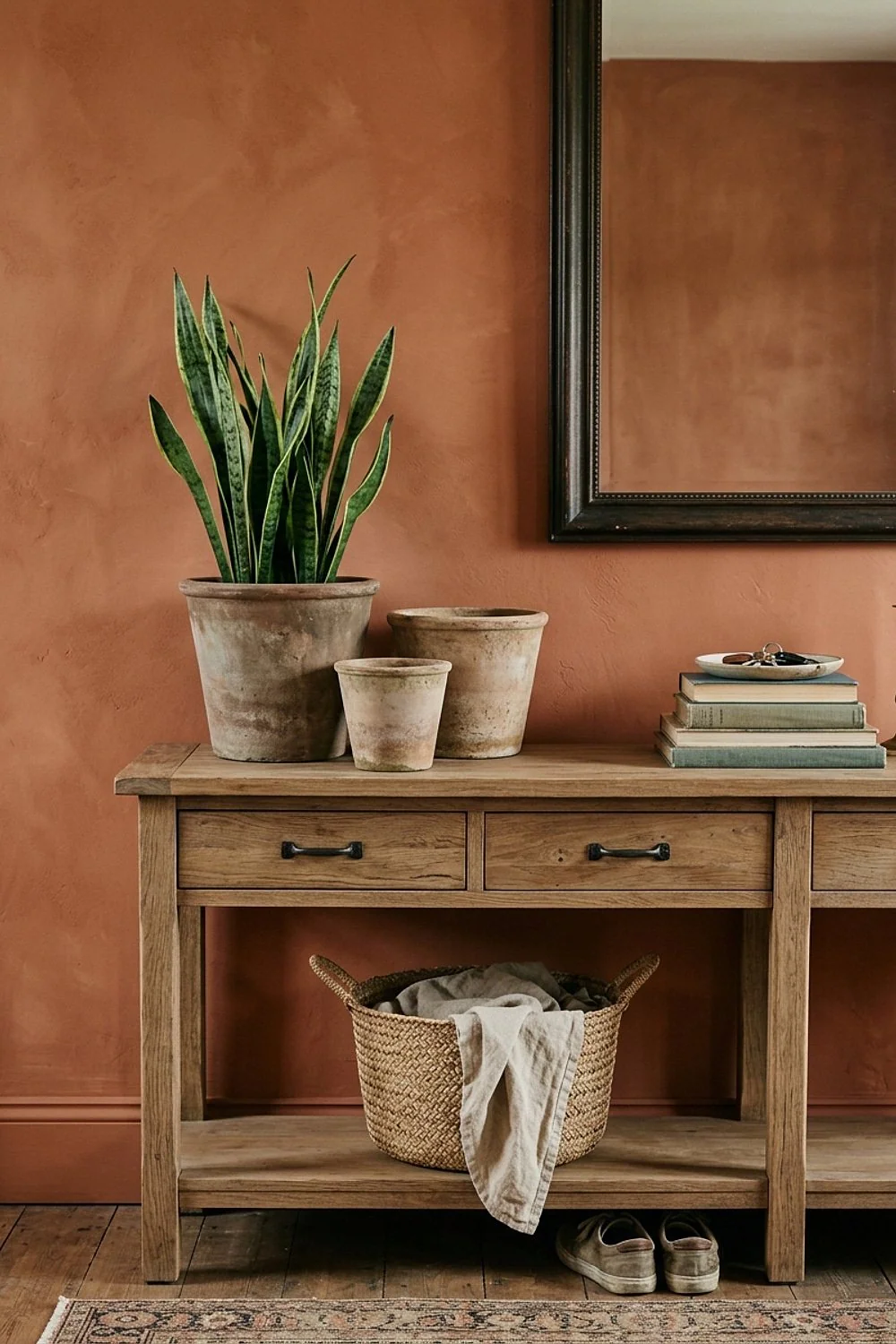
Three pots at 6, 8, and 10 inches wide, staggered by height, read as one deliberate group. The tallest plant should stay under about a third of the console’s length, so the group doesn’t crowd the surface.
Odd numbers look relaxed, and even numbers look stiff. Leave a few inches of bare console on each side so the surface still reads as a surface.
A rolling plant caddy for the heavy pots
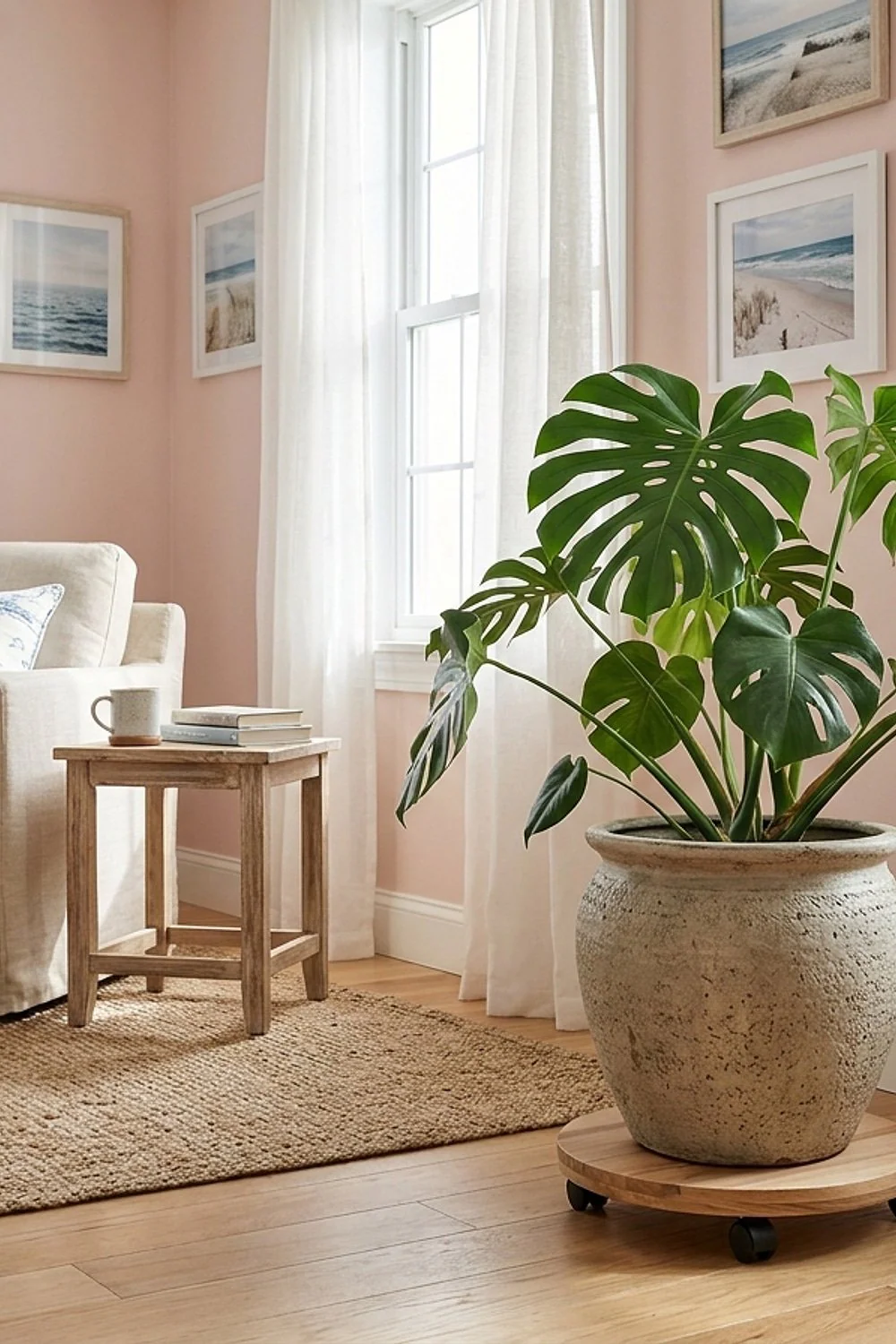
A 12-inch round caddy with four casters, around $20 to $25, turns a heavy 10-inch pot into something one hand can slide. Roll it into the tub to water, then roll it back after the soil drains.
Choose rubber wheels, because hard plastic casters scratch laminate and vinyl plank. Lock the wheels after you park it, or the plant drifts when someone brushes past.
A tension rod inside the window frame

A spring tension rod wedged inside a window frame holds two or three light hanging pots on S-hooks. Keep the total under about 5 pounds, since most rods slip when overloaded.
Stagger the drops at 6, 12, and 18 inches so the leaves don’t overlap. Pothos or a small spider plant in 4-inch pots works well, and the rod comes out in two seconds.
Self-watering pots for the frequent traveler

A self-watering pot with a one-quart reservoir, around $12, buys two to three weeks away from home. The soil draws water up through a wick, so the plant never swings between flood and drought.
It suits pothos, spider plants, and peace lilies, which like steady moisture. Snake plants and aloe rot in that setup, so keep those in regular pots.
Moving plants off the radiator cover
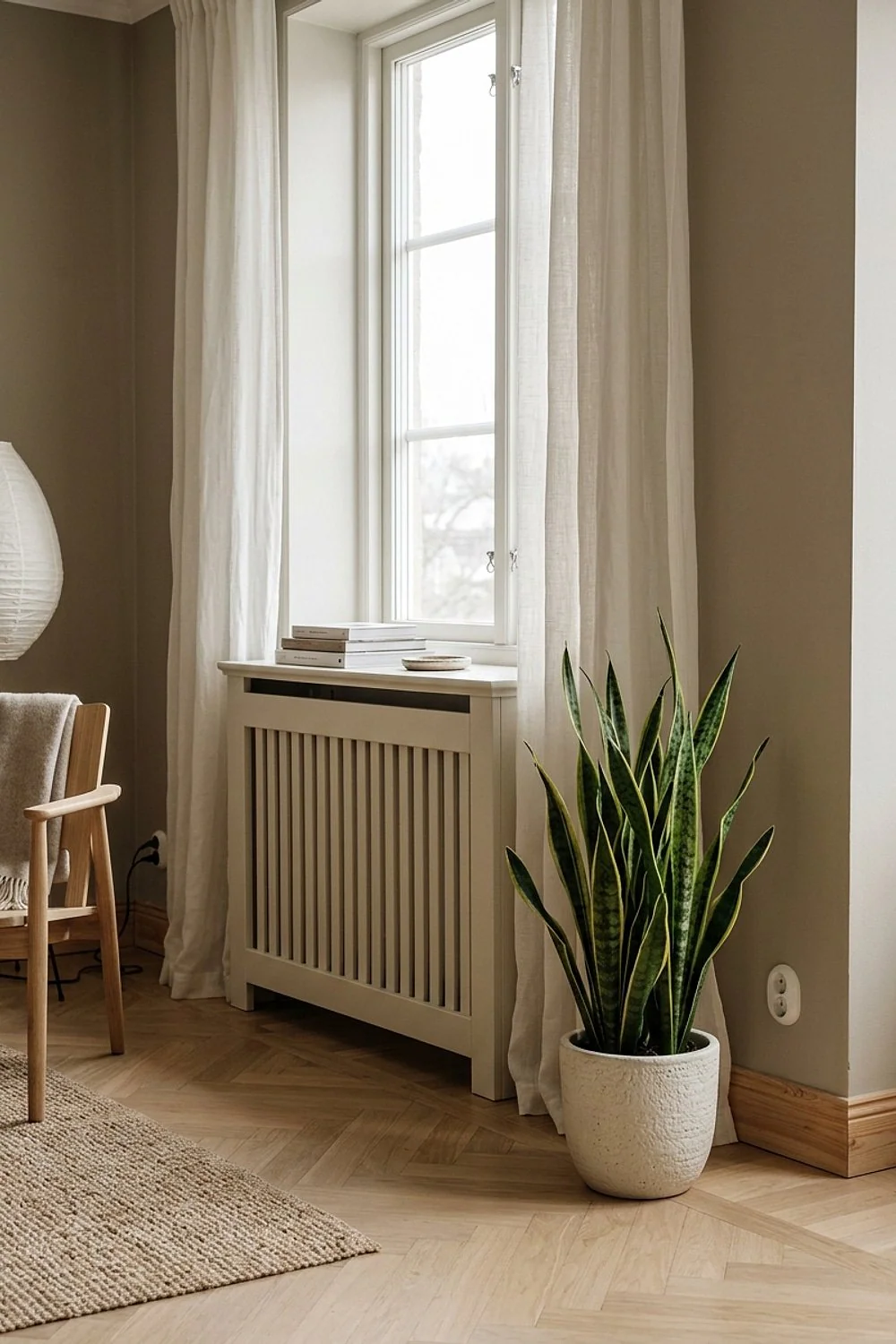
A plant parked on a radiator cover or baseboard heater cooks its leaves, and the tips crisp brown within weeks. Keep at least 12 inches between any pot and a heat source.
Winter has its own trap. During a January cold snap, leaves pressed against single-pane glass can freeze, so pull pots a few inches back from the window at night.
One pot color across mixed greens

Three different greens in three different pot colors read as clutter, because the eye has to sort leaf shapes and pot colors at once. Matte white or charcoal pots on every plant calm the whole shelf and let the foliage do the talking.
This works best on a dark console or a pale shelf where the contrast is clear, and it suits collectors who keep adding cuttings and odd nursery pots. Avoid glossy mixed finishes, since shine fights with the leaves for attention.
A windowsill row on a boot tray

A 24-inch rubber boot tray lined with pebbles holds five or six 4-inch pots in a tidy row. It catches drips and keeps humidity pooled around the leaves.
Leave about an inch between pots so air moves. Fill it with spider plant babies, pothos cuttings, and aloe pups, and keep the tray clear of blind cords and the window latch.
More air purifying indoor plants for dim rooms and tight corners
Air purifying indoor plants behave differently once light drops, and the last few ideas lean on lighting, pet safety, and small tools that make the rest easier.
A full-spectrum bulb in a lamp you already own

A full-spectrum LED bulb, about $15, screws into any existing lamp and turns a dim corner into a growing spot. Hang the lamp head 12 to 18 inches above the leaves and run it for 10 to 12 hours a day.
A cheap outlet timer handles the schedule. It suits windowless rooms and north-facing apartments, and the bulb simply unscrews when the lease ends.
A pet-safe swap for the one toxic plant

Replacing a single toxic plant, like a peace lily, with a Boston fern or areca palm makes a home easier to relax in. The ASPCA lists spider plants, Boston ferns, areca palms, and parlor palms as non-toxic to cats and dogs.
Non-toxic doesn’t mean edible, though. A cat that chews leaves may still vomit, so keep the plants on stands or shelves your pet can’t reach.
What landlords actually allow
Air purifying plants are rarely the problem in a lease. The trouble comes from the hardware and the water, so these are the usual flashpoints:
- Plants, pots, saucers, and freestanding stands are almost never restricted.
- Tension rods inside window frames are common, but ask first, because some leases treat frames as fixtures.
- Adhesive hooks may be fine on paint but can peel it off, so test a hidden spot.
- Water damage and soil on carpet are what actually cost deposits.
Send a short email before you start and keep the reply. A written “yes” is worth more than a verbal one if a dispute comes up.
Photograph floors and window frames on move-in day, with a plant-free baseline. That way a ring stain or hairline scratch can’t be pinned on your pots later.
Undoing everything on move-out day
The goal is to leave nothing behind but a faint smell of clean soil. Work through this order and the room resets in about an hour.
- Move every plant to the bathtub or a balcony so debris stays contained.
- Peel off cork and felt pads, then wipe the floor under each with a damp cloth.
- Vacuum loose soil from corners and along baseboards.
- Take down tension rods and wipe the frame where the rubber ends pressed.
- Warm any adhesive hook with a hair dryer for 30 seconds before peeling, to protect the paint.
Plants travel best in a sturdy box with newspaper packed around the pots. In cold weather, wrap the leaves in a sheet of paper for the walk to the car, because even a few minutes of frost can blacken tender foliage.
Start with one plant and one measured corner
Air purifying indoor plants won’t replace ventilation, but they bring warmth, softness, and a living thing to a rental that can’t be painted or drilled. The best results come from matching plant size to the space and keeping everything easy to lift out.
Save or pin this list so it’s ready when you start. Then measure one empty corner, from floor to the point where you’d want the tallest leaf, and pick the first plant that fits that number.
Frequently asked questions
Do air purifying indoor plants really clean the air in a small rental?
Only slightly. Lab studies used sealed chambers, and in a real room a single plant has a tiny effect compared with opening a window. Think of plants as a bonus for humidity and mood, not a replacement for ventilation or a filter.
How many plants does a 12 by 12 bedroom need?
Three to five medium plants look balanced in that size of room. One floor plant of 3 to 4 feet, a trio on a dresser, and one trailing plant on a shelf covers it without crowding the walkway.
Which air purifying indoor plants are safe for cats and dogs?
Spider plants, Boston ferns, areca palms, parlor palms, and bamboo palms are listed as non-toxic by the ASPCA. Snake plants, pothos, and peace lilies are toxic, so keep those out of reach or choose a safer swap.
Can a plant stand or hanging planter cost me my security deposit?
Freestanding stands and pots almost never do. Deposit deductions usually come from water rings on floors, scratched flooring from casters, or paint peeled by adhesive hooks, so use saucers, pads, and rubber wheels.

2 Comments