
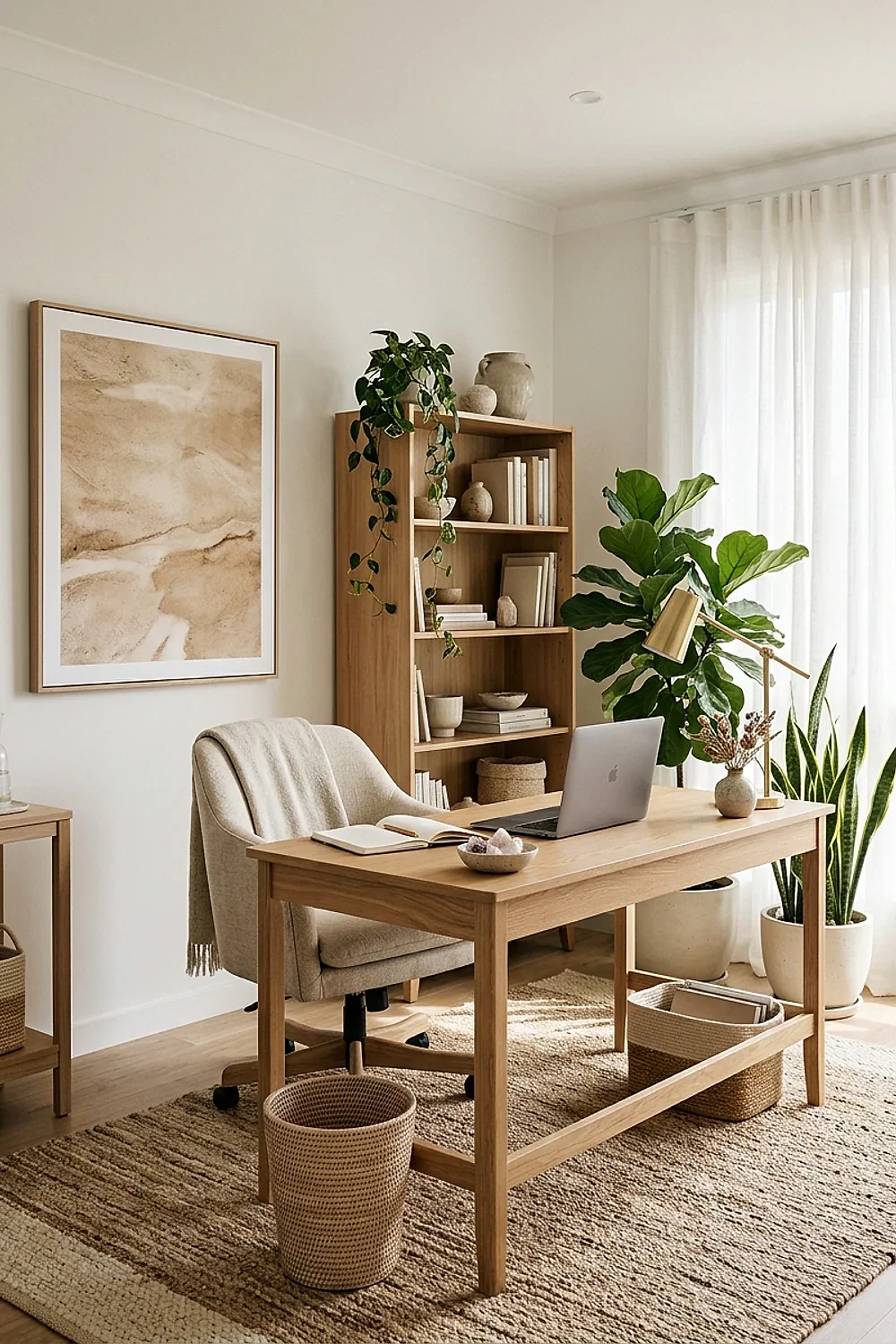
Feng Shui Home Office Updates on a Budget
Most guides push crystals, bells and bubbling fountains, yet a feng shui home office mostly comes down to where the desk sits and what’s behind your chair. Those two decisions cost nothing.
This makeover covers 13 changes, ordered roughly from free to modest, with price points and DIY swaps. The whole job can land under $500, and most rooms need far less.
Why a feng shui home office doesn’t have to break the bank
The main idea is the “command position”: you sit facing the door (on a diagonal, not in line with it), with a solid wall behind you. From there you can see who walks in, and nothing sneaks up on your back. That’s it. Everything else supports that one setup.
Here’s the rule of thumb worth memorizing: position first, props last. A $400 crystal tree can’t rescue a desk that faces a blank wall, but a free 90-degree turn can fix the same room.
A budget feng shui home office rests on four things:
- A desk that faces the door from a diagonal
- A supported back, meaning a wall or a heavy backdrop
- Warm, even light without glare
- Closed storage and a clear floor, so nothing piles up
Here’s a counterintuitive bit. Sitting directly in line with the door is considered worse than sitting off to one side, because the straight path feels exposed. A corner diagonal is the sweet spot.
The before and after: what a typical makeover changes
Picture the usual starting point: a desk shoved against a window with the chair’s back to the door, a pile of paper on the left, and a bare overhead bulb. By a gray 4pm in February, the room looks like a waiting area.
The after is quieter. The desk sits on a diagonal, a lamp pools amber light on the surface, and the paper disappears into a drawer. Nothing about it looks mystical, and that’s the point.
The lesson from most of these rooms is that the cheap changes do the heavy lifting. Furniture position, light and closed storage deliver the visible shift, and decorative extras only finish it.
The feng shui home office fixes, in the order to do them
Swing the desk into the command position
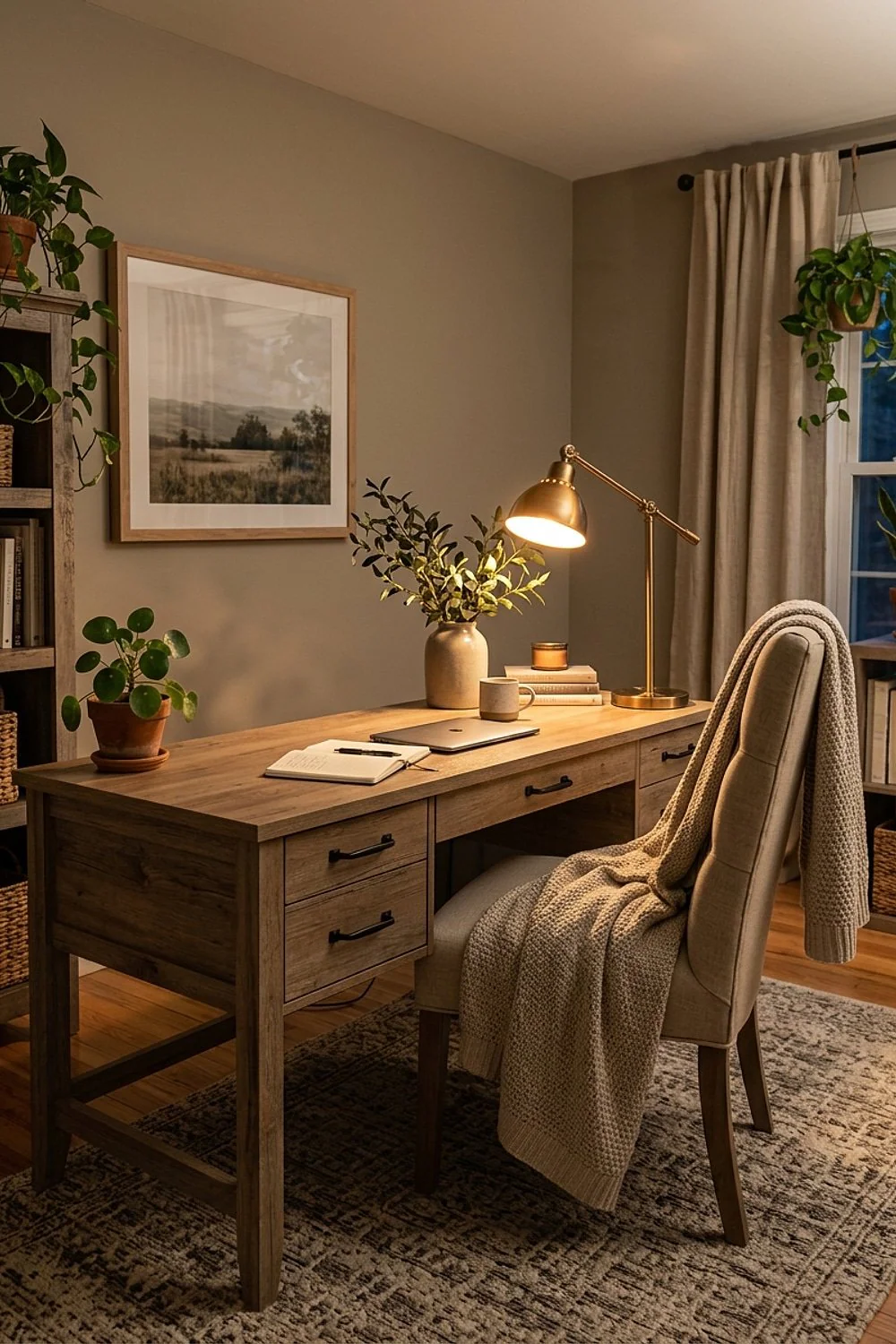
Turn the desk so the chair faces the door on a diagonal, with a solid wall behind it. The price is $0 and the job takes about ten minutes, plus a helper for the heavy end. It gives you a view of anyone arriving without twisting around.
This suits almost any room over 80 square feet. Leave at least 3 feet between the chair and the wall, and don’t line the desk up with the doorway itself, since a straight line reads as exposed.
A high-back chair with a firm backrest
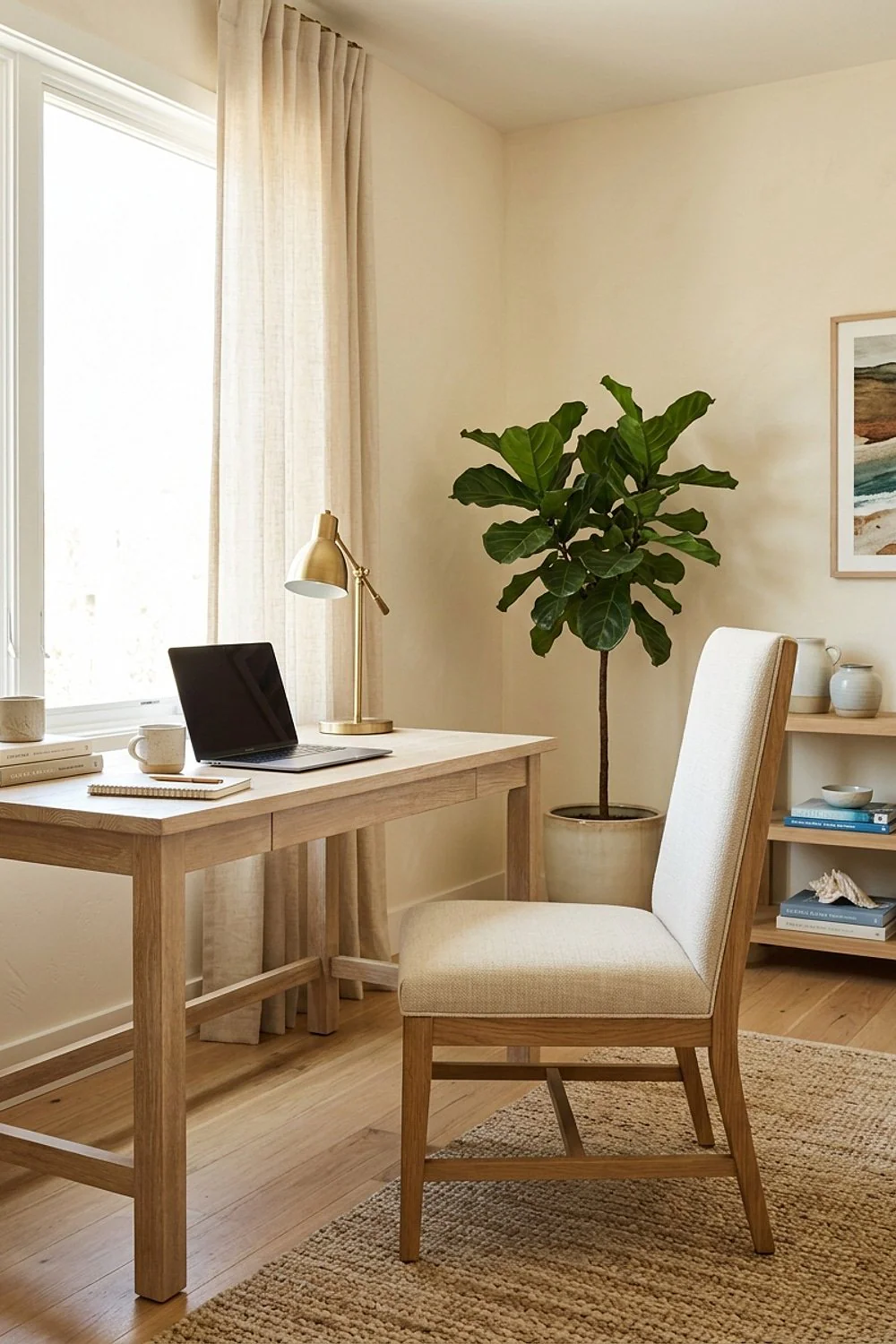
A chair back that rises past the shoulder blades gives you the sense of support the whole practice depends on. Look for a back at least 20 inches tall, firm mesh or padding, and a seat height that keeps knees near 90 degrees.
Used office-furniture dealers sell ergonomic chairs for roughly half of retail, and this is the one spot worth spending more. Skip anything with a wobbly gas lift. Sit and lean back for a full minute before you hand over cash.
A warm 2700K lamp for the gray hours
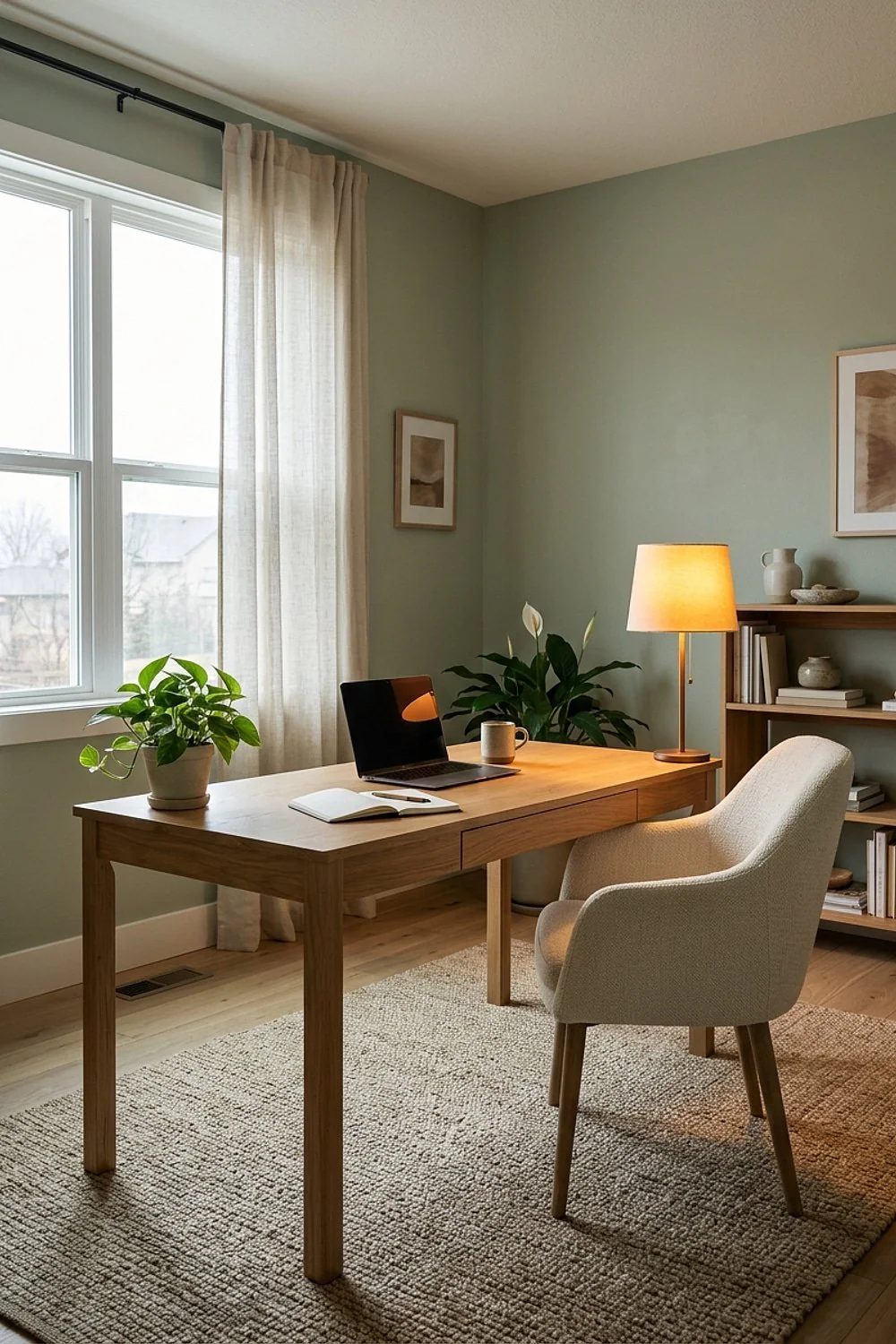
A desk lamp with a 2700K to 3000K bulb throwing around 800 lumens fixes flat, bluish afternoon light. Expect to pay $20-$30 at a big-box store, or less secondhand. It suits north-facing rooms and windowless corners best.
Place it opposite your writing hand to avoid shadows on the page. And ditch the buzzing fluorescent tube overhead. That faint 60-hertz hum wears on you more than you’d guess.
A wood desktop with rounded corners
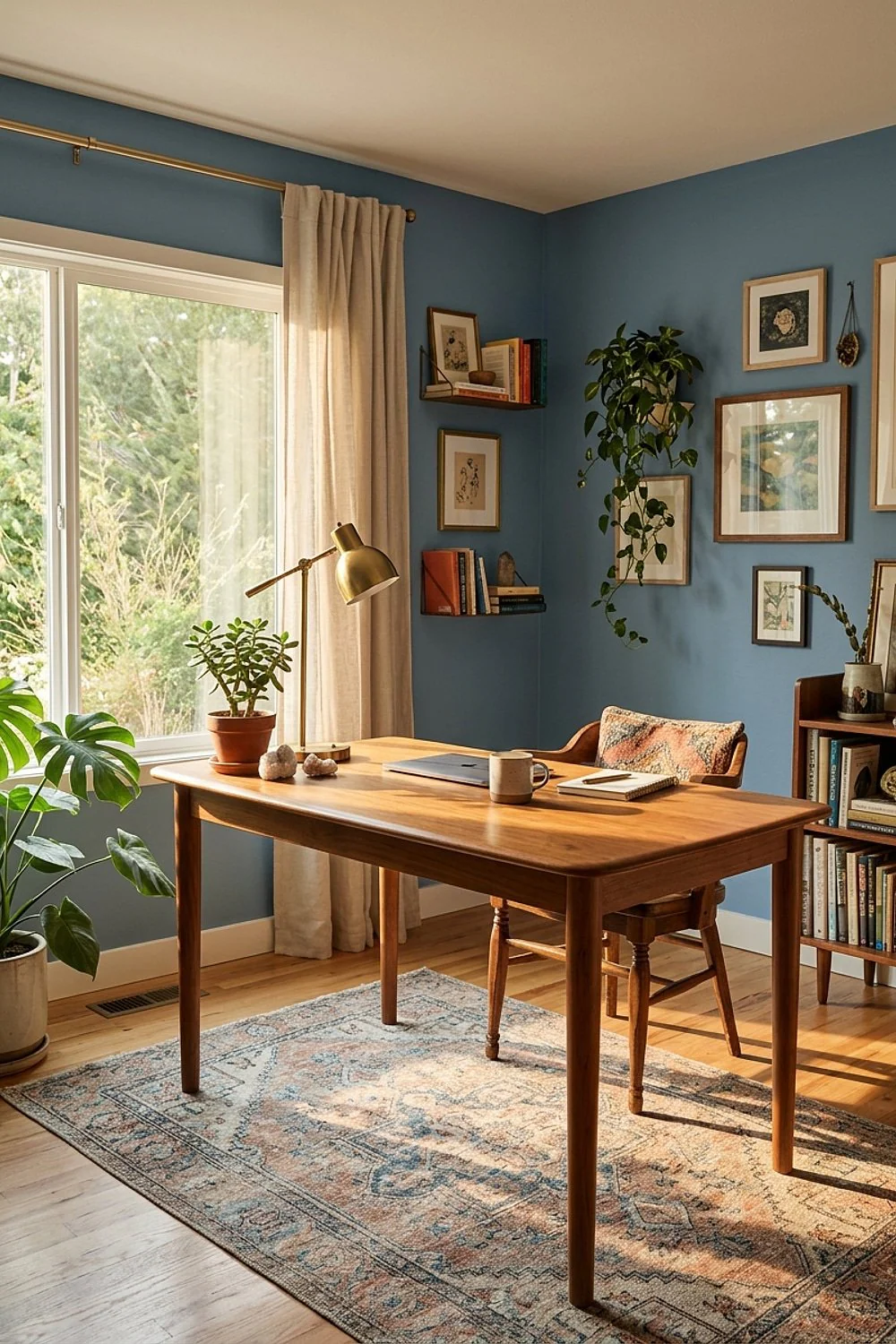
Solid wood or wood veneer beats glass here. It grounds the room with the wood element and feels slightly warm under your forearms, while glass stays cold and shows every fingerprint.
Check the corners too. Sharp points aimed at your seat are the “poison arrows” the tradition warns about. Sanding square edges to a half-inch radius, or sticking on clear corner guards, solves it without buying a new desk.
A two-drawer filing cabinet to hide the paper
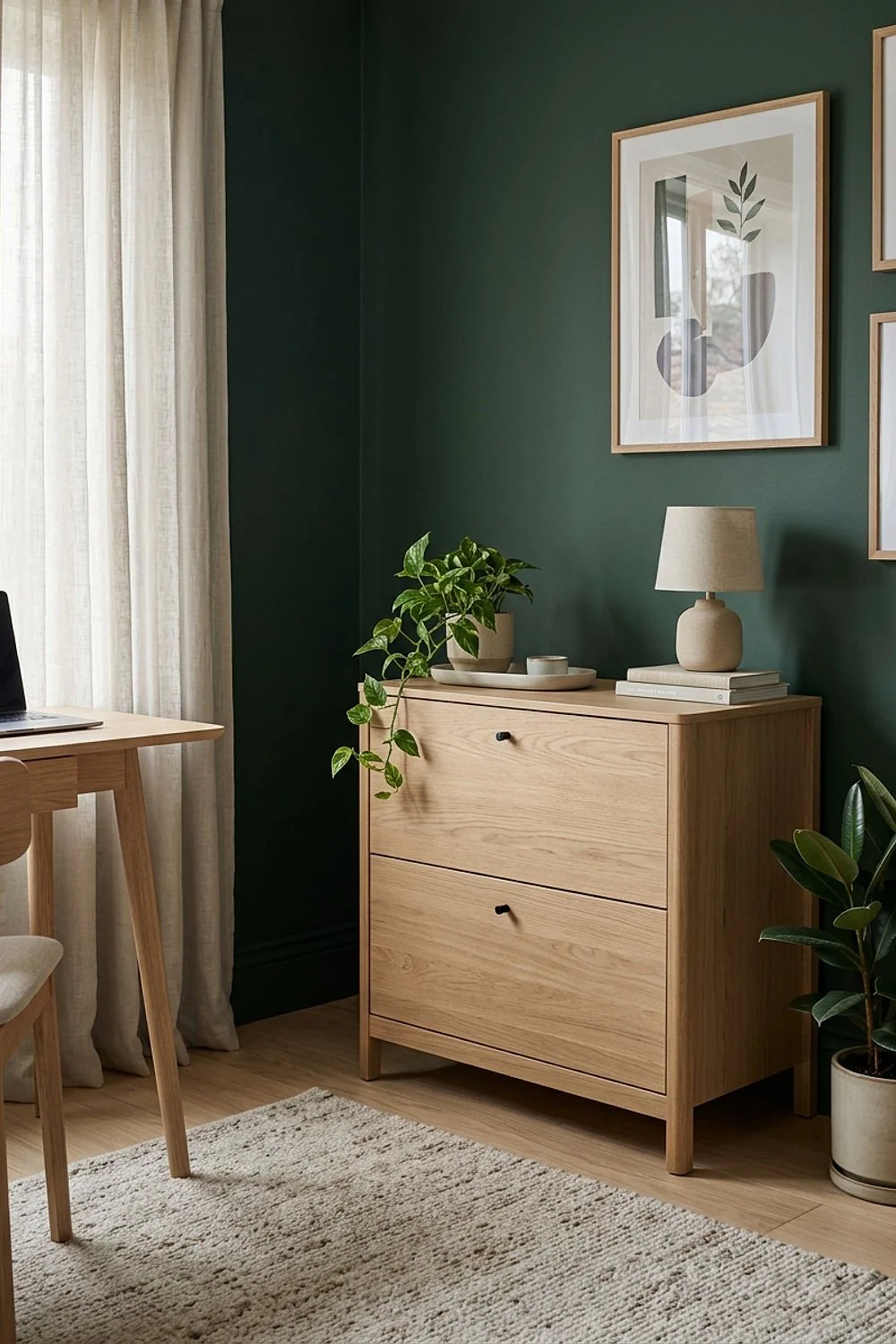
A secondhand two-drawer cabinet runs about $30-$40 and swallows the paper that otherwise colonizes the desk. Closed storage matters because visible clutter is exactly what this practice tries to calm. A drawer that shuts with a soft thud is also oddly satisfying.
It’s the right call for paper-heavy work. Avoid open bins, which just display the mess, and keep the desktop to three objects or fewer.
One quart of muted green or warm greige
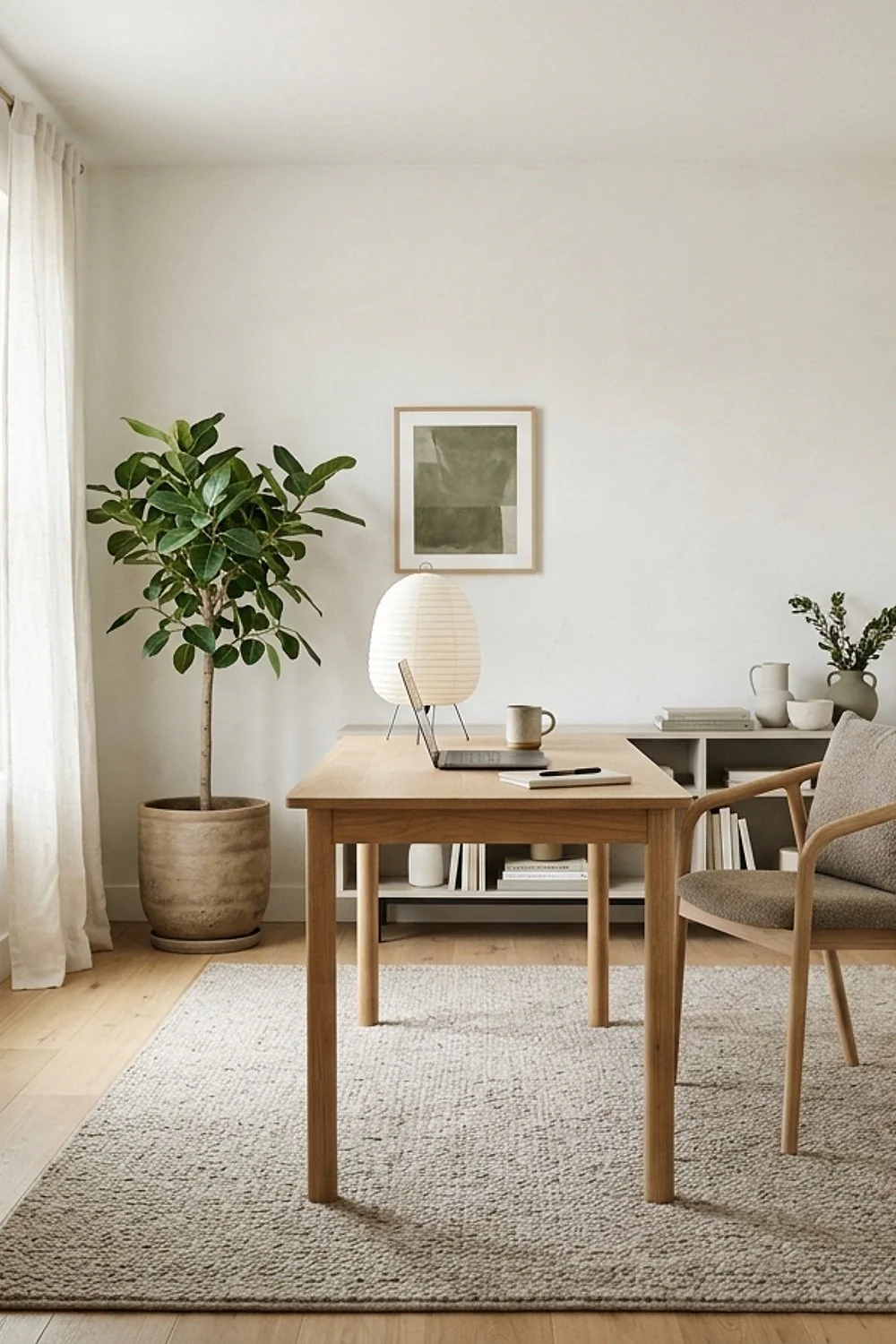
A quart of matte paint covers about 100 square feet, enough for the wall behind the desk and one more. Muted sage or warm greige steadies the room without the sterile glare of stark white. Brush a 2-foot test square and check it at 9am and again at 4pm.
Avoid saturated red behind a desk. Over an eight-hour day it reads as agitating, not energizing.
A pothos or snake plant in a 6-inch pot
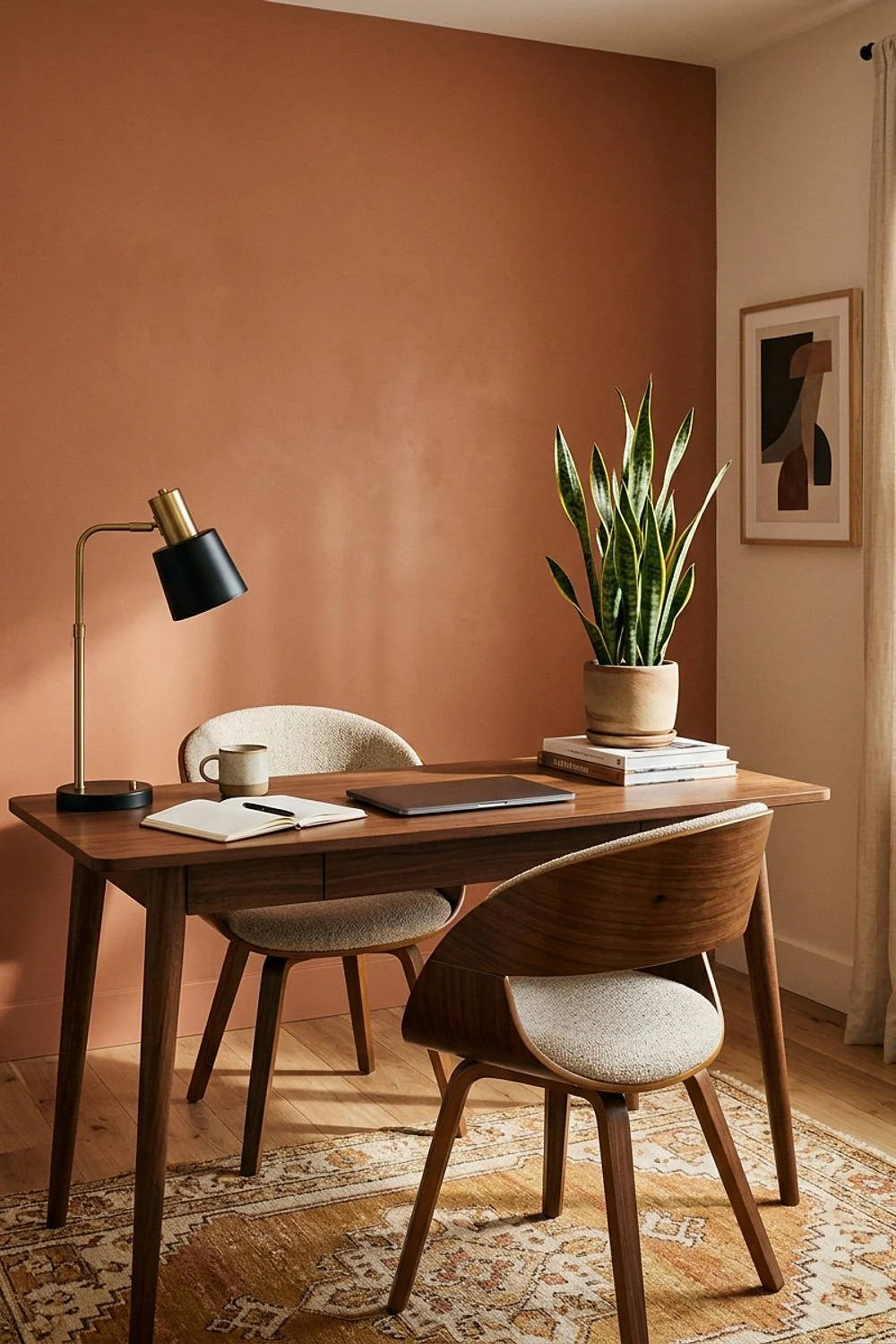
A pothos or snake plant brings the living wood element for $12-$20 at a hardware store, or nothing if a friend hands over a cutting. Both tolerate low light and forgetful watering, so they suit busy people and dim corners.
Set it at the far corner, not on the desk where it blocks the screen. And skip dusty fake plants. A leaf that’s actually alive is the whole point.
A desk sized to the room, not the showroom
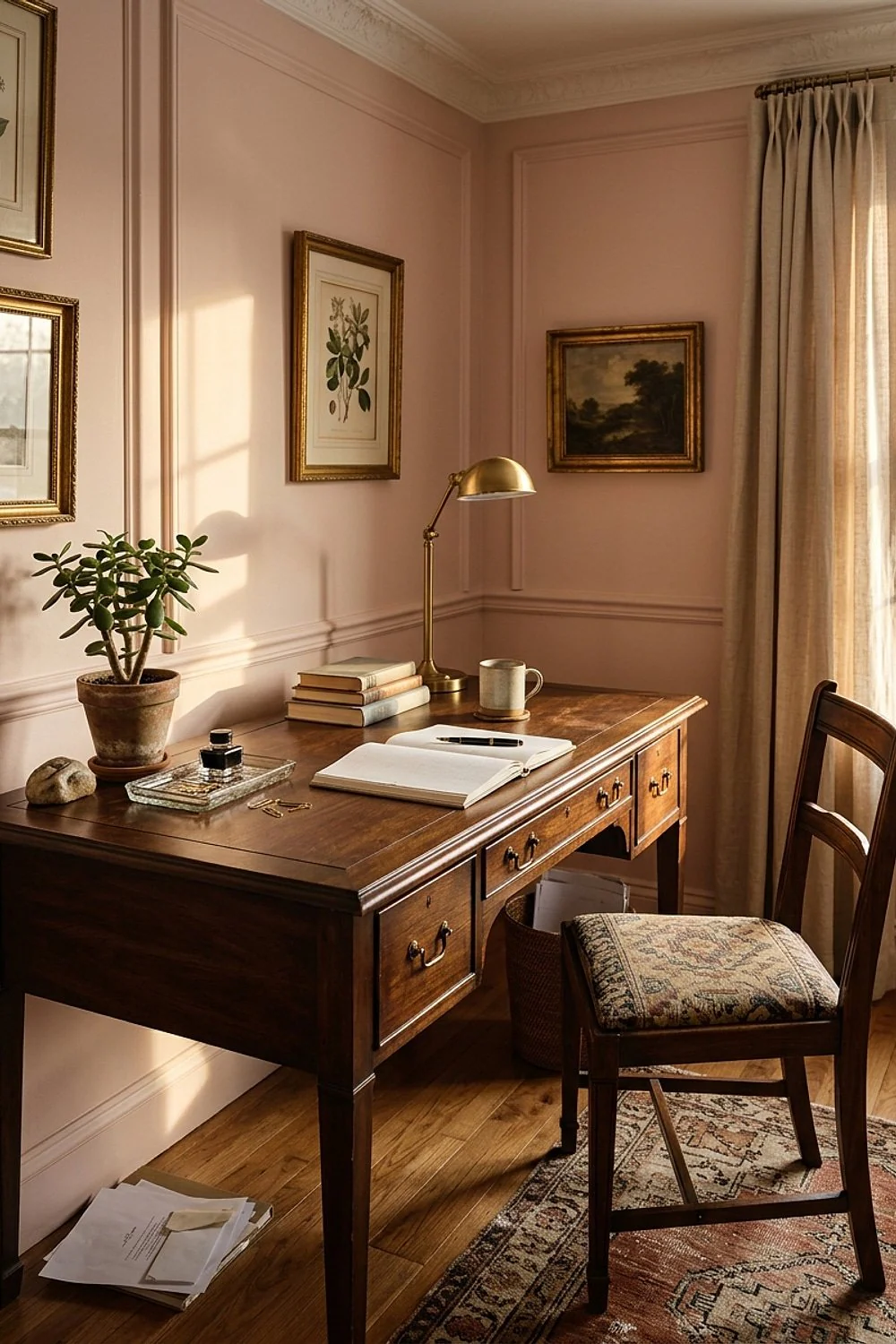
Most small rooms are well served by a work surface 48 to 60 inches wide and 24 to 30 inches deep. In a 9-by-10 space, anything deeper crowds the walking path and makes the room feel stuck. Furniture that overwhelms a room blocks movement, and movement is what the practice cares about.
Mark the footprint on the floor with painter’s tape before buying. An L-shaped desk only makes sense in a room of at least 12 by 12 feet.
A thrifted mirror, hung with care
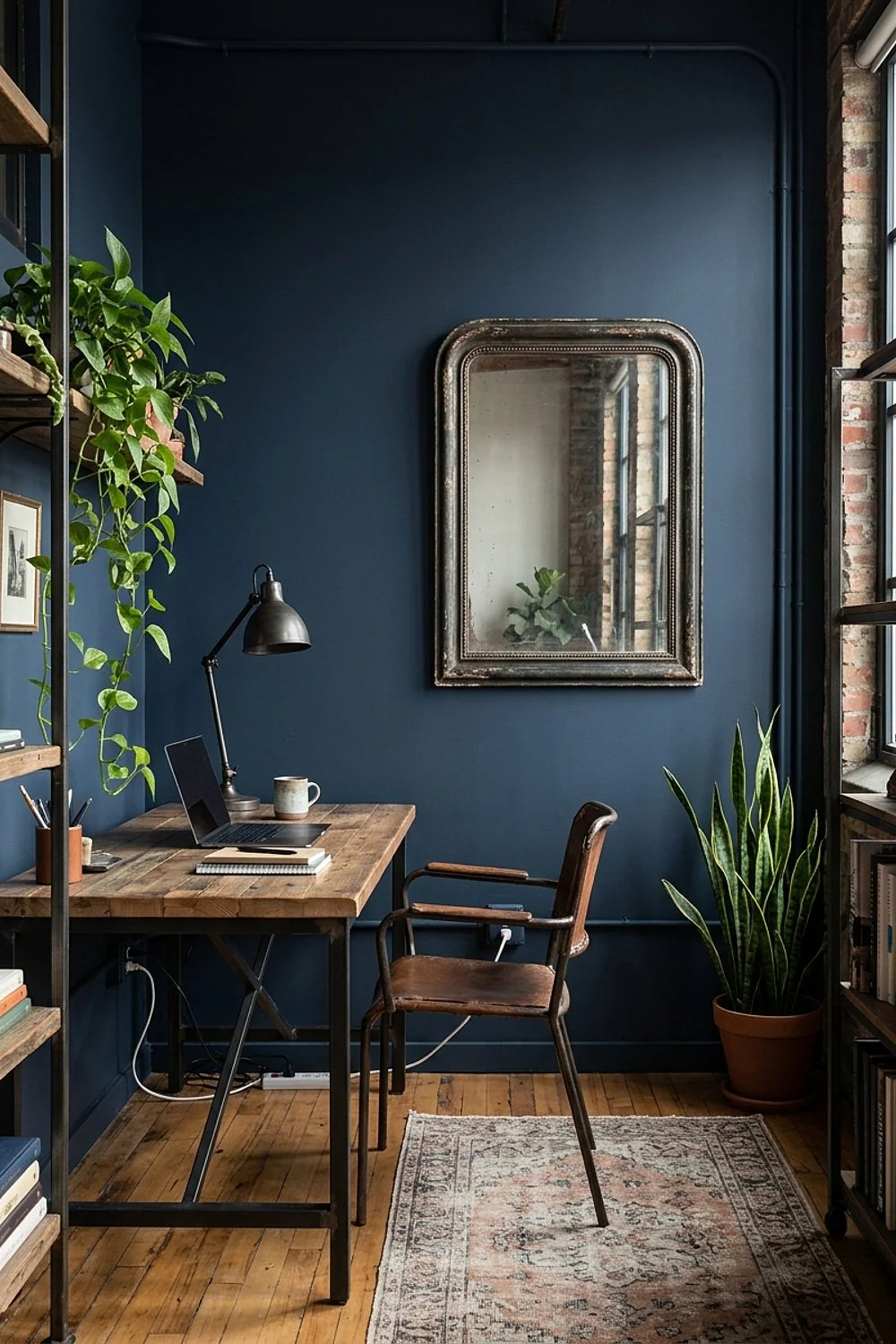
A framed mirror from a thrift shop, about $10-$20, is useful or a mistake depending on placement. Hung where it shows the door from your seat, it stands in for the command position when the desk can’t turn.
The mistake is hanging it behind you or opposite the screen, where it doubles the glare and bounces movement into your eyeline. Check by sitting down and looking at what the glass shows.
30 inches of clear floor behind the chair
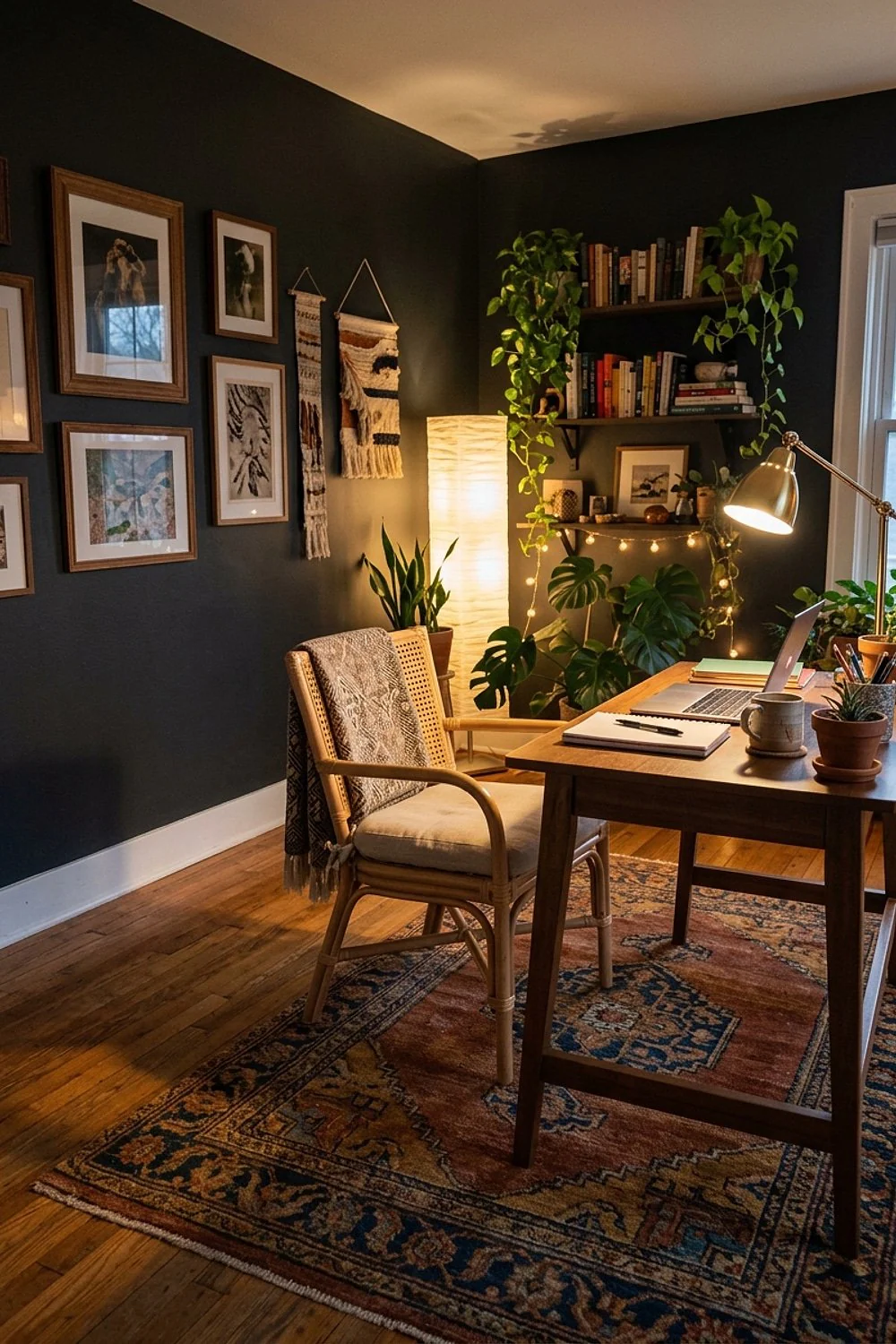
Keep 30-36 inches behind the chair empty so it rolls back freely and the path to the door stays open. This helps spare-bedroom offices most, where boxes love to gather behind the desk. A blocked path makes a room feel stalled.
Avoid stashing storage totes back there “just for now.” Cords count too. A $6 cable tray or a few adhesive clips keeps them off the floor.
A floating shelf off to the side
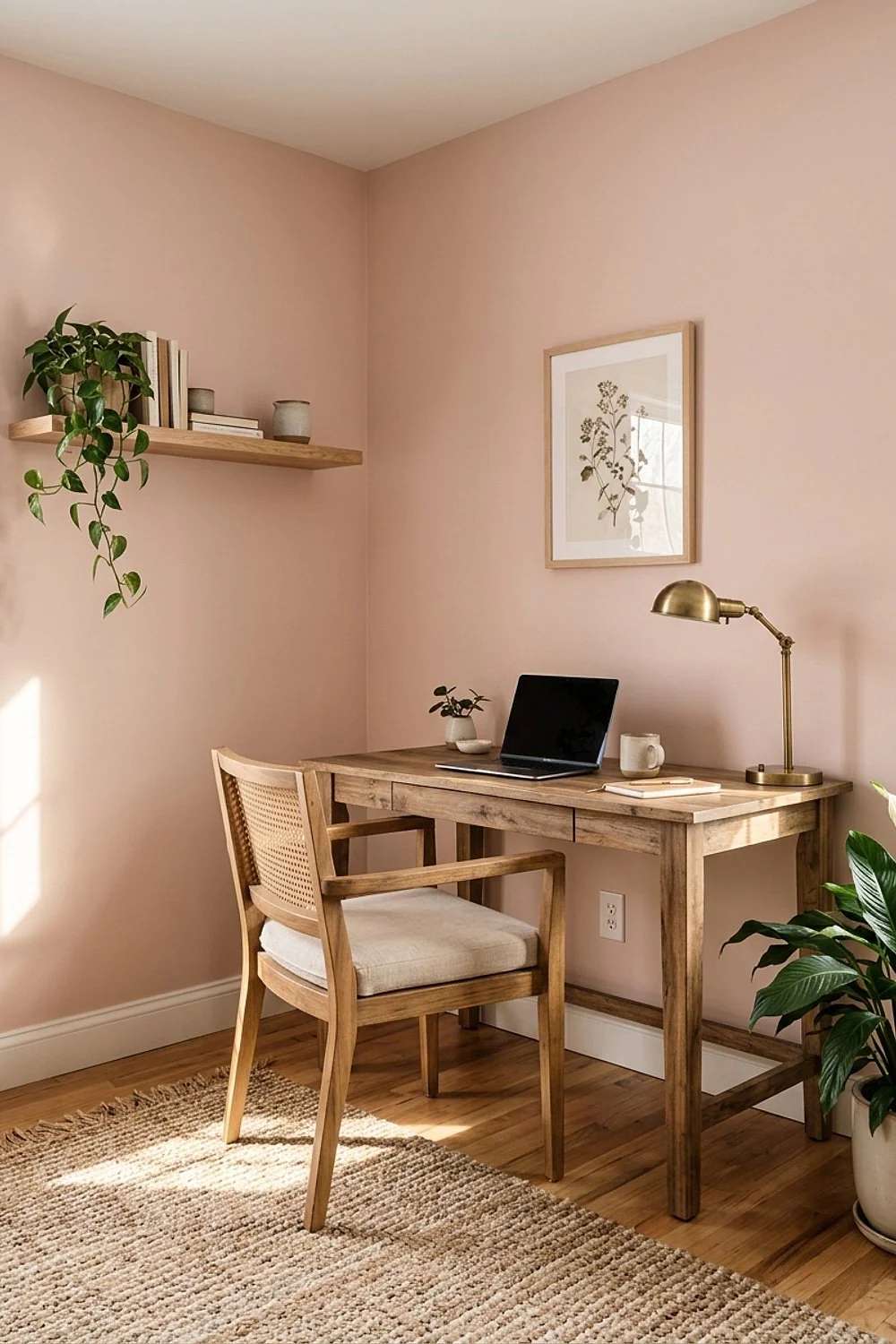
A 36-inch pine shelf costs about $20-$35 and holds books without crowding the desk. Mount it on a side wall at 60 to 66 inches from the floor, never directly above your head, where heavy mass reads as pressure.
Use wall anchors rated for at least 50 pounds if there’s no stud. And limit it to one row of books and one object, because a packed shelf turns into the clutter you just cleared.
A cork desk pad that settles the surface
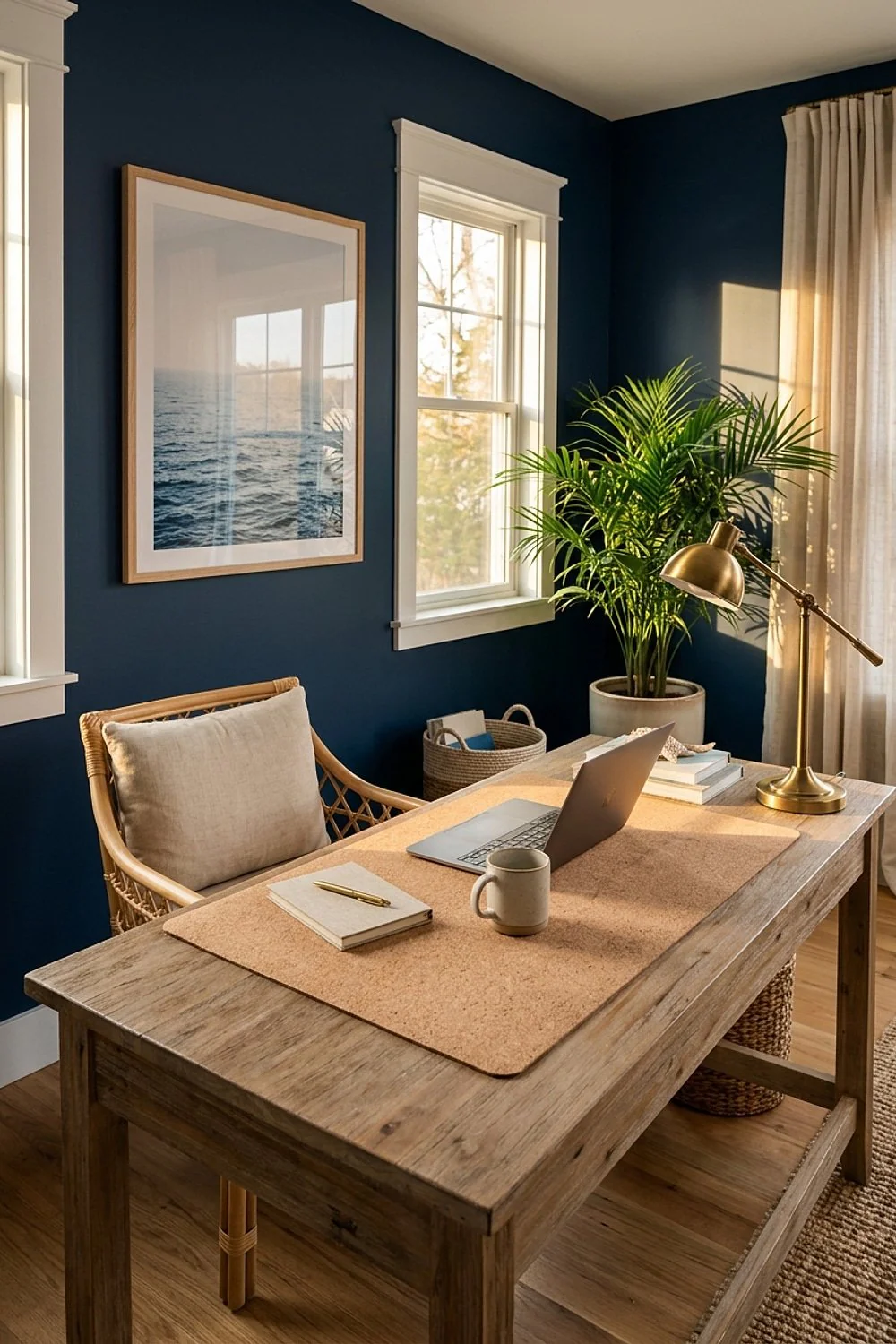
A 3 mm cork pad feels grainy and slightly springy under your fingers, and the soft cellular material dulls the clatter of a keyboard instead of bouncing it back off a hard desktop. Cork also adds a natural, earthy texture, so it fits the wood element and calms a glossy or glass surface.
It suits heavy typists, shared rooms, and anyone whose desk echoes, especially a bare laminate top. Avoid faux-leather pads. The coating peels within a year or so and leaves flakes across the keyboard and wrists.
A lined curtain panel behind the chair
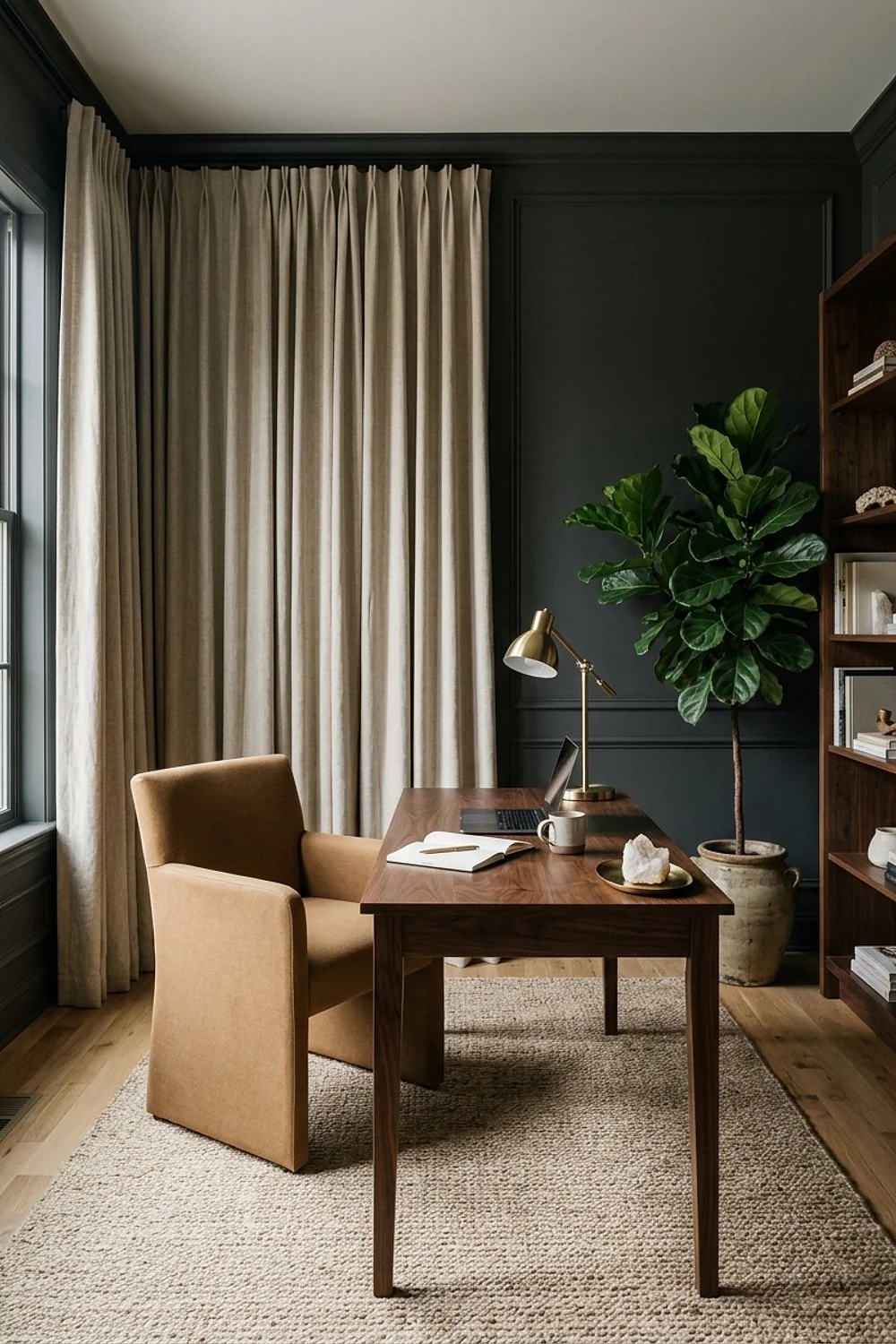
A window directly behind the desk leaves your back unsupported. A lined curtain panel, about $20-$40, stands in for a wall when moving the desk isn’t possible. It also blocks drafts and takes the edge off morning glare.
This is the fix for bedrooms and rentals. Skip sheer panels, because they let the light and the sense of exposure straight through.
What to buy first
Secondhand channels cover almost the whole list. The chair, cabinet, desk and shelf are all easy to find used, and wood outlasts particleboard.
- Facebook Marketplace and Craigslist: search “office chair” or “filing cabinet” and filter within 10 miles.
- Habitat for Humanity ReStore: solid wood desks, often $40-$90.
- Office liquidators and school auctions: ergonomic chairs at roughly half of retail.
- IKEA‘s As-Is section: floor models with minor scratches, marked down 20-50%.
- Thrift stores: mirrors, lamps and plant pots, usually under $15 each.
Shop at the end of the month, when people moving out sell quickly. And bring a tape measure.
DIY vs store-bought: honest comparison
DIY wins on the small items. A sanded desk corner, a pothos cutting, a hand-hung shelf and painter’s-tape layout all match the store version at a fraction of the cost.
Store-bought wins on anything you sit on or plug in. A new desk is the splurge, right? Actually, no, scratch that. The chair is the splurge, because a bad desk annoys you but a bad chair hurts you.
Lamps sit in the middle. A $25 new LED lamp with a stated 2700K rating beats a vintage lamp rewired at home, unless the wiring is already safe. Paint is a toss-up, though a sample pot costs less than a regret.
Mistakes that keep showing up
Most overspending traces back to buying decor before settling the layout. Fix the order of operations and half the budget stays in your pocket.
- Buying symbolic objects first, such as fountains and crystals, before the desk is positioned.
- Choosing a glass desk, which shows smudges and feels cold.
- Crowding a small room with an oversized desk.
- Hanging a mirror that reflects the screen.
- Letting open shelving fill with paper.
Each one is fixable in an afternoon, so don’t panic if your room already has a few.
What the full makeover costs
Here’s a realistic tally for a spare-room office, using secondhand where it makes sense:
- Desk position, clear floor and layout: $0
- Used ergonomic chair: $60-$150
- Lamp: $20-$30
- Filing cabinet and floating shelf: $50-$75
- Paint sample plus a quart: $20-$35
- Plant, cork pad, mirror and curtain panel: $60-$100
That adds up to about $210-$390 for most rooms, with the chair as the biggest line. A room that already has a decent chair and wood desk can finish under $150.
Conclusion
A strong feng shui home office is built on placement, support, light and closed storage, and nothing in that list needs a big budget. The free steps do more than the shopping does, so start there and buy only what the room still lacks.
Save or pin this list so it’s ready when you start. Then measure the room and turn the desk into the command position first, before spending a dollar.
Frequently asked questions
Can a feng shui home office work in a bedroom corner?
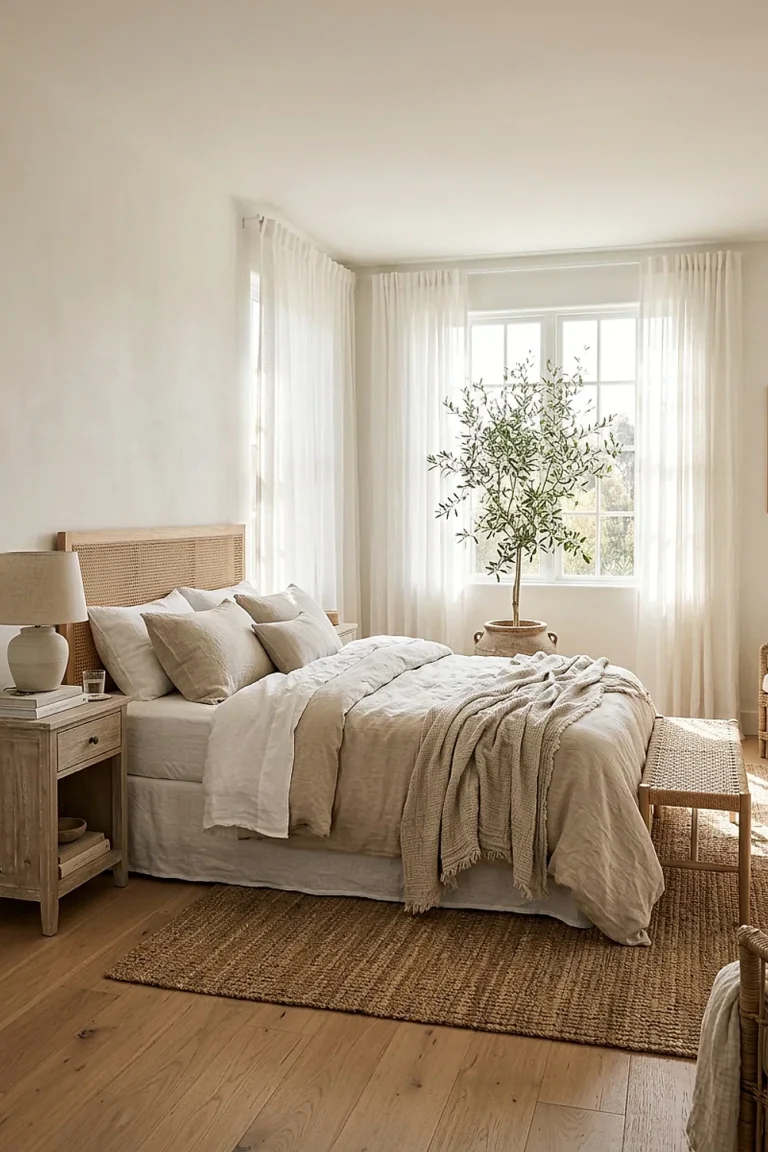
Yes, with a few adjustments. Face the desk away from the bed if possible, or use a folding screen or bookcase to separate the zones. A feng shui home office in a bedroom benefits most from closed storage, so work papers don’t stay in view at night.
What if the desk can’t face the door?
Use a small mirror positioned so it shows the doorway from your seat. A convex desk mirror of about 4 inches works too. This is the standard workaround when the layout won’t change.
Do I need crystals or a fountain?
No. Those are optional extras, and the core setup works without them. For a budget feng shui home office, spend on the chair and lamp before any symbolic objects.
Which colors are best behind the desk?
Muted earth tones such as sage green, warm greige and soft clay suit most rooms. They keep the wall calm without feeling stark. Avoid saturated red or glossy black directly behind your chair.

One Comment