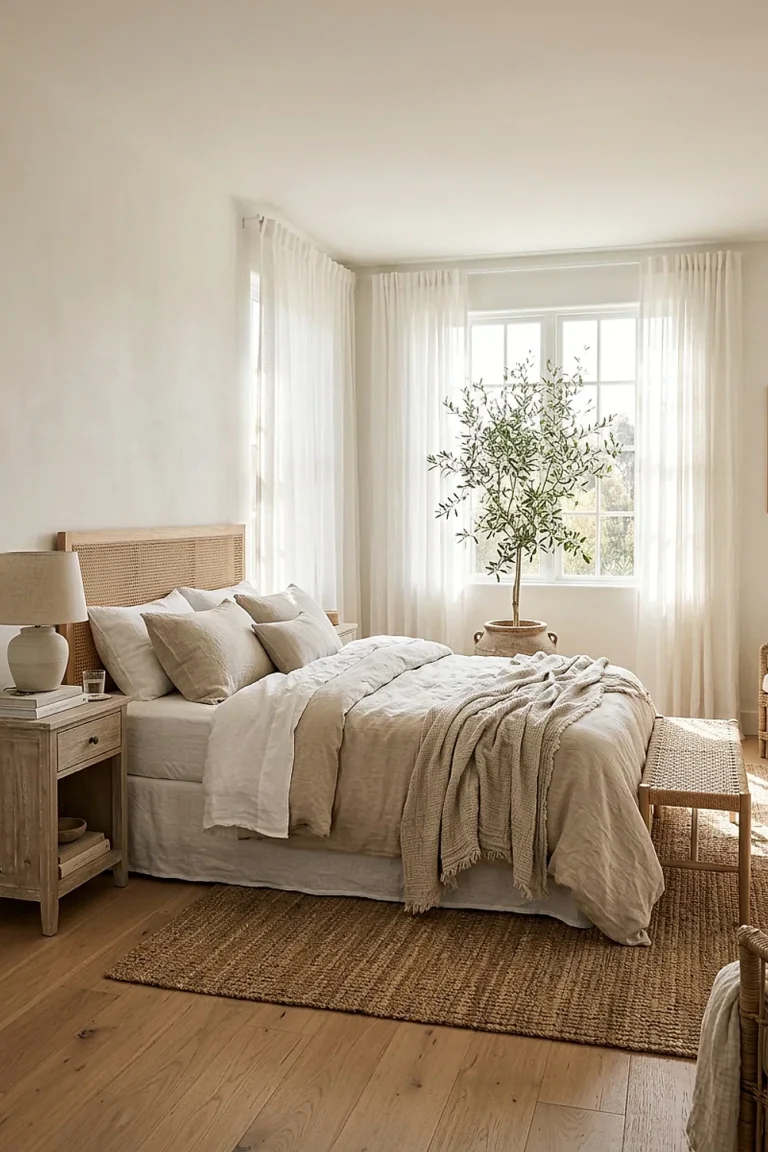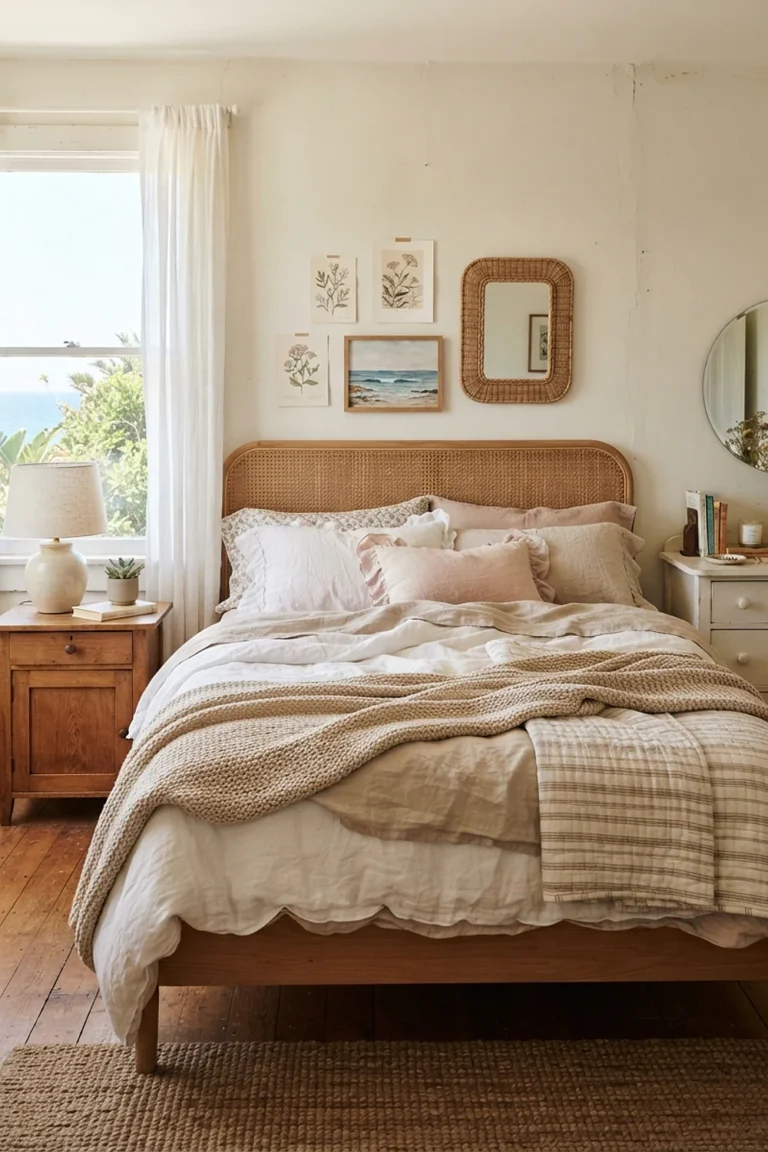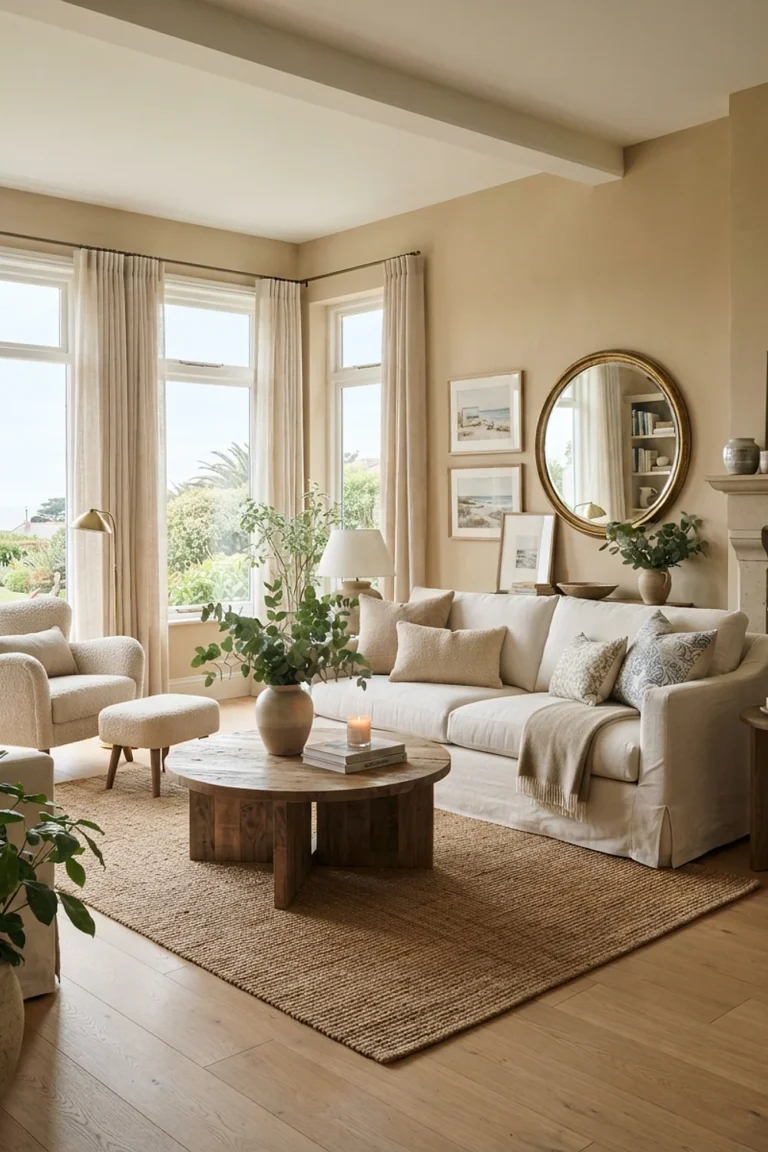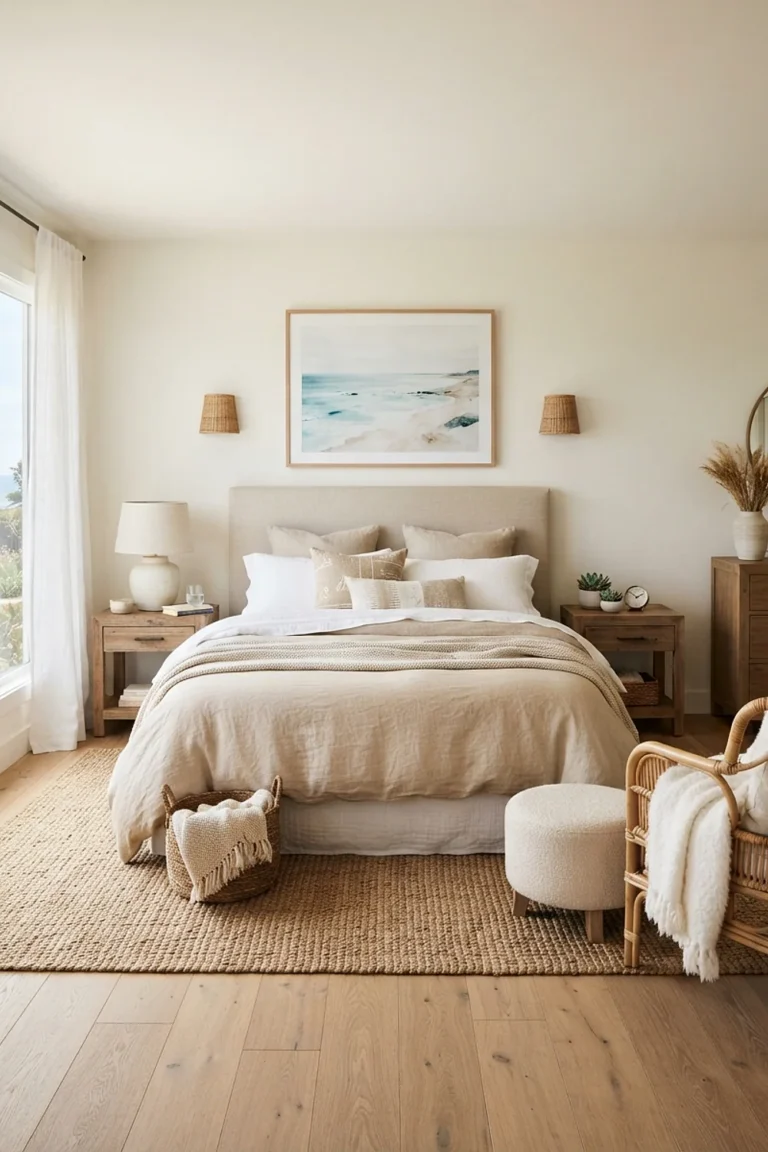
Non Toxic Nursery Ideas for Every Room
By the end of this walkthrough, a bare builder-beige bedroom can become a calm, low-chemical nursery with a plan for every wall, floor, and corner. These non toxic nursery ideas run zone by zone, from the crib to the closet, so you can shop in the order that matters most.
The “before” is familiar: wall-to-wall carpet with a synthetic pad, vinyl mini blinds, a flat-pack dresser, and a fresh coat of paint that still smells at 4pm when the sun hits the west wall. The “after” is quieter, lighter, and easier to breathe in. Here’s how to get there.
Non toxic nursery ideas: Ideas worth borrowing
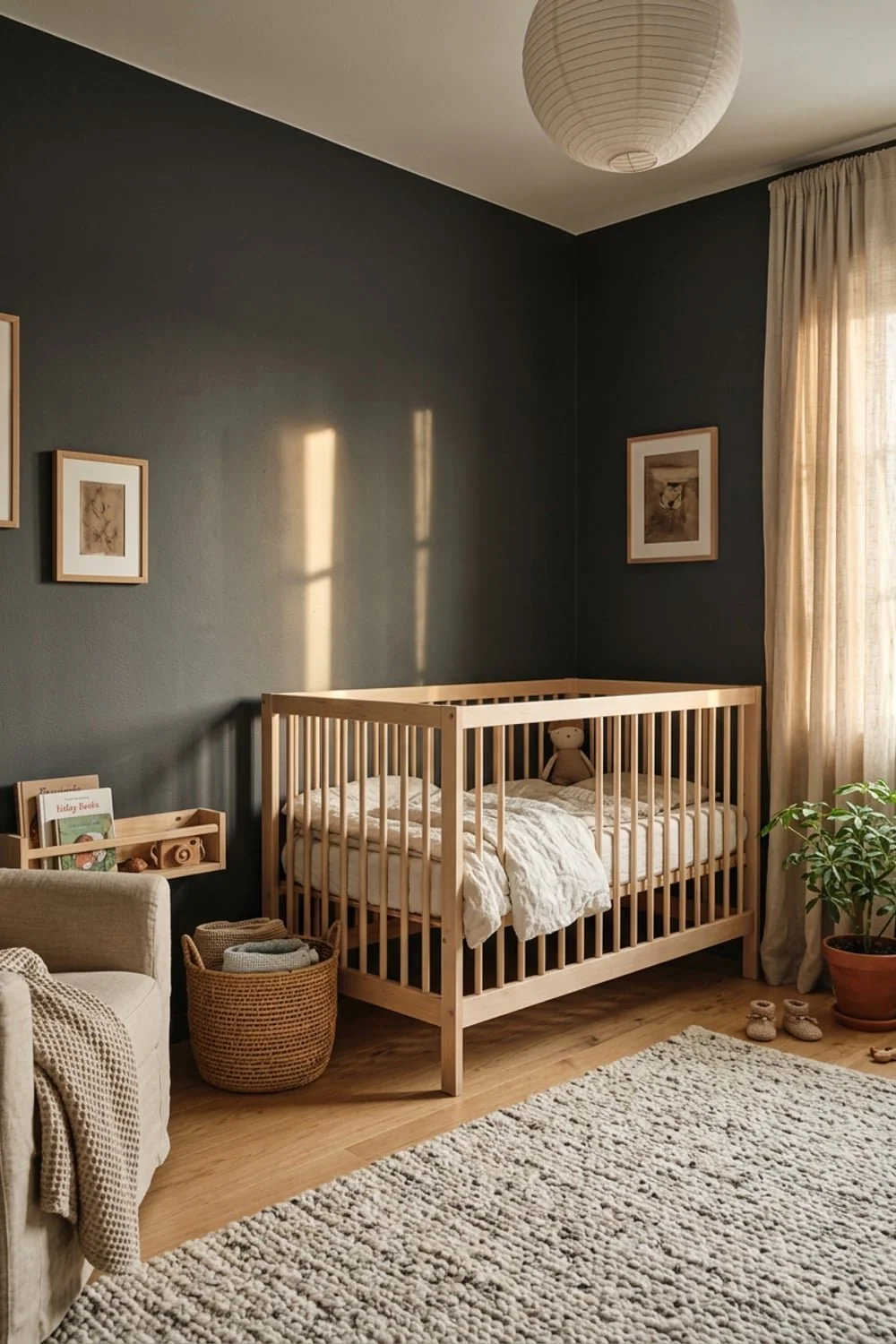
A solid wood crib with a water-based finish

A crib made from solid beech, birch, or maple has no layered glue, so there’s far less to off-gas than in a veneered panel version. Look for a water-based or plant-oil finish, and skip anything with a heavy lacquer smell when the box is opened.
Buy this one new. Older cribs may have drop sides or lead-era paint, and current safety rules exist for good reason.
A mattress built from wool, latex, or cotton

The crib mattress is where a baby spends 12 to 16 hours a day, so it earns the biggest share of your attention. A firm core of natural latex or coil, wrapped in organic cotton and wool, avoids the polyurethane foam and chemical flame retardants found in cheap options.
Check for GOTS or GOLS labels, and a firmness that doesn’t dent under your palm. Expect to spend $300 to $600 for a good one.
Fitted sheets in organic cotton or linen

Run your hand across a GOTS-certified cotton sheet and you’ll feel the difference: slightly crisp at first, then buttery after two washes. Wrinkle-free and “easy care” sheets often carry a formaldehyde-based finish, which is the exact thing you’re trying to dodge.
Buy two to three fitted sheets cut for a 28 by 52 inch mattress. Rotate them so one is always washed and waiting.
Zero-VOC paint on the walls

A zero-VOC, low-odor paint such as Benjamin Moore Natura or AFM Safecoat gives you color without the paint-fume headache. Read the fine print though: the base may be zero-VOC while the tint adds some back, so ask the store to mix with low-VOC colorant.
Pale, grayed greens and warm whites look best in a north-facing room, where light stays cool and flat all day.
Mineral or clay paint for a soft, matte wall

Mineral silicate and clay-based paints dry to a chalky, almost suede finish that hides drywall flaws better than eggshell. They contain no plastic binders, and the depth of color shifts as daylight moves across the wall.
This suits a single feature wall behind the crib, about 10 to 12 feet wide. Skip it on trim, since the finish scuffs under a toddler’s shoe.
Wallpaper without a vinyl face

Most cheap peel-and-stick wallpaper is PVC, which is the plastic you’re avoiding everywhere else. Choose a paper, non-woven, or grasscloth option printed with water-based inks, and hang it with a plain wheat paste.
Cover one wall rather than all four. A 20.5 inch wide roll of about 33 feet covers roughly 56 square feet, and that’s enough for a feature wall in a standard 10 by 12 room.
Solid hardwood, cork, or sealed concrete underfoot

Wall-to-wall carpet traps dust and holds the adhesive and pad underneath. If the existing floor is solid hardwood, a hard-wax oil finish is a gentle refinish choice, and cork is a warm, springy option for a first-time install.
Avoid laminate with a click-lock core in a nursery, because the fiberboard under it can off-gas for weeks. Let any new flooring air out for at least a month.
A washable wool or cotton rug, about 5 by 8 feet

A flatweave wool rug resists dust mites better than shag and takes spot cleaning without a fuss. At 5 by 8 feet, it sits under the glider and half the crib zone, with at least 18 inches of bare floor left at the walls.
Skip anything labeled stain-resistant, since that usually means a fluorinated treatment. A rug that can go in the machine, like a washable cotton one, is worth the trade-off in softness.
A felt and natural rubber rug pad

Rug pads are a quiet source of trouble. Many are PVC or vinyl-backed, and some stain hardwood floors after a few months of contact.
A pad made of natural rubber bonded to felt grips firmly and lets the floor breathe. Cut it 1 inch smaller than the rug on every side so the edges don’t curl and catch a toddler’s foot.
A solid wood dresser as the changing station

Particleboard dressers glued with urea-formaldehyde are one of the biggest chemical contributors in a nursery. This is also where the mistake people make most often happens: they paint the room and assemble a brand-new flat-pack dresser in the same closed-window weekend, a week before the due date.
Do the opposite. Paint four to six weeks ahead, unbox and air out furniture in a garage or on a porch, and keep the window cracked.
A changing pad cover that isn’t vinyl

The changing pad itself is a foam slab, so the cover is your barrier. Choose a removable cover in organic cotton terry or bamboo-blend jersey, and keep two on rotation because spills happen at the worst times.
Strap the pad to a dresser top that’s at least 20 inches deep, so there’s room for the pad and a hand on the baby at all times.
A glider cushioned in wool or latex
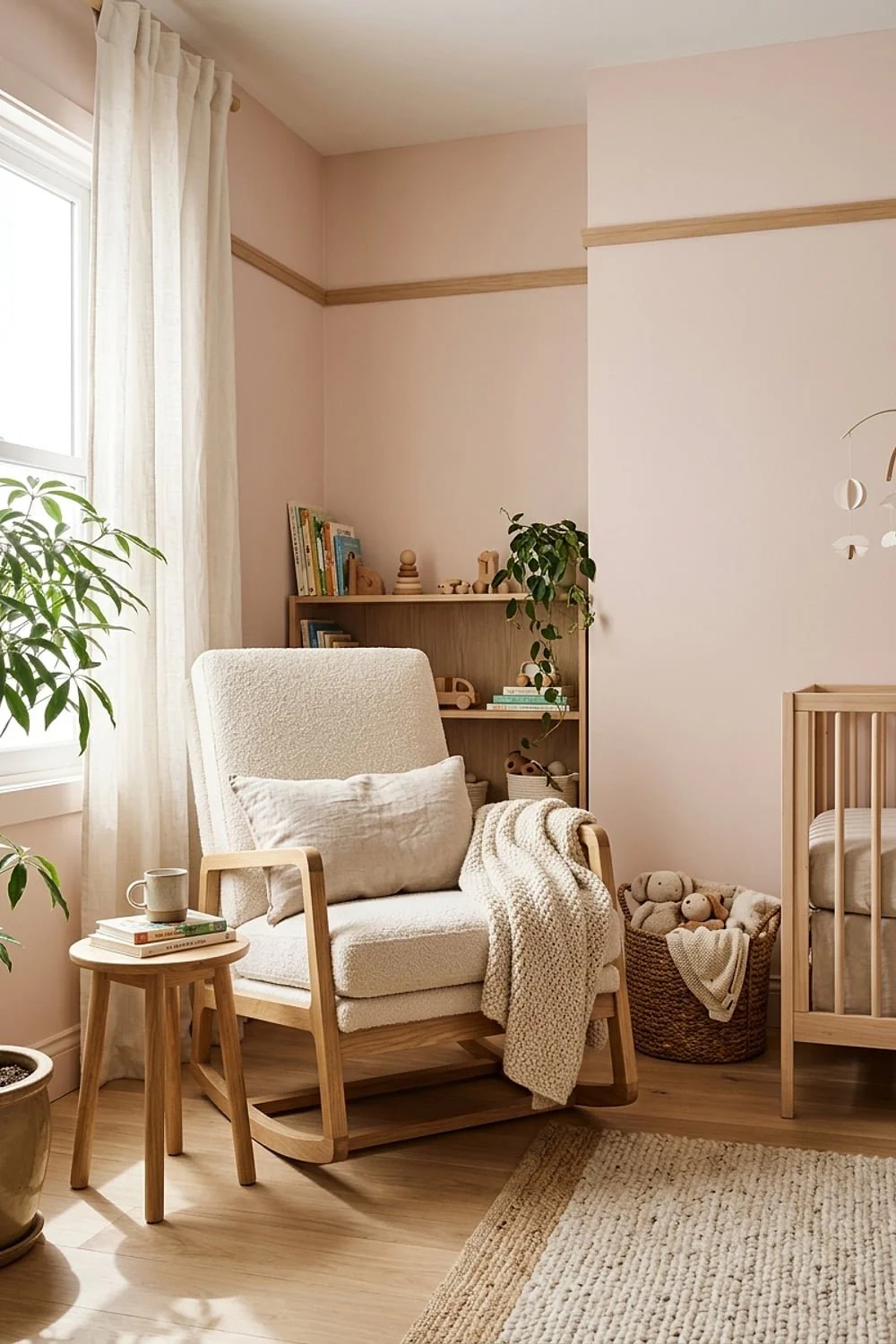
Upholstered chairs are one of the last places flame retardants hide, especially in older foam. Look for a glider with a solid wood frame and cushions filled with wool, natural latex, or a certified foam, and a tag that states it’s free of added flame retardants.
Test the seat height: your feet should rest flat on the floor with knees bent near 90 degrees. A 29 inch wide chair fits a corner without crowding the crib.
Linen or organic cotton curtains, floor length

Unlined linen filters afternoon light into a soft glow, and it gets better with every wash because the fibers loosen and drape more gently over time. Hang the rod 4 to 6 inches above the window frame and let the panels brush the floor, which makes a 96 inch ceiling feel taller. This suits rooms with standard windows and a renter’s budget.
Skip curtains sold as “wrinkle-resistant” or “stain-proof.” Those finishes are chemical, and you’ll breathe them every night. Choose untreated linen and accept some creases.
Blackout without the vinyl

Old vinyl mini blinds are a classic trouble spot, since some made before the late 1990s contain lead. Replace them with a wool-felt shade, or line linen curtains with a tightly woven cotton blackout layer.
Naps during a bright August afternoon are the real test. Cover the gaps at the sides, since light leaks there before it leaks through the fabric.
Warm LED bulbs and a paper lantern shade
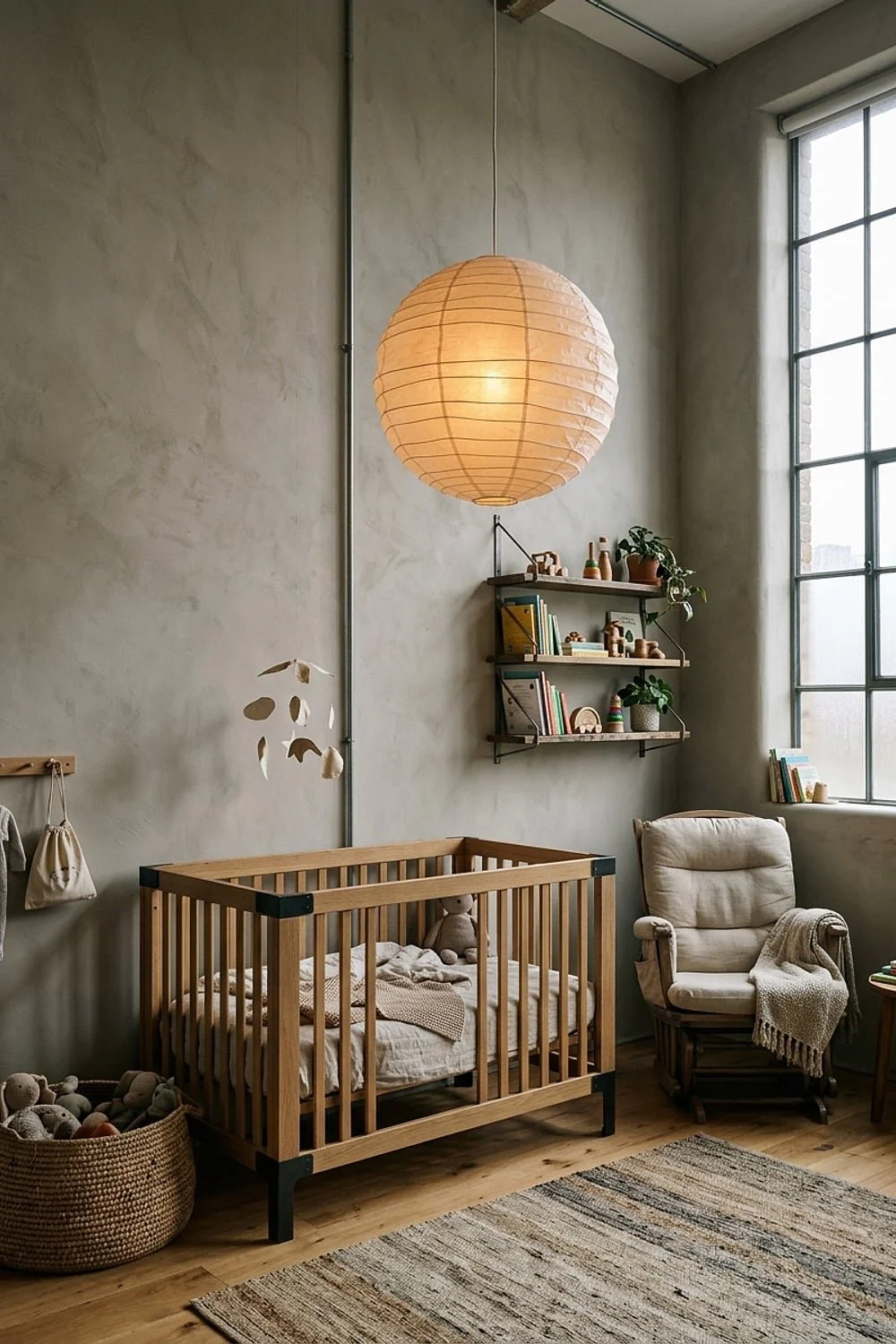
Pick bulbs at 2700K or lower so the room reads as amber at night, not clinical blue, since warmer light disturbs drowsy eyes less. A dimmable lamp on the dresser or a rice-paper lantern throws diffuse light, which keeps a 3am feeding from jolting everyone awake. This suits small rooms with no overhead dimmer.
Use a 40 to 60 watt equivalent, and keep cords behind the furniture, at least 3 feet from the crib. Avoid bright “daylight” bulbs, which are easy to grab by mistake.
Fresh air first, a HEPA purifier second

Here’s a counterintuitive fact: houseplants do very little for indoor air quality at normal home densities. You’d need dozens per room to measure a change, so open the window for 10 minutes a day and let real air move.
A HEPA purifier rated for a 150 to 250 square foot room handles dust and smoke on days when outdoor air is poor.
Toy storage in wood and wool felt

Plastic bins and cube drawers with laminate fronts are the usual default, but a basket made of undyed cotton rope or wool felt softens a corner and holds up. A 15 inch cube fits comfortably on a low shelf and is light enough for a toddler to pull out alone.
Choose open storage over lidded lids. A heavy lid is a finger hazard.
A solid wood picture ledge for books

Front-facing book display makes covers part of the decor, and a 36 inch long, 3 inch deep ledge in oak or ash holds a dozen board books. Mount it at 36 to 42 inches high so a sitting toddler can reach the lowest edge.
Finish it with a plant-based oil rather than glossy polyurethane, since little teeth will find the edge eventually.
Art in wood frames with real glass or acrylic

Thin plastic frames with a flimsy front sheet are cheap and fragile, and they can crack into sharp edges. A solid wood frame with a sheet of shatter-resistant acrylic and a backing board of paper or cardboard is safer and doesn’t smell of plastic. It suits renters and budget decorators, since thrifted wood frames can be refitted with new acrylic.
Hang pieces at about 57 inches to the center, and keep them at least 2 feet from the crib’s reach zone. Avoid glass in any spot a standing toddler could pull on.
A crib mobile in wood, wool felt, and cotton

Felt balls on a wood arm feel soft under your thumb and drift slowly in the air from a window, giving a newborn something gentle to track without blinking lights or music. It suits a changing table or a crib corner in a quiet room.
Avoid mobiles made from painted plastic with strong odors, and anything with long strings. Use it only until the baby can push up on hands and knees, around five months, then take it down for good, because a reachable mobile becomes a strangulation hazard.
A play mat in cork or quilted organic cotton

Interlocking foam puzzle mats have been flagged for formamide in some brands, so a quilted cotton mat or a cork tile works better. Cotton is soft underfoot and skips the foam altogether, while cork is firm, naturally antimicrobial, and suits households that want an easy-clean surface.
A 4 by 4 foot square gives room for tummy time without crowding the rug. Wash cotton mats weekly during the crawling stage. Cork wipes clean with a damp cloth, but avoid soaking it, since water can lift the edges of tiles.
A stainless steel diaper pail and a cotton-lined hamper

A steel pail with a tight lid holds odors without the plastic smell, and a simple foot pedal keeps both hands free during a change. It suits small bedrooms and apartments where the pail sits in plain view.
Pair it with a cotton canvas hamper that’s roughly 24 inches tall, so the load fits in one wash cycle. Keep both away from the crib wall. The smell won’t matter much, but the lid mechanisms pinch, and a curious toddler’s fingers can get caught in the hinge.
A small side table next to the glider

A 16 inch round side table in solid wood, finished with beeswax or hard-wax oil, holds a water glass and a burp cloth without eating floor space. It smells faintly of honey when new, and the natural finish avoids the solvents in many lacquered pieces. It suits small nurseries where the glider already fills most of the room.
Round edges beat square ones here, especially at 2am in a dark room when you’re half asleep. Avoid glass tops and lightweight tables that tip when leaned on.
Closet organizing with wood hangers and cedar blocks

Small wooden hangers, about 10 to 11 inches wide, keep tiny clothes from sliding off, which a standard adult hanger cannot do. Cedar blocks repel moths without mothballs, which contain naphthalene or paradichlorobenzene, and both are worth avoiding near infant clothes. This setup suits a shared or reach-in closet with limited rod space.
Wash everything before it goes in, including gifted clothes. Detergent without fragrance is the easiest swap. Avoid leaving loose cedar blocks within a baby’s reach, since small pieces are a choking hazard.
A shoe-free threshold at the nursery door

Shoes carry pesticide residue, lead dust, and road grime, which a crawling baby will find at floor level. A low bench and a washable cotton doormat outside the room, around 24 by 36 inches, make it easy to leave footwear in the hall. This suits older homes or busy entryways, where lead dust is most likely.
Vacuum the floor with a sealed HEPA vacuum twice a week, and damp-mop between runs. Avoid unsealed vacuums, which blow fine dust back into the air.
The finishing touches
Non toxic nursery ideas only work when the furniture actually fits, and a typical 10 by 12 foot bedroom leaves less margin than you’d expect. Start with a tape measure and masking tape on the floor before anything gets ordered.
- Leave 30 inches clear on the open side of the crib so you can lift without twisting.
- Place the crib at least 3 feet from windows, cords, and radiators.
- Keep the dresser 24 inches from the crib’s edge, and anchor it to a wall stud.
- Set the glider about 18 inches from the nearest wall for room to recline.
Light matters too. Late afternoon sun on a west wall can heat the crib corner, so a linen curtain or a sheer panel helps keep the temperature even.
Order the big items first, measure again, then buy the soft goods.
Making it flow between rooms
Non toxic nursery ideas fall apart if the hallway smells like air freshener and the laundry room is full of scented pods. Carry the same few habits out of the nursery door and into the rest of the house.
- Match one wall color or one wood tone to the hall so the nursery doesn’t feel like a separate project.
- Switch to fragrance-free laundry detergent for the whole household, not just baby clothes.
- Use the same wool or cotton rug material in the hallway and living room.
- Open windows on the same schedule in every room, mornings if possible.
One note on conventional advice: buying everything certified organic and new is the usual rule. It’s worth bending. A secondhand solid wood dresser from the 1970s has long finished off-gassing, and it often beats a brand-new organic particleboard one, provided it’s been checked for old lead paint and stripped or resealed.
Skip the mattress and crib on the used market, though.
Where to begin
Non toxic nursery ideas don’t require rebuilding a room. Start with the three things the baby touches or breathes most: the mattress, the paint, and the floor. Everything else can follow over a few weeks, and the room will smell like clean cotton and warm wood instead of a hardware store.
Save or pin this list so it’s ready when you start, then measure the room and pick the single mattress or paint you’ll buy first.
Frequently Asked Questions
How early should I start non toxic nursery ideas before the baby arrives?
Four to six weeks before the due date is a safe window. Paint first, let furniture air out in a garage or on a porch, and keep a window cracked for several days after each new item arrives.
Are non toxic nursery ideas more expensive than a standard nursery?
Some pieces cost more, mostly the mattress and solid wood furniture. Secondhand dressers, simple cotton curtains, and zero-VOC paint in a standard gallon (usually $40 to $70) keep the overall spend reasonable.
Can I use a secondhand crib?
Most safety groups advise against it. Older cribs may have drop sides, loose hardware, or lead-based paint, and they can’t be verified against current standards.
Does “zero-VOC” mean a paint has no smell at all?
No. Zero-VOC refers to the base paint, and tinting can add some compounds back. Ask for low-VOC colorant, ventilate for several days, and wait at least a week before the baby sleeps in the room.