33 Cute Bedroom Decor Aesthetic Ideas That Never Go Out of Style
A 10-by-12-foot bedroom with one north-facing window doesn’t need a renovation to look cute, only pieces with a long track record. A cute bedroom decor aesthetic that lasts rests on textiles you want to touch, small-scale pattern, and lamplight, all of which have been working in bedrooms for a few hundred years.
The 33 ideas below are grouped by what they do in the room, and each one explains why it keeps earning its place, who it suits, and the mistake that spoils it.
The textiles behind a cute bedroom decor aesthetic that never ages
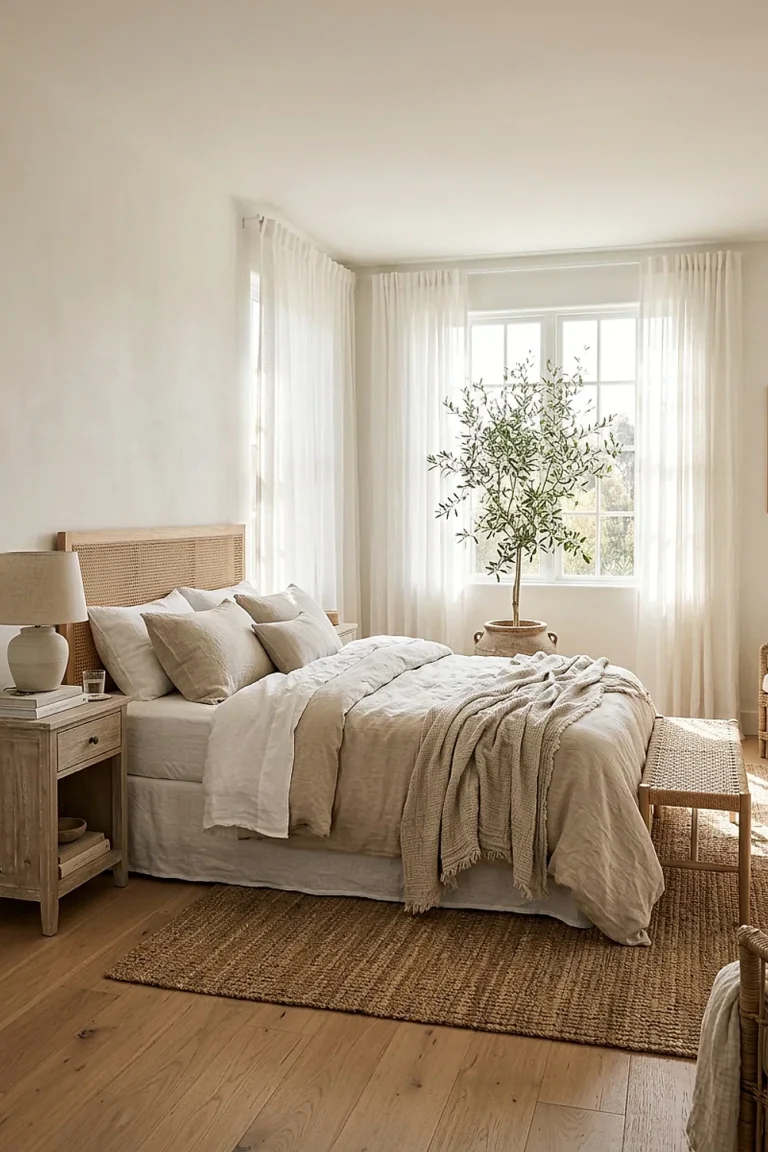
Bedding is where a bedroom starts to look cute, because the bed takes up about 40 percent of the visible floor area. Fabrics with a natural weave and a little texture age better than anything glossy or heavily printed.
1. Oatmeal linen duvet cover
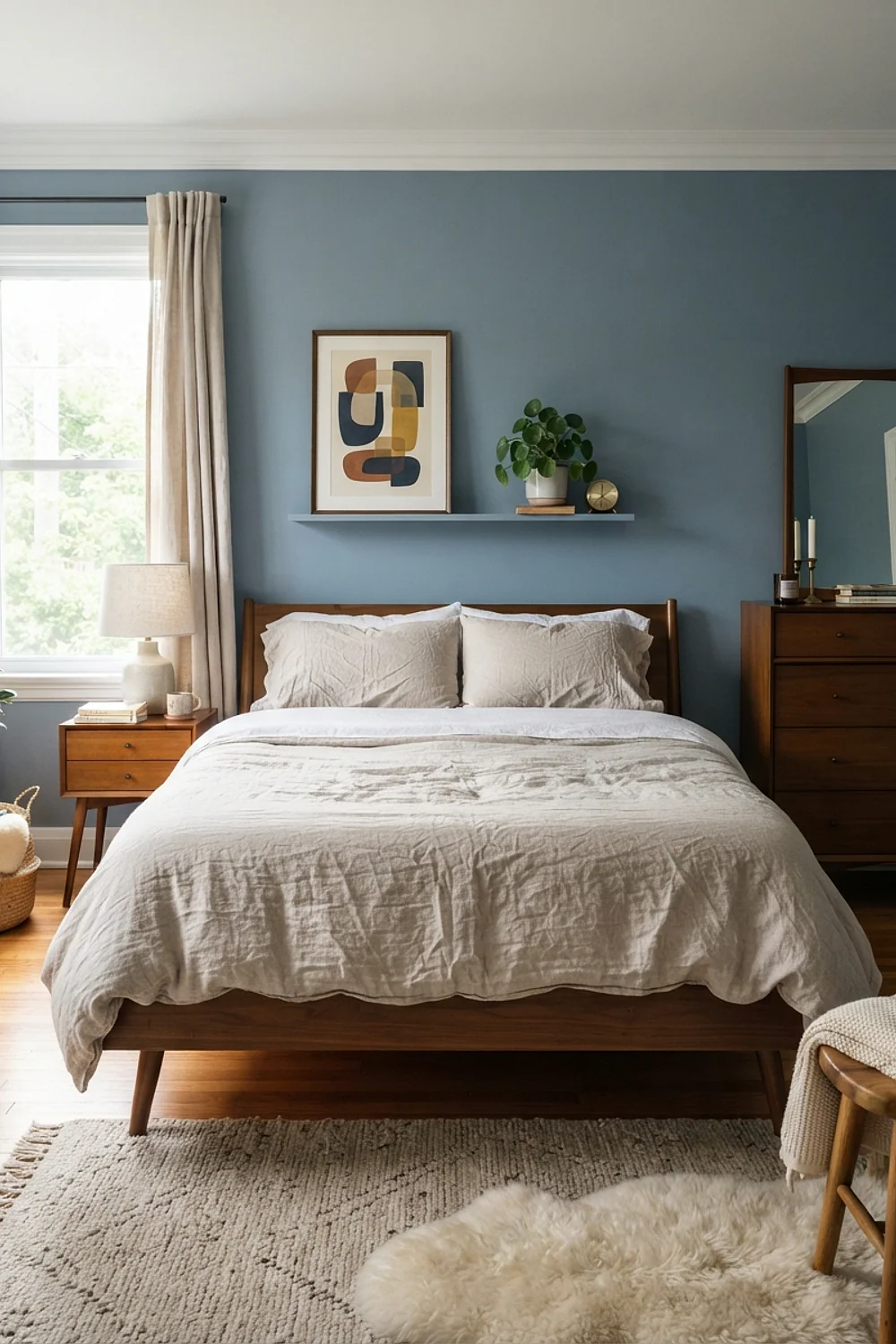
A stonewashed linen duvet cover in oatmeal or flax gives the bed a rumpled, slept-in look that reads as cute with no styling at all. Linen has been woven into bedding for centuries, and the crumple is the point, so don’t iron it. A queen cover runs about $120-$200 from decent mid-range makers.
Add one contrasting pillow in rust or faded blue rather than six matching ones. Look for 150-190 gsm, since lighter linen floats instead of draping. It suits anyone who sleeps hot, because the weave breathes.
2. Upholstered headboard
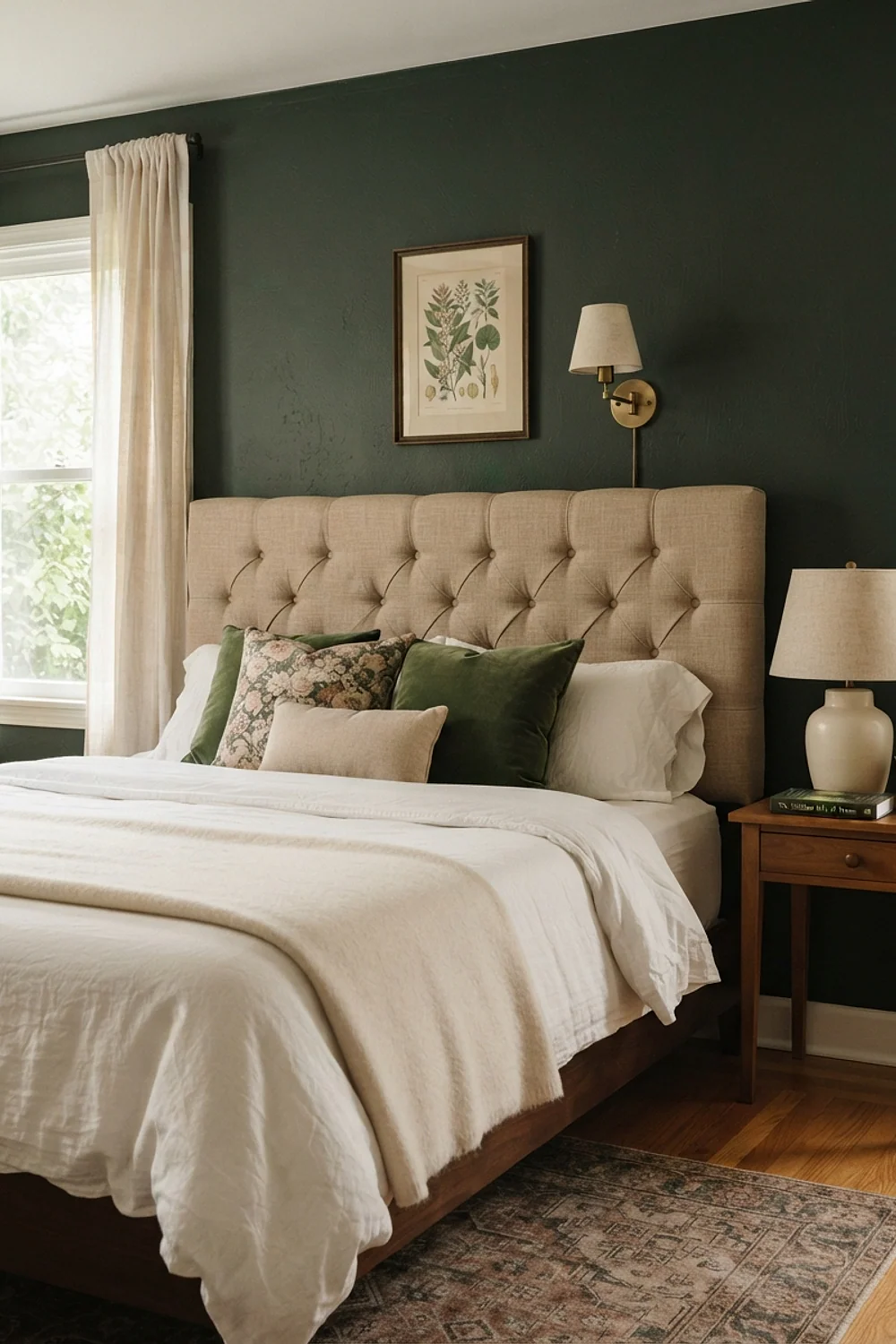
An upholstered headboard that extends 8 to 12 inches past the mattress on each side frames a bed the way a mat frames a print. On a 60-inch queen, that means roughly 76-84 inches overall. Anything narrower looks like it shrank in the wash.
Height matters just as much. About 54-60 inches from the floor suits a standard 8-foot ceiling, while taller versions crowd the wall and fight with art. Pick tight-weave bouclé or cotton velvet, which resist the pilling that cheap polyester shows quickly.
3. Brass swing-arm sconce
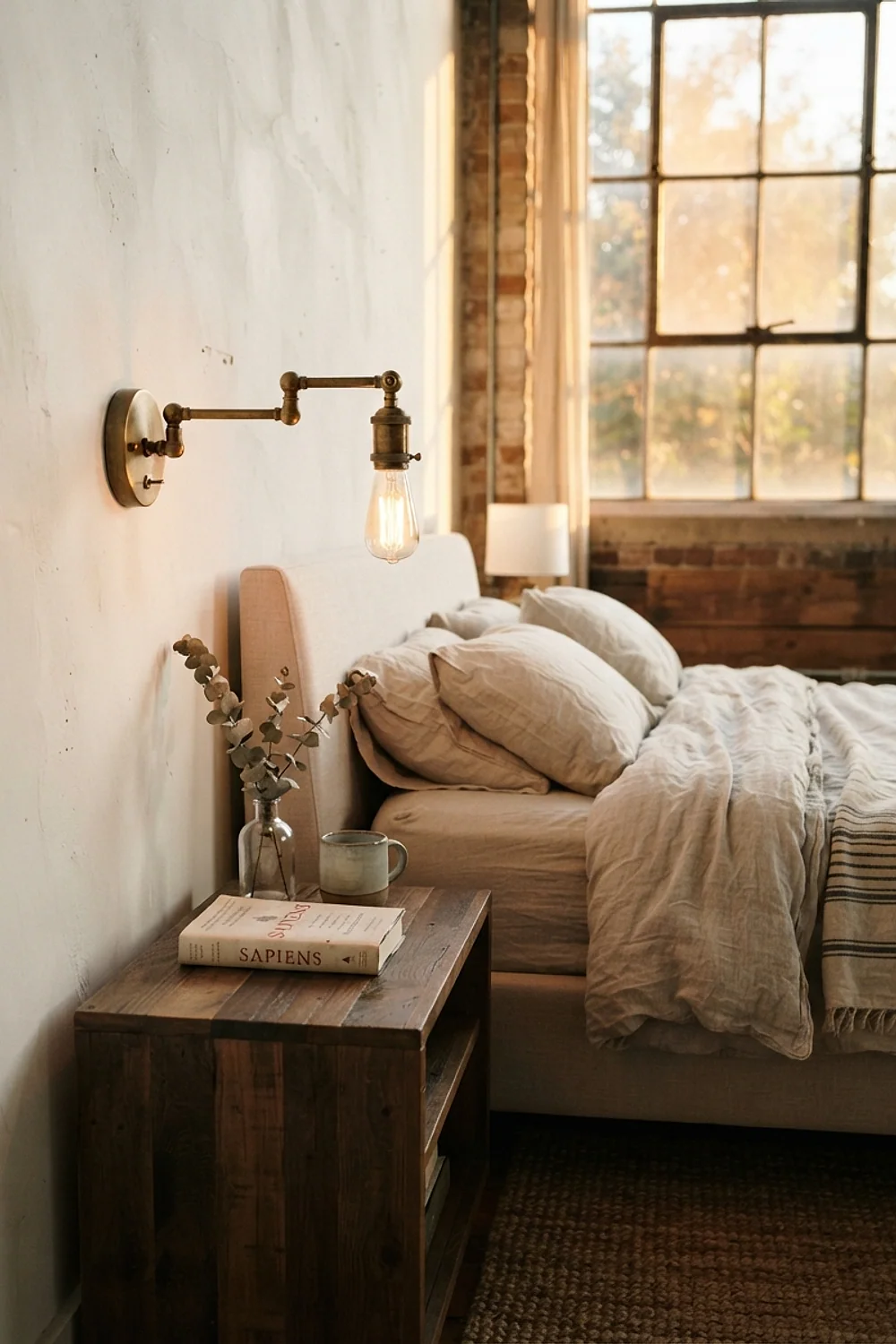
Brass swing-arm sconces beside the bed free up the nightstand and echo the fixtures that hotels and libraries have used since the early 1900s. The usual mistake is mounting them too high. Center the bulb 54-60 inches off the floor so the light lands on the page, not the ceiling.
Unlacquered brass develops a patina, which suits an older room. Lacquered finishes stay shiny but chip. Plug-in versions with a cord cover work in rentals, and a 2700K bulb keeps the glow honey-toned.
4. Cotton matelassé coverlet
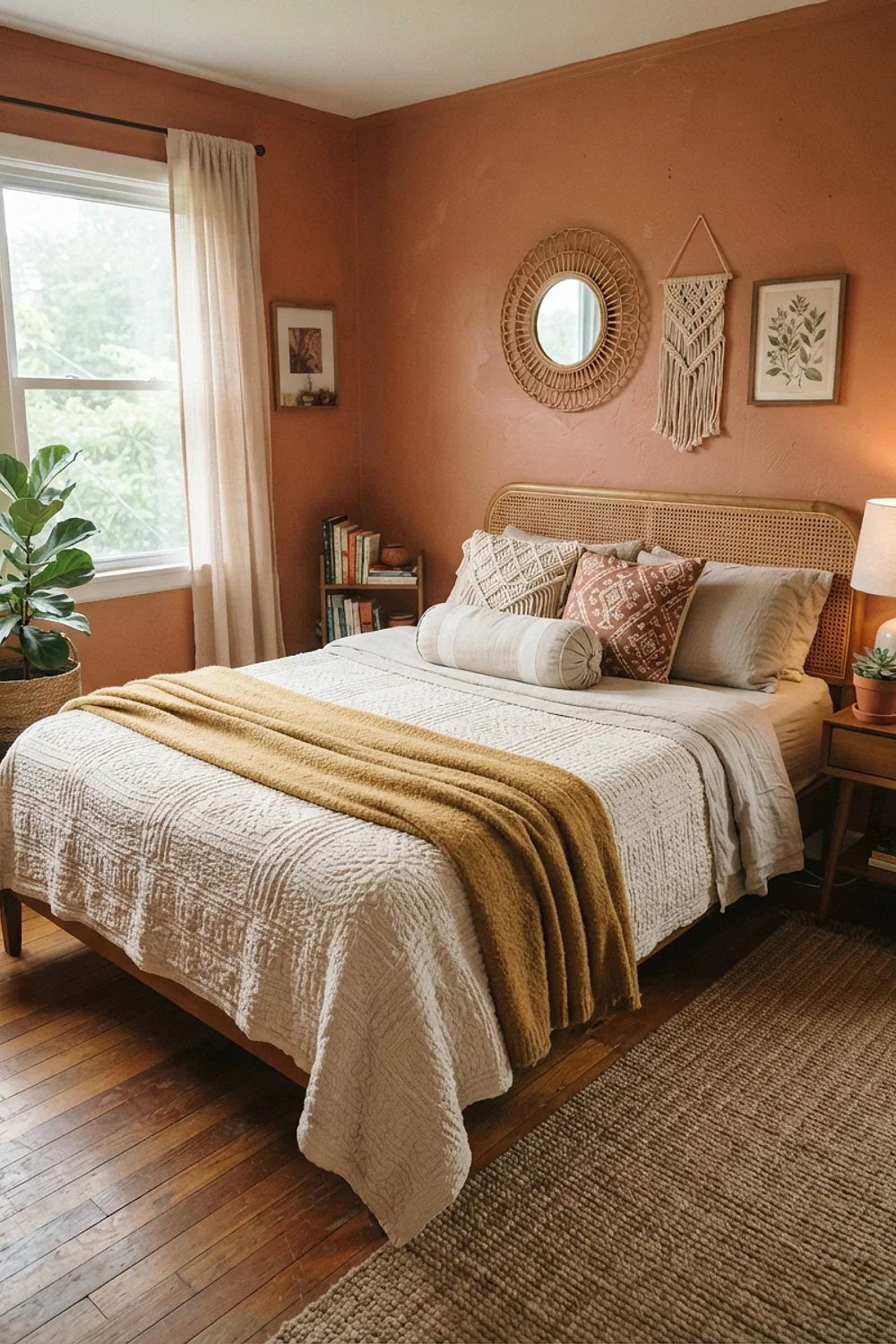
Matelassé is woven on a jacquard loom so the quilted pattern is part of the cloth, not stitched on. That’s why a good one survives hundreds of washes without the filling shifting. Expect to pay $110-$250 for a queen in 100 percent cotton.
It’s the right layer for three-season bedrooms, folded back to show a quarter of the bed. Avoid blends with more than 20 percent polyester, which pill at the seams and lose the dry, papery hand that makes matelassé feel good.
5. Gingham pillow in sage or navy
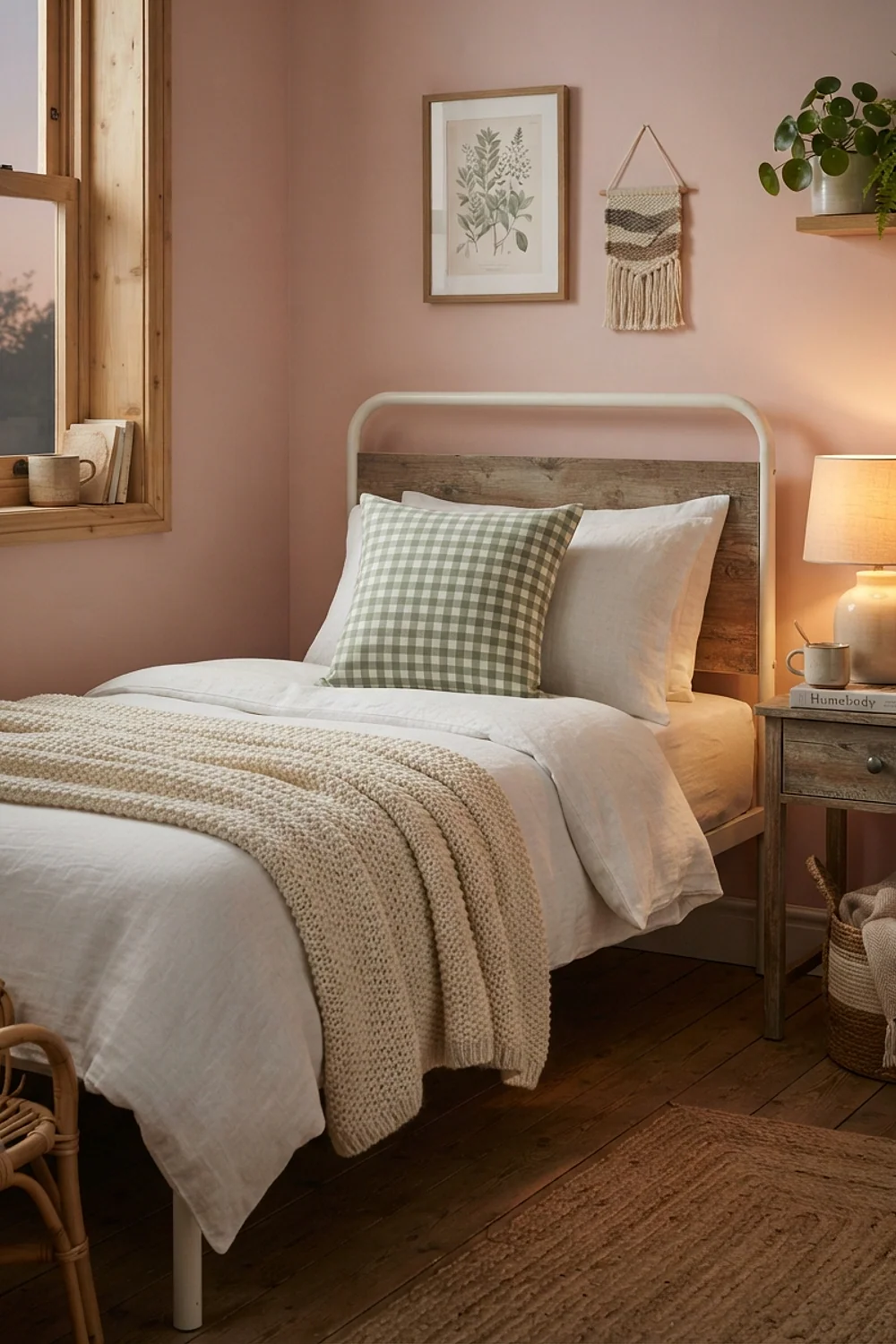
A gingham check in sage, navy or faded red makes a plain white bed look cute without shouting about it. The fabric has been woven in cotton since at least the 1700s, and it keeps its place because the two-tone grid calms any third color near it. Keep the check between half an inch and an inch on a pillow.
Skip bright primary red, which turns into a picnic cloth. Dusty, slightly muted tones age far better. It’s best in a room with plain walls, where one checked piece gets room to breathe.
6. Wool tartan blanket at the foot of the bed
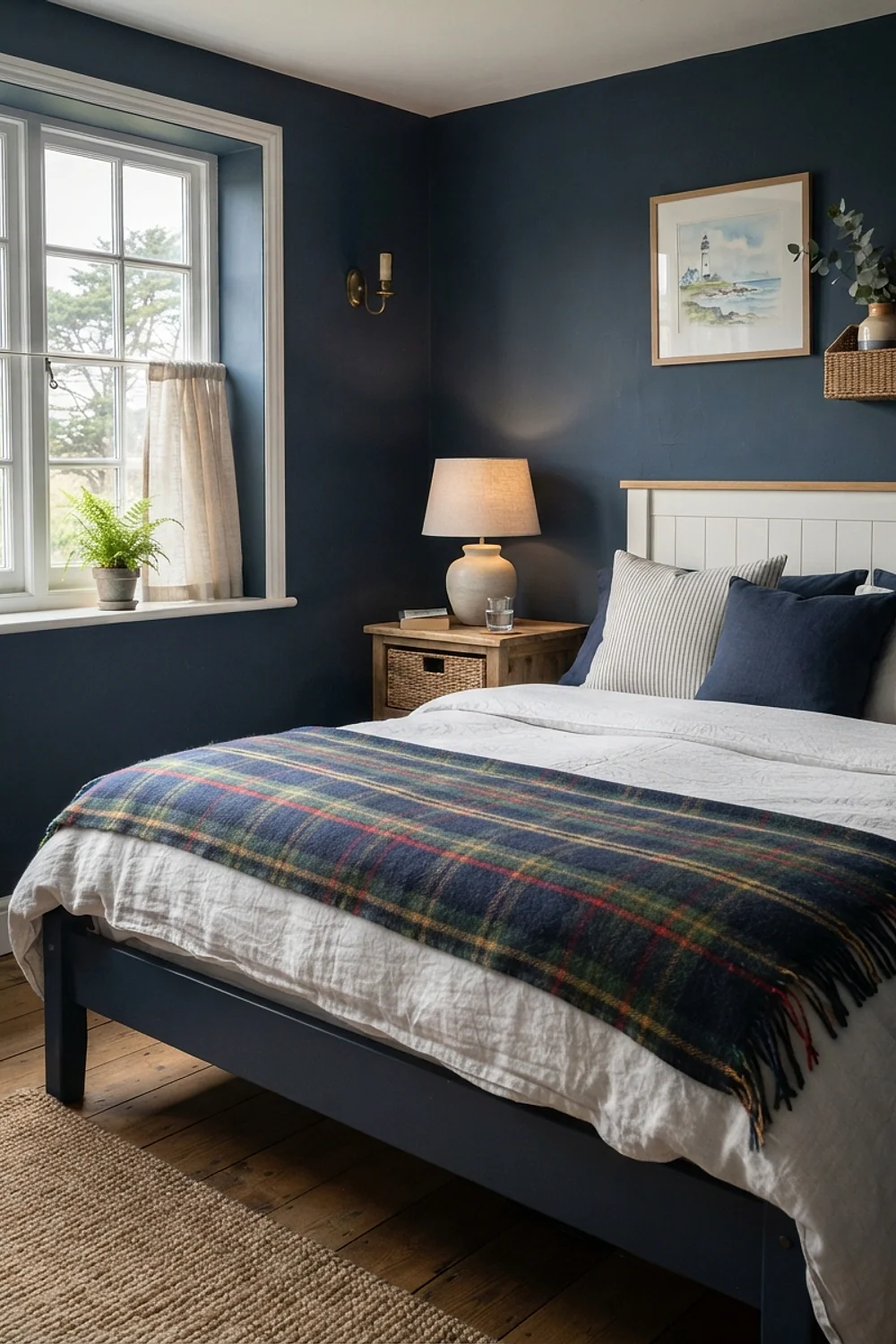
A wool tartan blanket folded in thirds across the foot of the bed adds 2-3 pounds of weight on a cold night without the clamminess of polyester fleece. Wool regulates temperature, so it suits both the sleeper who runs cold and the one who kicks covers off by 3 a.m.
Choose a muted check, such as bottle green and cream, because loud tartans dominate a small room. Wool varies in scratchiness, so test it against the inside of your wrist before buying.
7. Vintage trunk at the foot of the bed
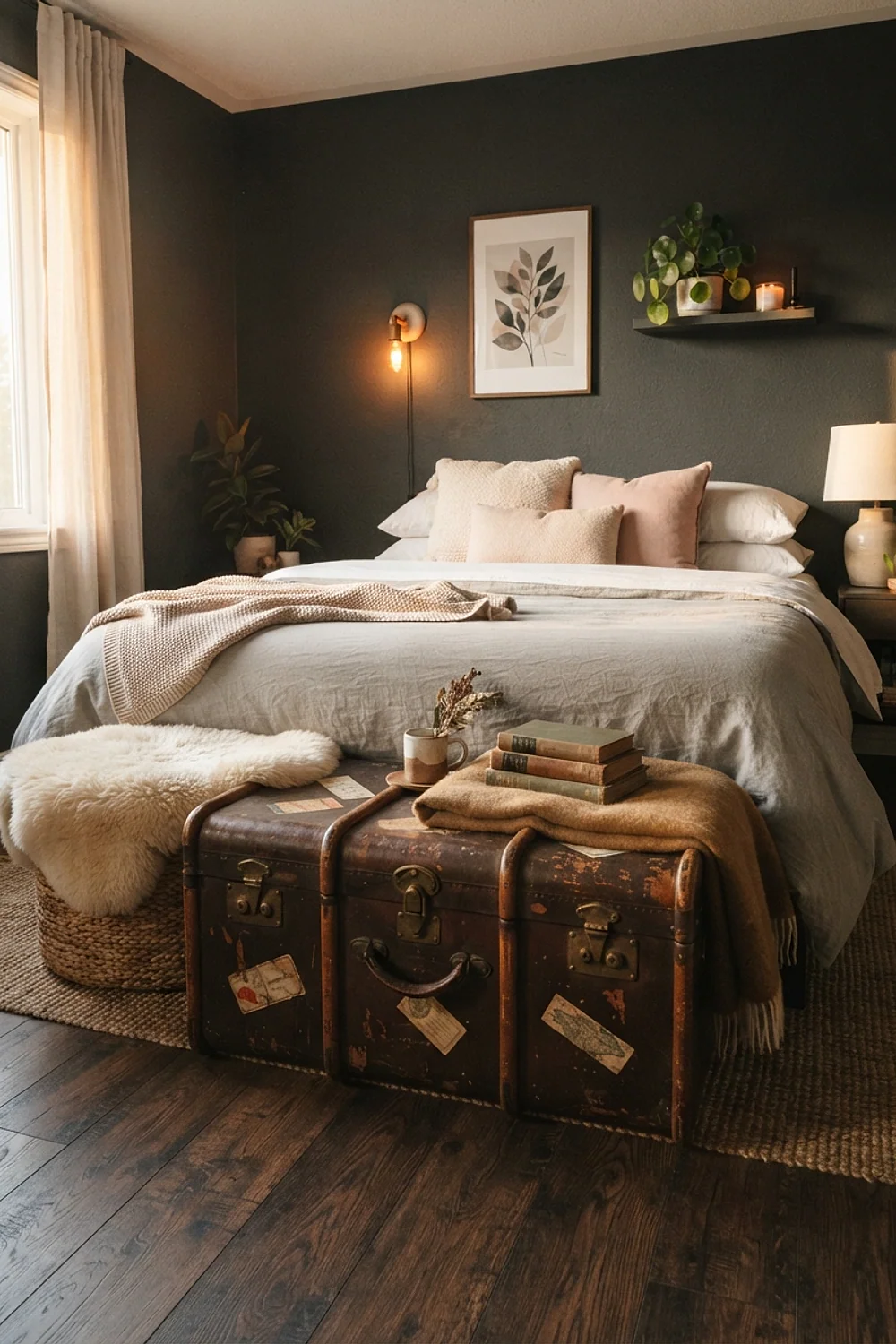
A steamer trunk or blanket chest, about 36 inches wide and 18 inches deep, hides spare bedding and gives the foot of the bed a visual stop. Chests like this were bedroom standards long before wardrobes, which is why they still look right.
Check the hinges and lid prop before buying secondhand, because a lid that slams is a finger hazard. Leave 24 inches of walkway between trunk and wall, or the room starts feeling like a storage unit.
8. Bedside table with a drawer and a lower shelf
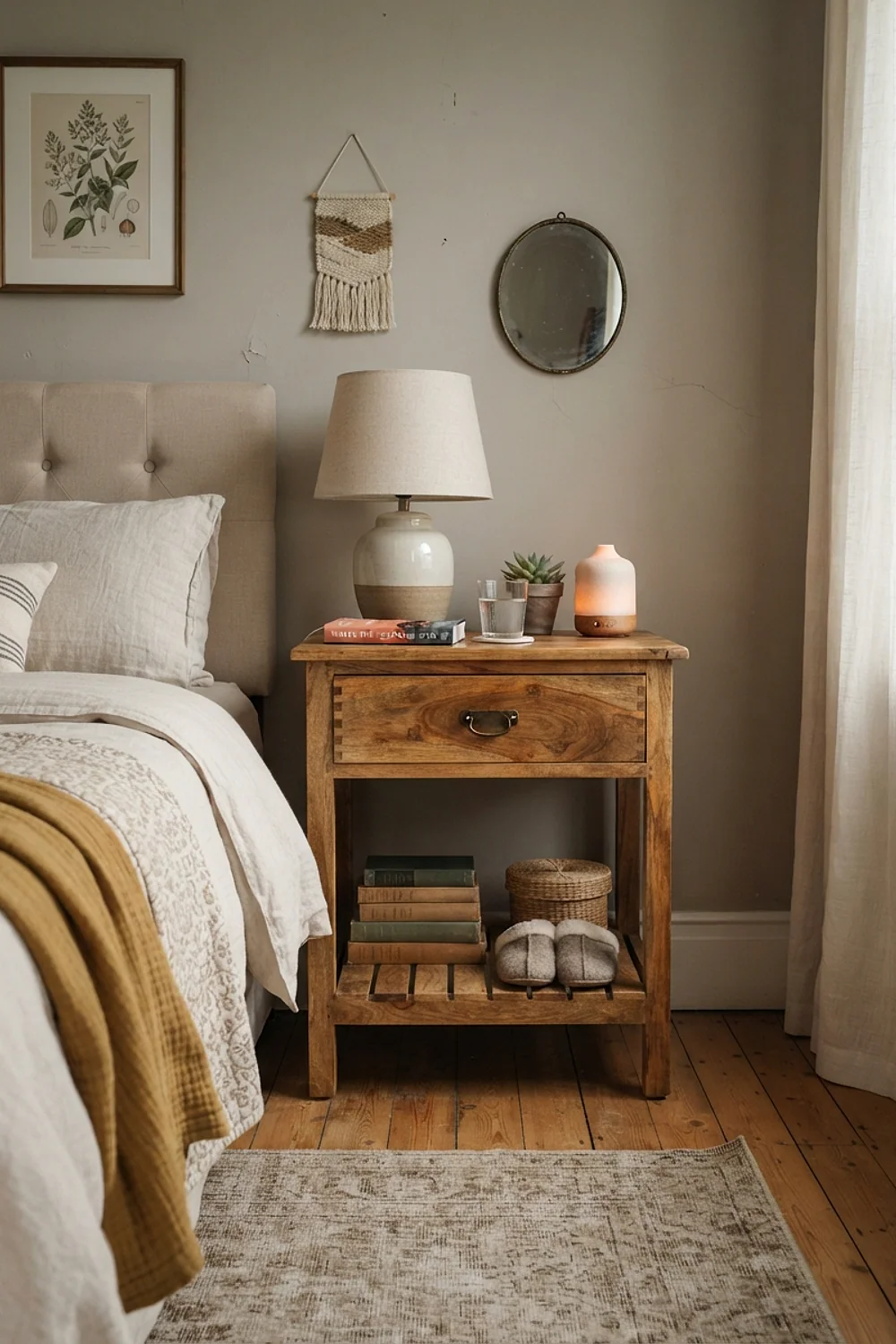
A bedside table about 24-26 inches tall, roughly level with the top of the mattress, lets you reach a glass of water without sitting up. The drawer swallows chargers and lip balm, and the open shelf holds the book stack that makes a room look lived in.
Solid wood in oak, walnut or painted pine outlasts veneer, which bubbles if a glass sweats on it. Choose this when the room is too narrow for a full dresser beside the bed.
Pattern, color and light in a cute bedroom decor aesthetic
Walls, lamps and prints decide the mood after the bed is made. The pieces below have all outlasted trends because they behave well in changing daylight.
9. Pleated lampshade on a ceramic base
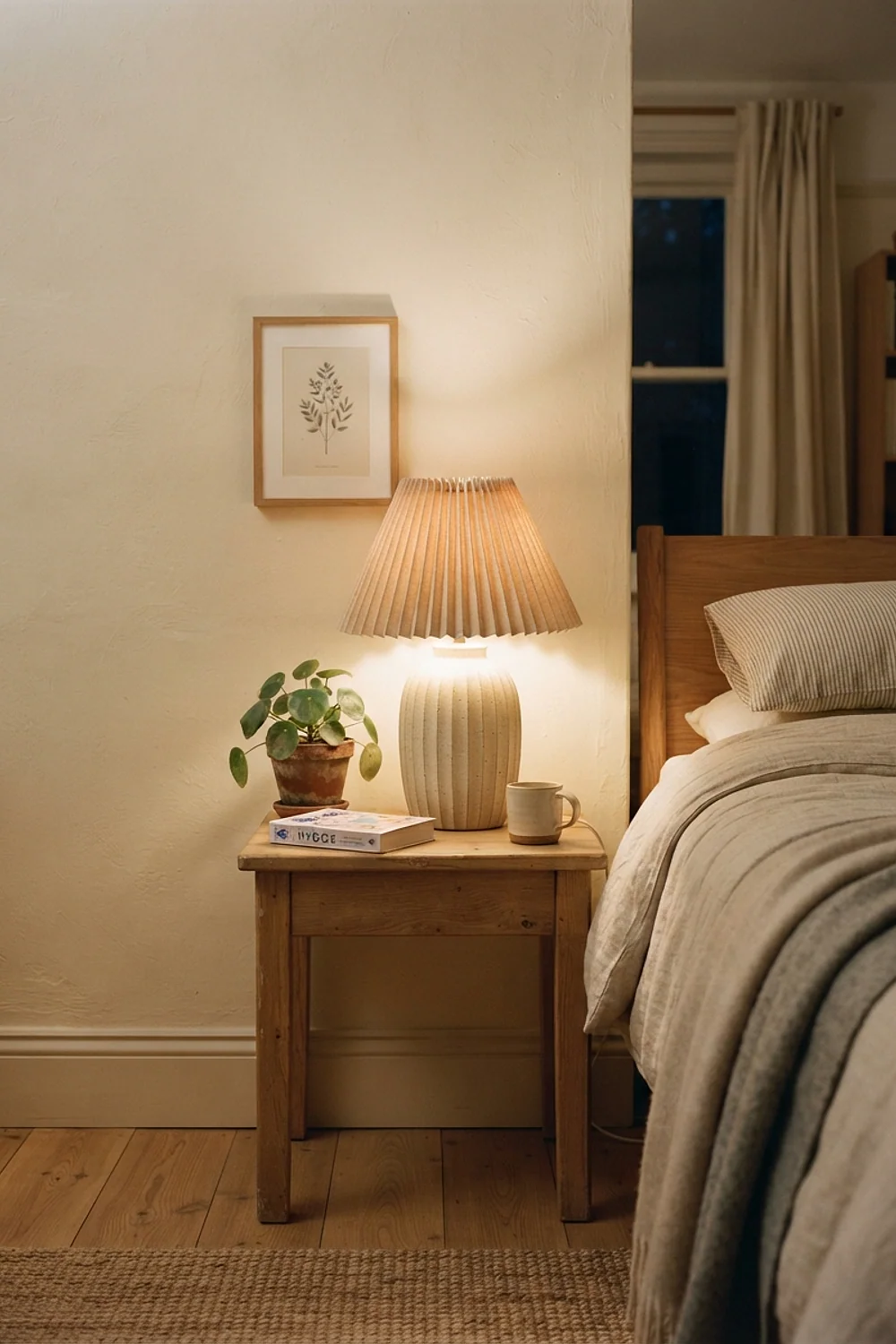
A knife-pleat or empire shade in cream linen over a ceramic base throws a pool of light that flatters skin and walls alike. Here’s the counterintuitive part: the shade’s lining changes the glow more than the bulb does, so a white lining stays crisp and a gold lining turns the light amber. A good pair costs $90-$180.
Size the shade at about two-thirds the height of the base. A shade that’s too small leaves the bulb visible from the bed and glares at 10 p.m.
10. Area rug sized to the bed
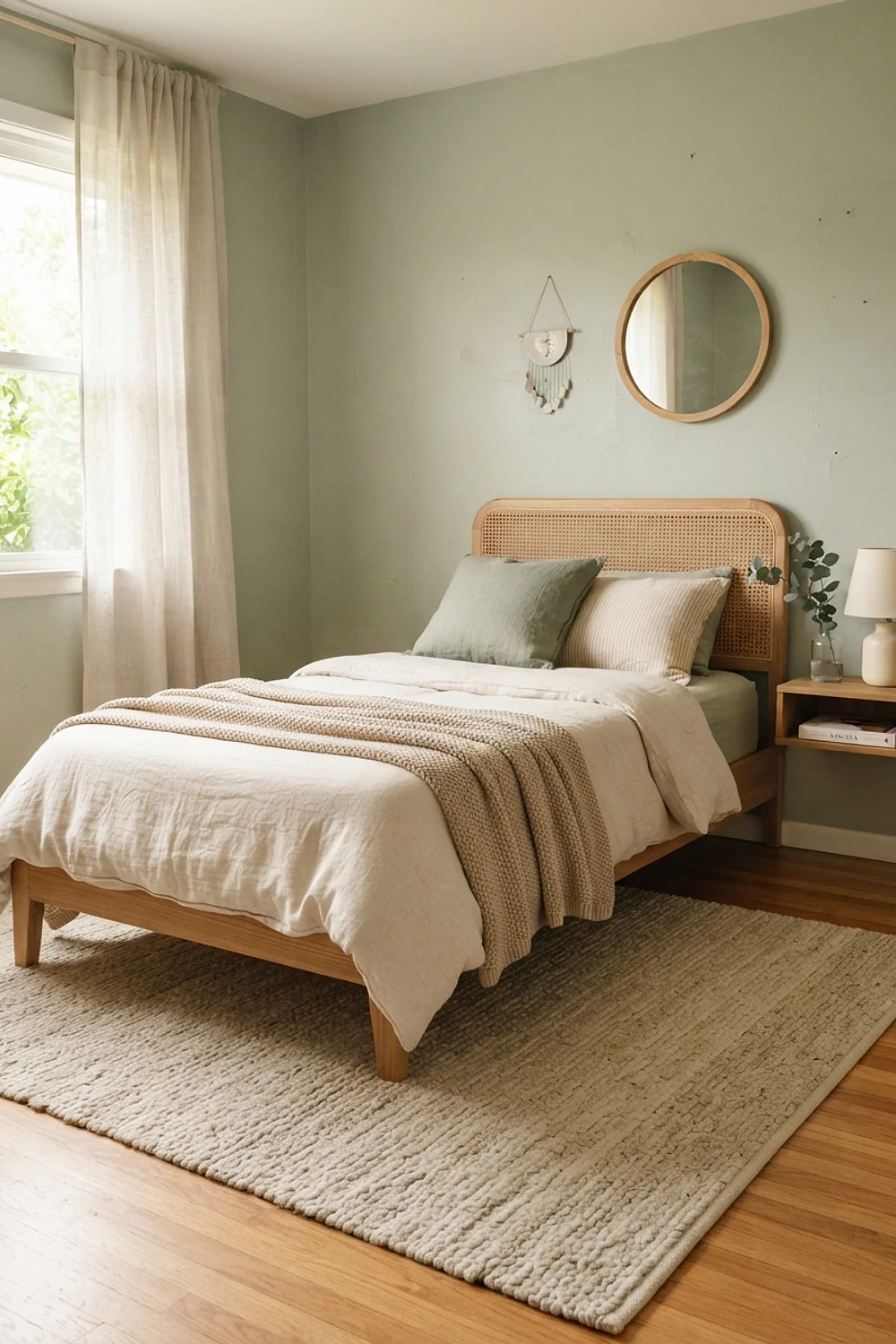
An 8-by-10-foot rug under a queen bed, with the front two-thirds of the bed on it, leaves about 24 inches of rug showing on each side and at the foot. That’s enough for bare feet to land on wool instead of cold boards.
Rugs that are too small, like a 5-by-8 that stops at the nightstands, make the bed seem to float. Flatweave or low-pile wool cleans easily and doesn’t make the bed rock the way plush shag does.
11. Sheer canopy over the bed

A light linen or cotton voile canopy hung from a ceiling hook, falling in two panels on each side of the headboard, brings the old four-poster idea into a modern room without the bulky frame (this only works if the ceiling is at least 8 feet, or it crowds the head). Panels about 90 inches long reach the floor in most rooms.
It suits anyone who wants a cozy cocoon feel in a shared or open-plan room. Keep fabric away from bedside lamps, since voile is flammable.
12. Small-scale floral wallpaper

A floral print with motifs under 3 inches wide reads as a texture from across the room and as a pattern only up close. That’s why English cottage prints of the Arts and Crafts era still look right, while giant blooms shrink small bedrooms.
Papering one wall behind the bed is the safest way in. Check the repeat length before buying, because a 24-inch repeat wastes more paper than a 12-inch one.
13. Round or arched mirror
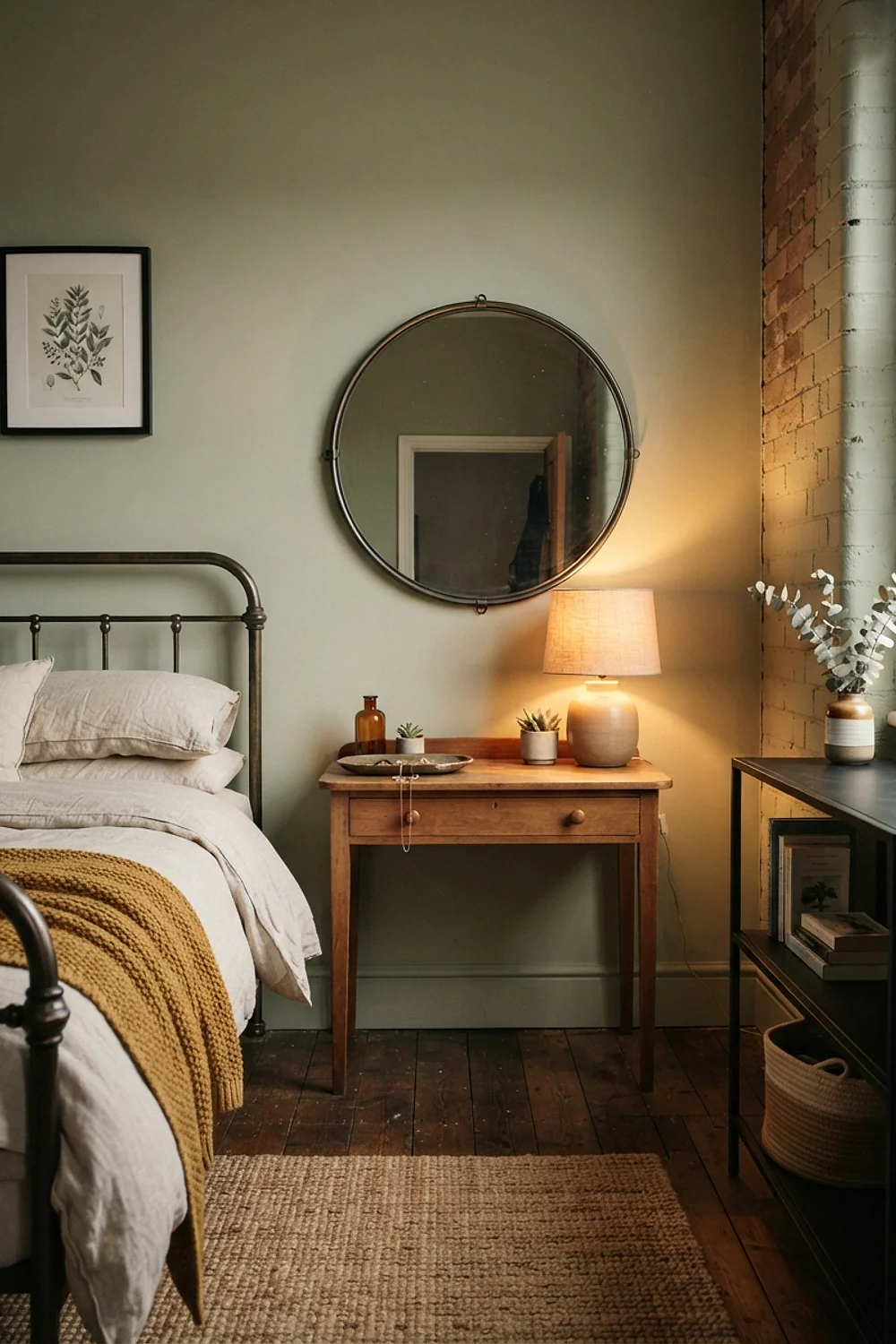
A round mirror around 30 inches in diameter breaks up the right angles of bed, dresser and windows. Hang it so the center sits at about 57-60 inches. A common mistake is hanging it so high that it only shows the ceiling, and a $60-$150 mirror with a thin brass or wood frame is plenty.
Place it on the wall that catches window light across the room, so it bounces daylight back toward the bed. Skip beveled glass in tight rooms, since the edge splits reflections into rainbow smears.
14. Cane-front dresser or rattan headboard

Woven cane is made by splitting the outer skin of rattan into strips, which is why it stays light and breathable for decades when it’s kept dry. A cane-front dresser or headboard adds a honey-colored, open-weave texture that smooth upholstery can’t match.
It suits small bedrooms, since the see-through weave takes up less visual weight. Keep it away from radiators, which can dry the cane and make it brittle within a couple of heating seasons.
15. Pale blue painted ceiling
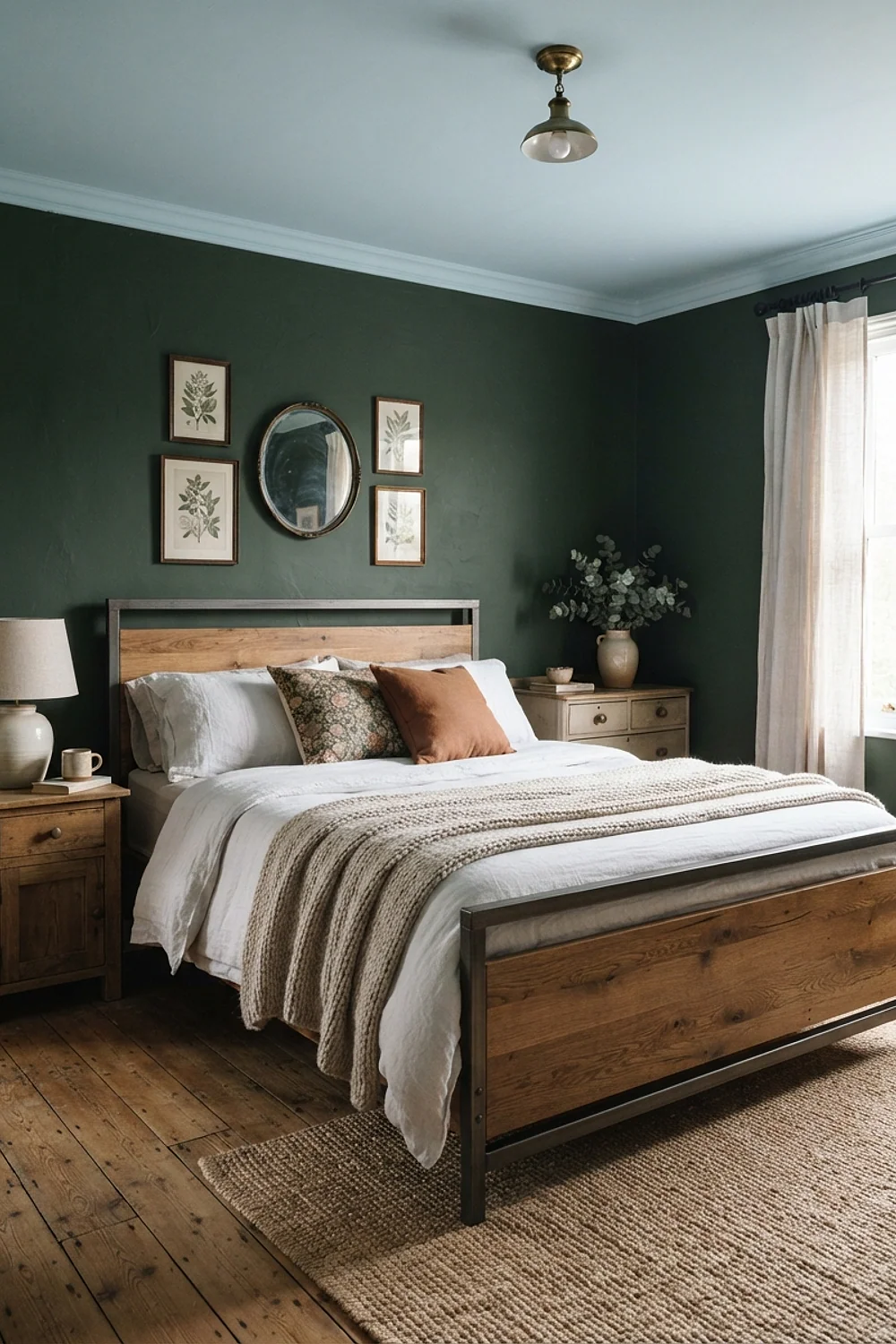
A ceiling painted in a pale sky blue, a tradition on Southern porches, makes a room feel as if it has a small piece of daytime built in. On a gray November afternoon, it keeps a north-facing bedroom from going flat.
Use flat paint, which hides plaster flaws, in a shade that’s lighter than a robin’s egg. Anything deeper pulls the ceiling down and makes a standard 8-foot room feel tighter.
16. Cotton percale sheets with a piped edge
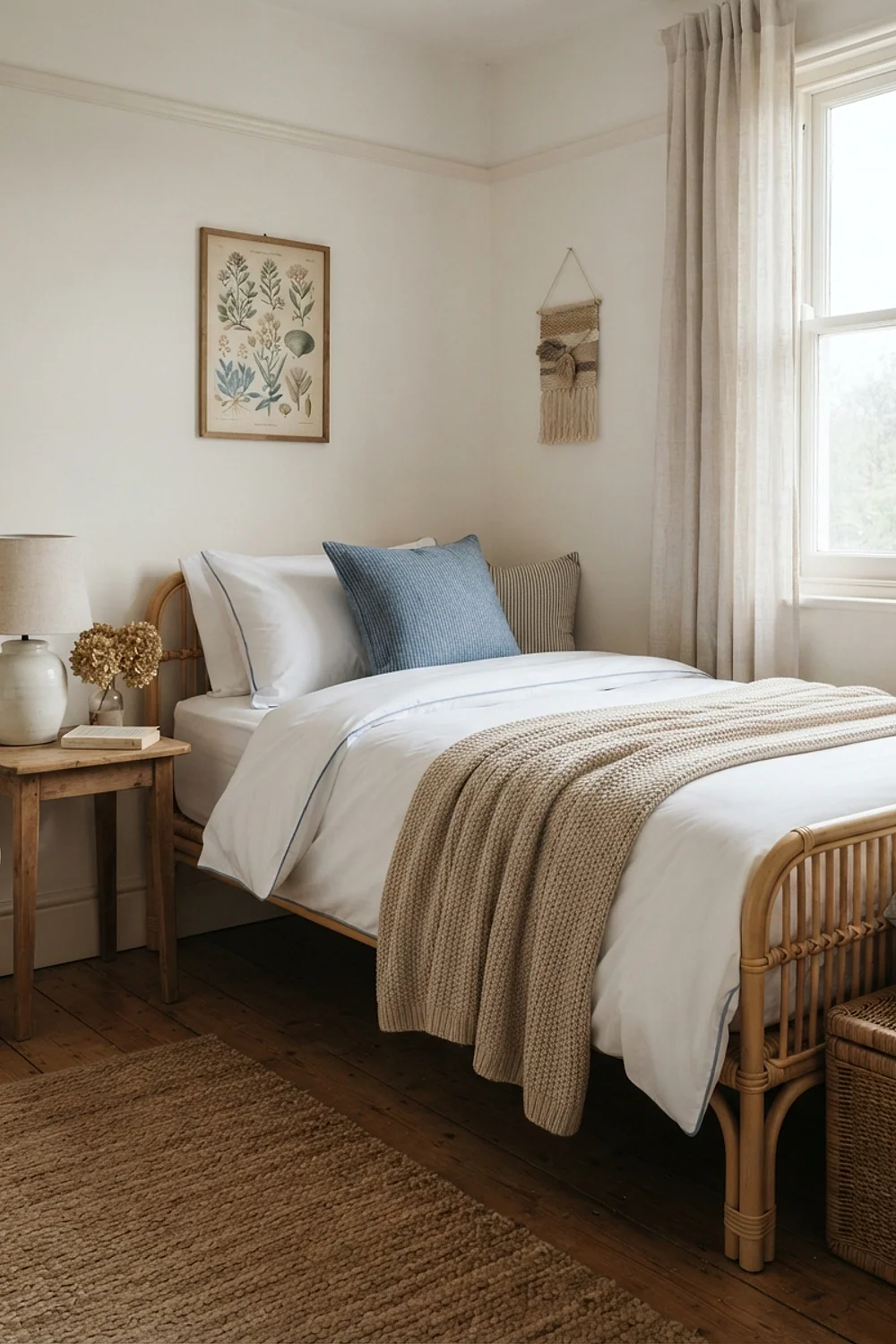
Percale is a plain one-over-one weave that feels crisp and cool, like a hotel sheet, and a thin piping along the hem gives it a tailored finish. Thread counts of 200-300 are plenty, and anything above 400 usually means thinner yarns packed in.
This is the right sheet for hot sleepers and people who like the crinkle of fresh cotton. Satin-weave sateen drapes prettier but traps more heat, which is the trade-off to weigh.
17. Seagrass basket for extra bedding
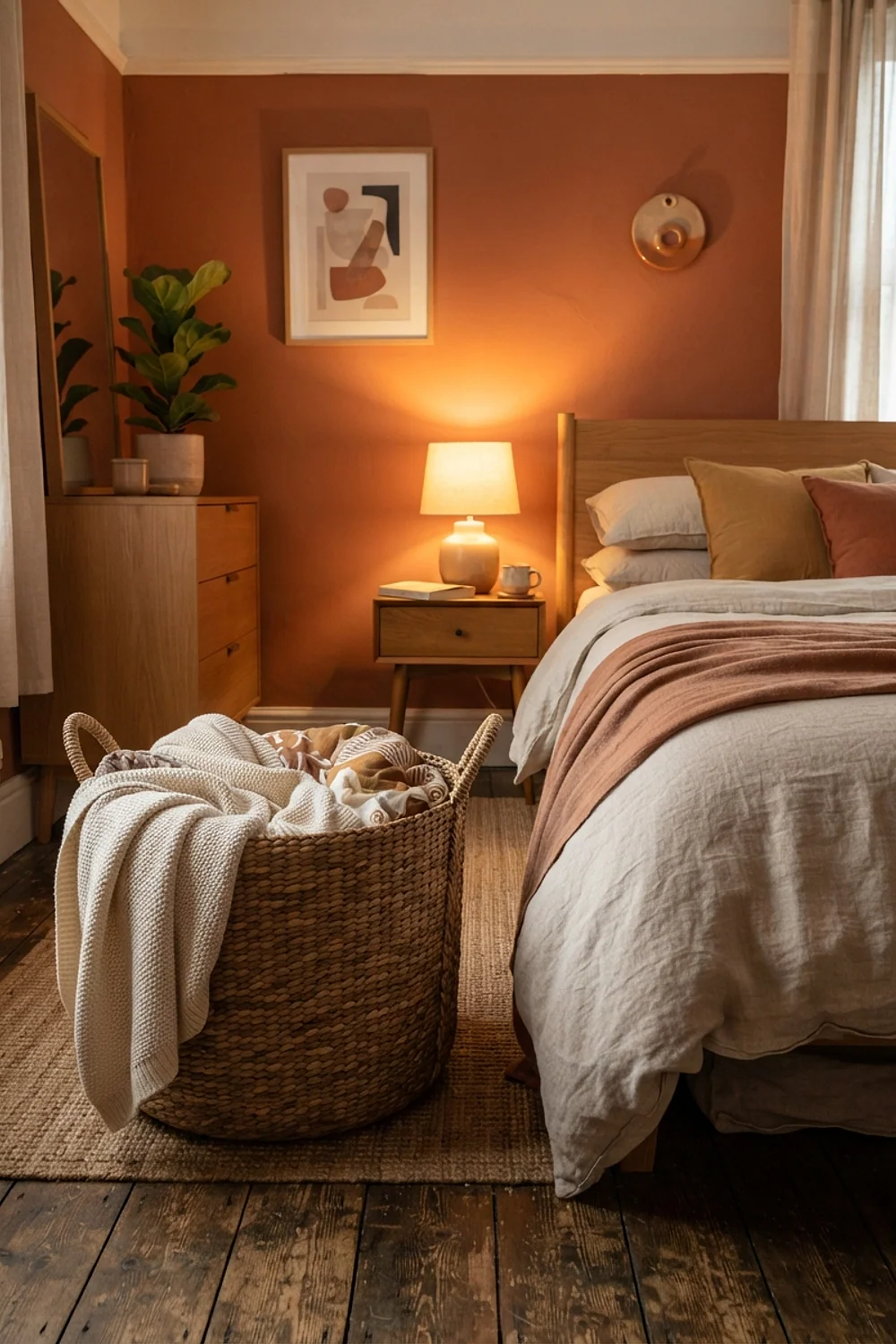
A lidded seagrass or willow basket about 18 inches across stores a spare blanket and keeps it within reach. Basket weaving is one of the oldest storage crafts, and the natural fiber adds texture next to smooth painted furniture.
Line it with muslin to stop snags on knit throws. Natural fibers dry out near heat, so set it away from radiators and out of long afternoon sun.
Things that elevate the room
This cute bedroom decor aesthetic leans on furniture that has a history of being copied, which usually means the proportions are right. Look for good joinery, solid wood and shapes that look familiar.
18. Slipper chair in the corner
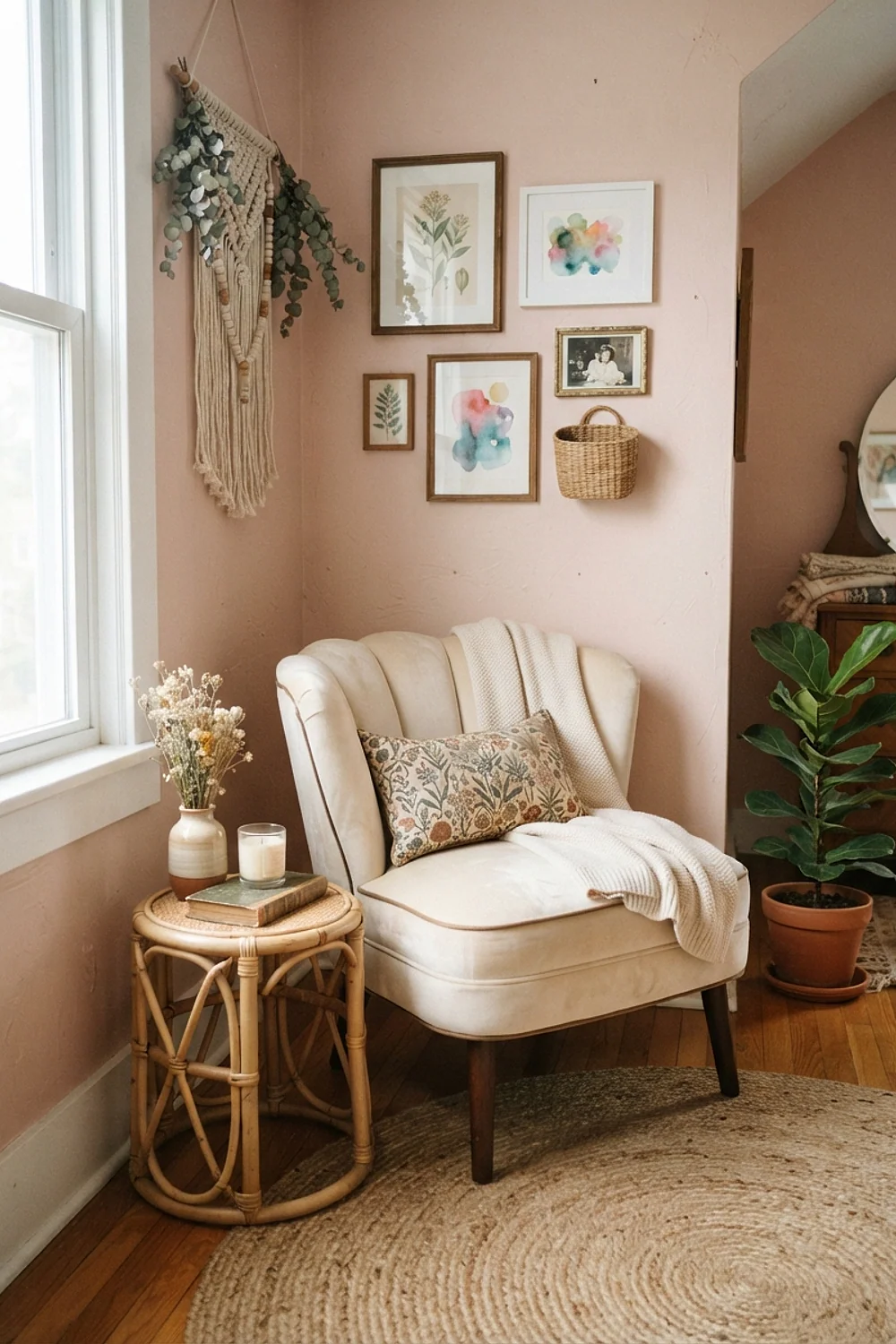
A slipper chair is low-slung, armless and about 28-30 inches wide, a shape created in the 19th century so people could sit and dress without a bulky frame. It fits into corners that an armchair would swallow.
Use it for pulling on socks, or for the pile of clothes that isn’t quite dirty. Choose a seat height around 17 inches, and a performance fabric or washable slipcover, because it will double as a landing spot for bags.
19. Layered linen curtains and sheers
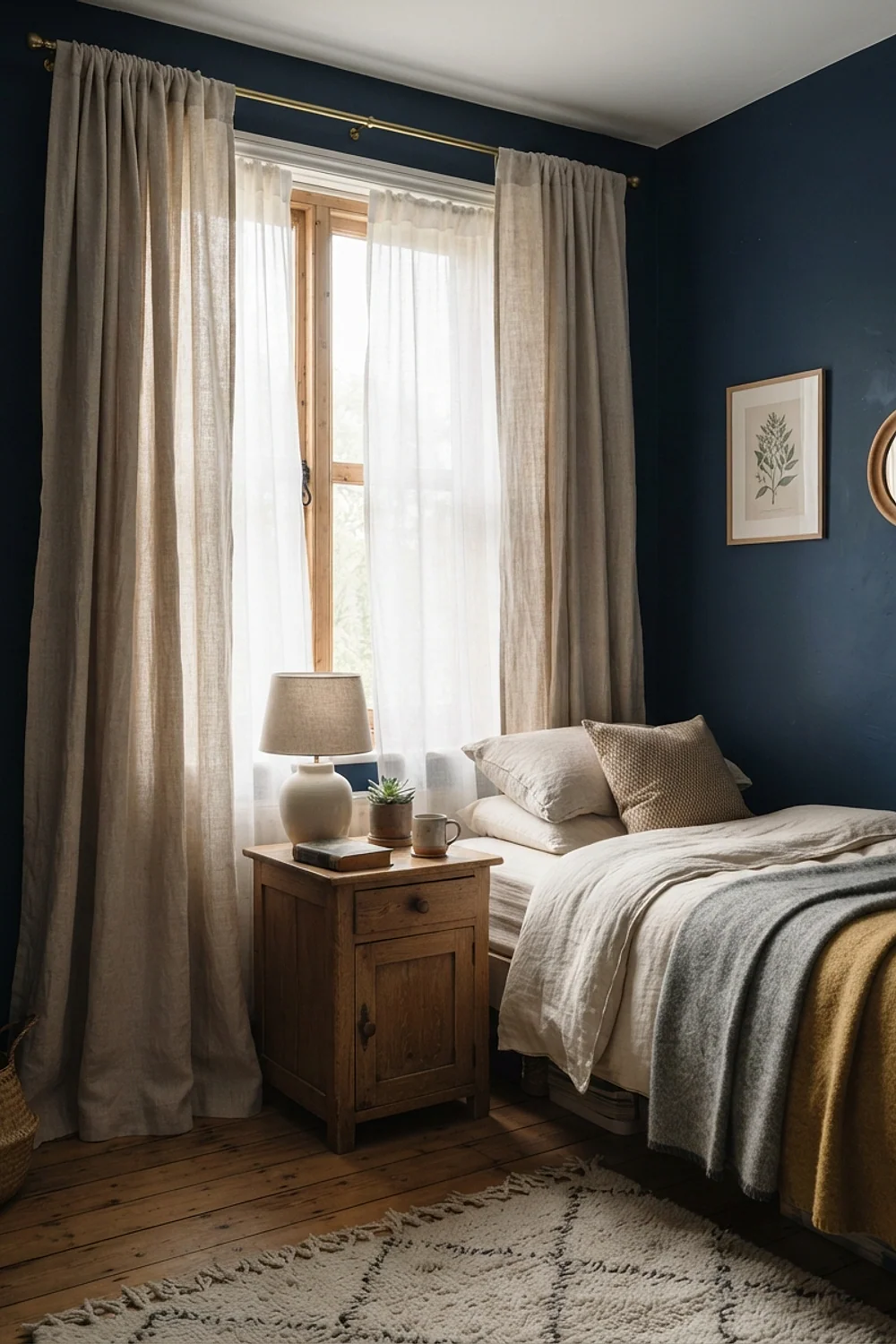
A sheer panel behind a linen curtain handles two different bedroom hours. At 8 a.m., the sheer softens low sun so nobody wakes up squinting, and at 9 p.m., the heavier layer blocks streetlight. A full set costs $150-$300 in ready-made lengths.
Hang the rod 4-6 inches below the ceiling and let the curtain graze the floor. A hem that stops 3 inches short looks like a mistake, so measure after the rod is up.
20. Botanical prints in mismatched frames
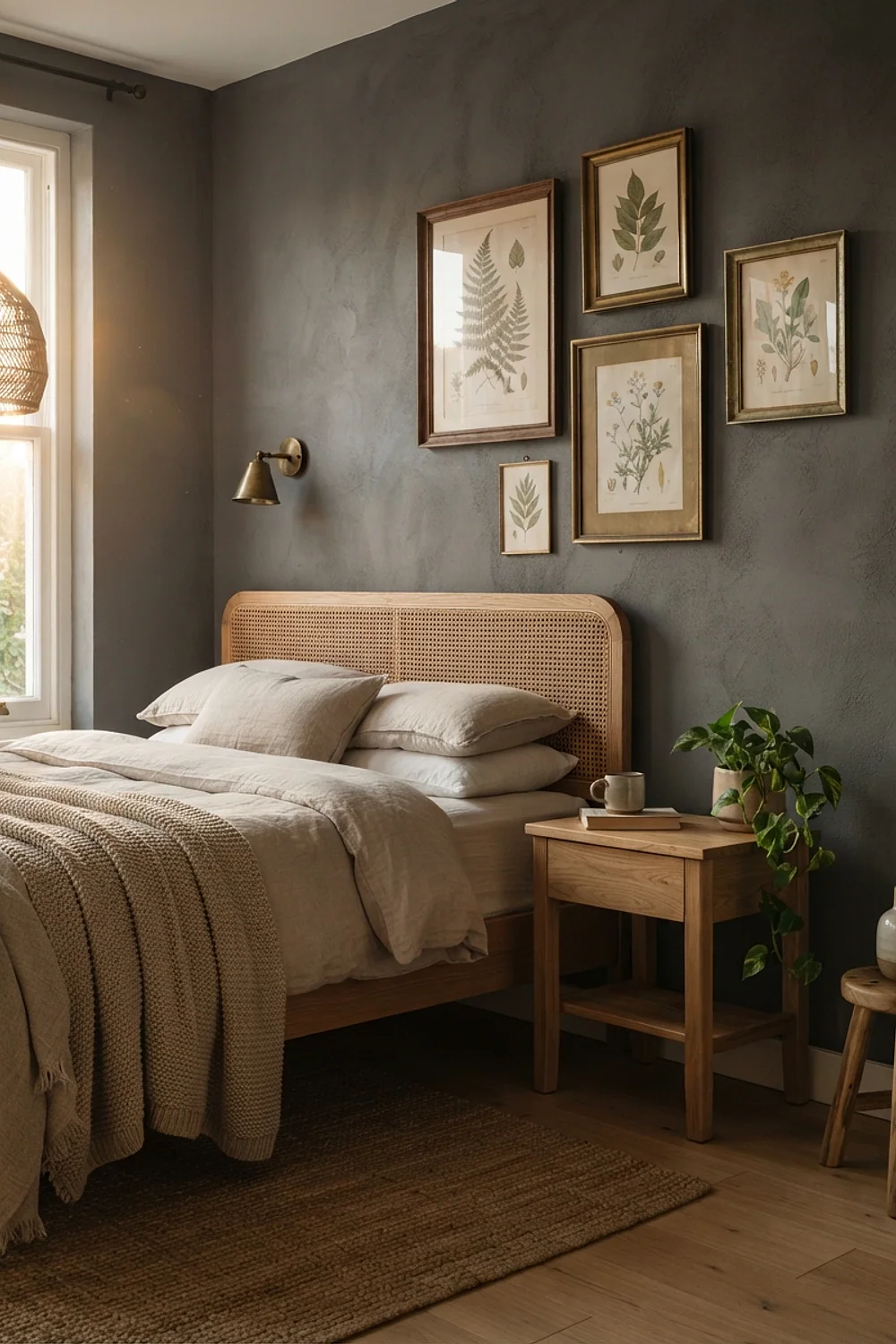
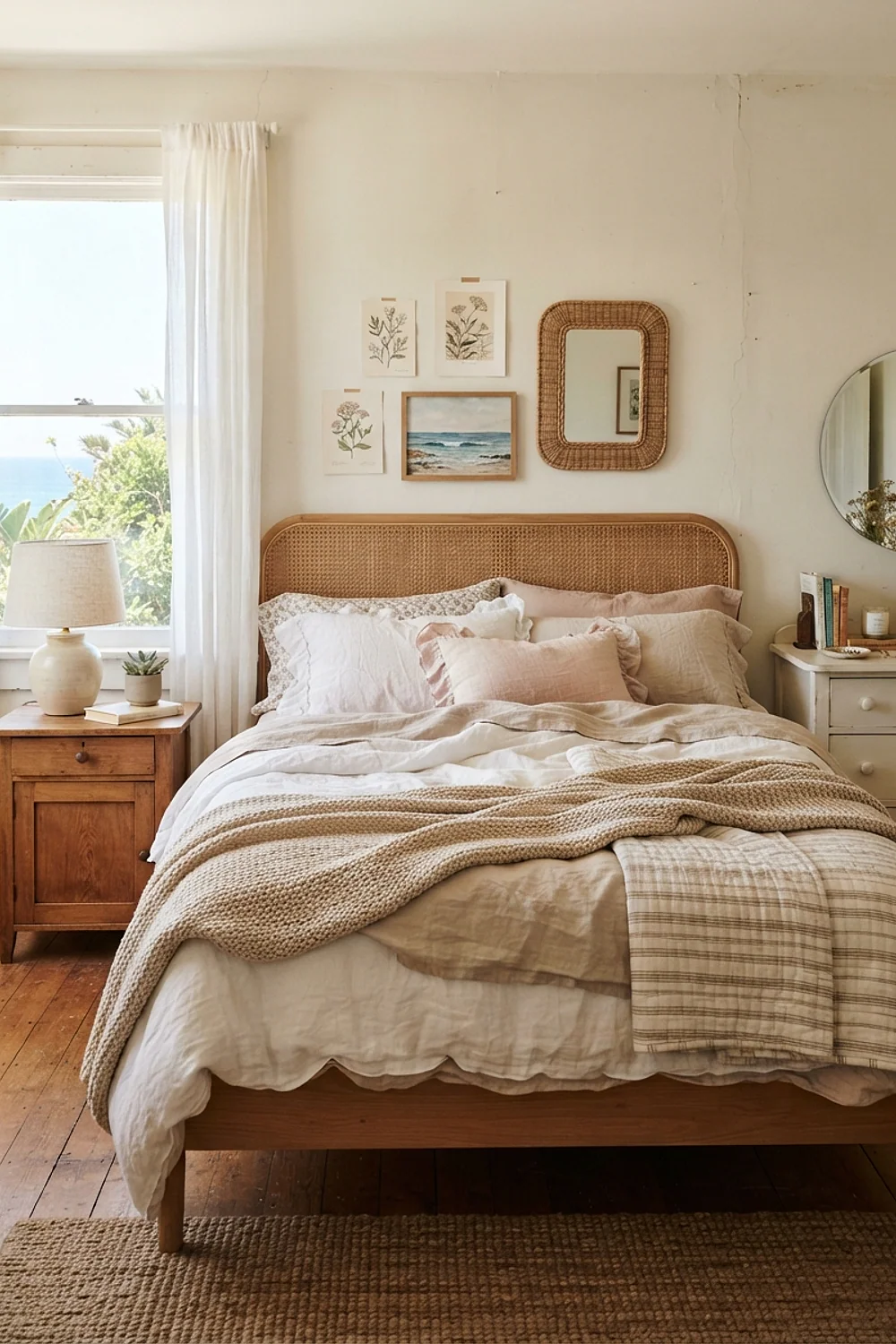
A group of five to seven botanical prints, each in a different frame, gets cute quickly. Botanical illustration has been collected since the 1700s, and the subject works because leaves and flowers suit any palette.
Space frames 2-3 inches apart and center the group about 57 inches from the floor. Lay everything on the floor first and trace paper templates on the wall, so the nail holes are right the first time.
21. Bud vases with a single stem
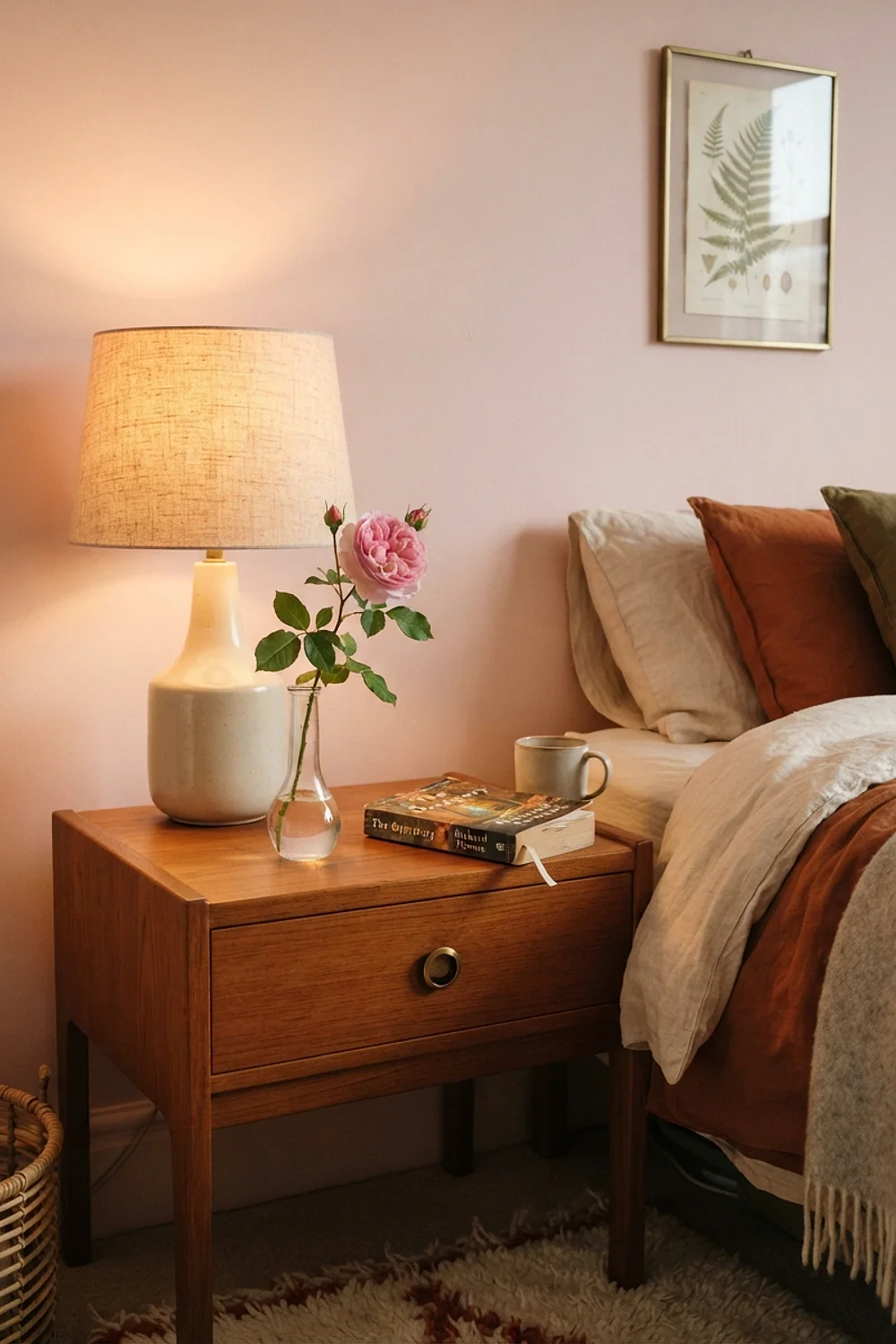
Three small ceramic bud vases, each holding one stem of eucalyptus, ranunculus or dried grass, bring something alive onto a dresser. Single-stem arrangements go back to Japanese ikebana and English cottage windowsills, and they suit nightstands that can’t take a full bouquet.
Choose vases 4-6 inches tall so they don’t tip when a hand reaches past them. Dried stems last months, which makes them the better pick for a room that’s rarely checked during the week.
22. Dressing table with a stool
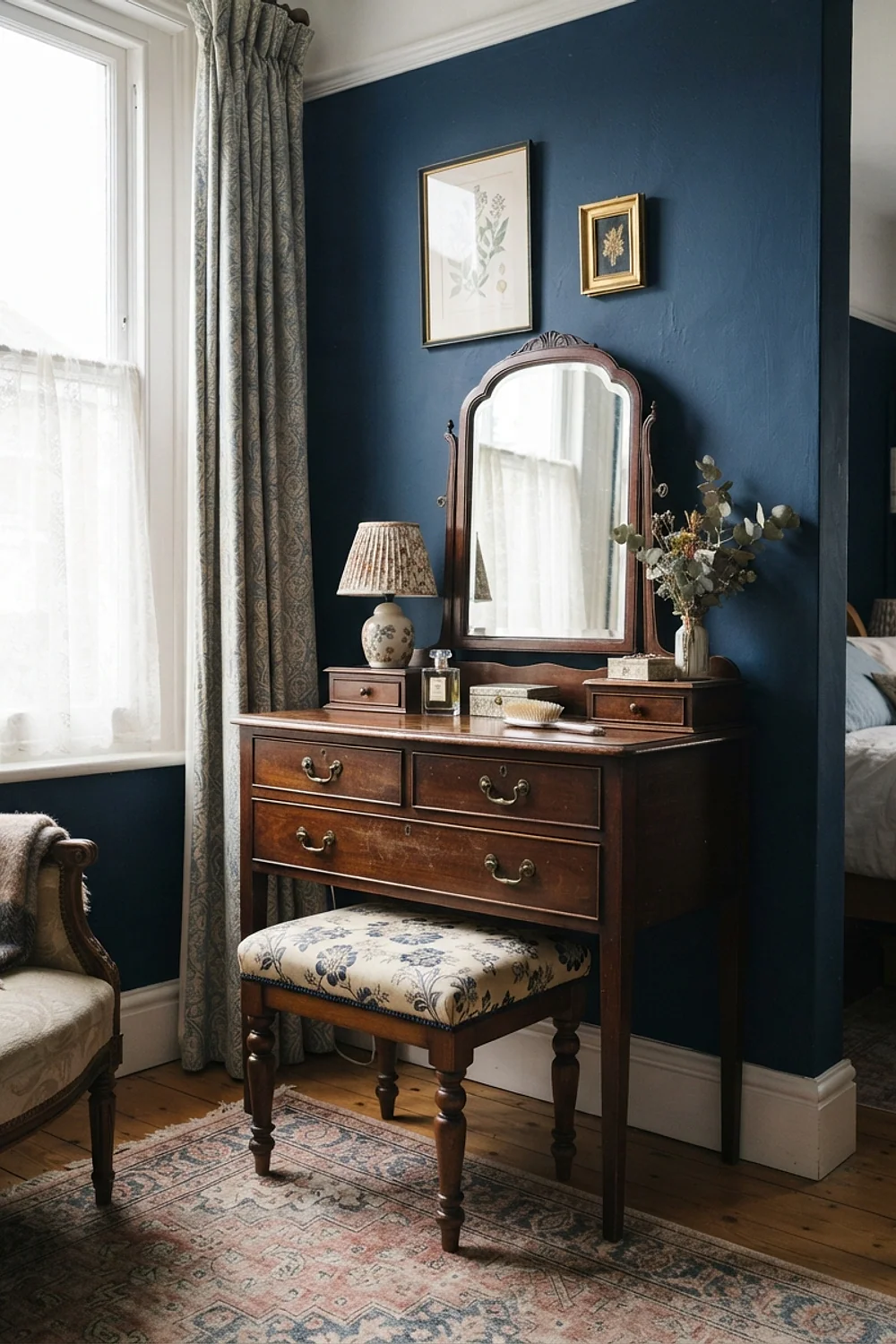
A dressing table 30 inches high and 16-18 inches deep fits under a window or in an alcove where a full dresser won’t go. The form dates to the 1700s, and it’s still the best answer for a tiny room, since one can be found secondhand for $80-$250.
Position it to catch daylight on your face from the side. A table facing a bright window leaves the face in silhouette, which defeats the purpose.
23. Tailored bed skirt
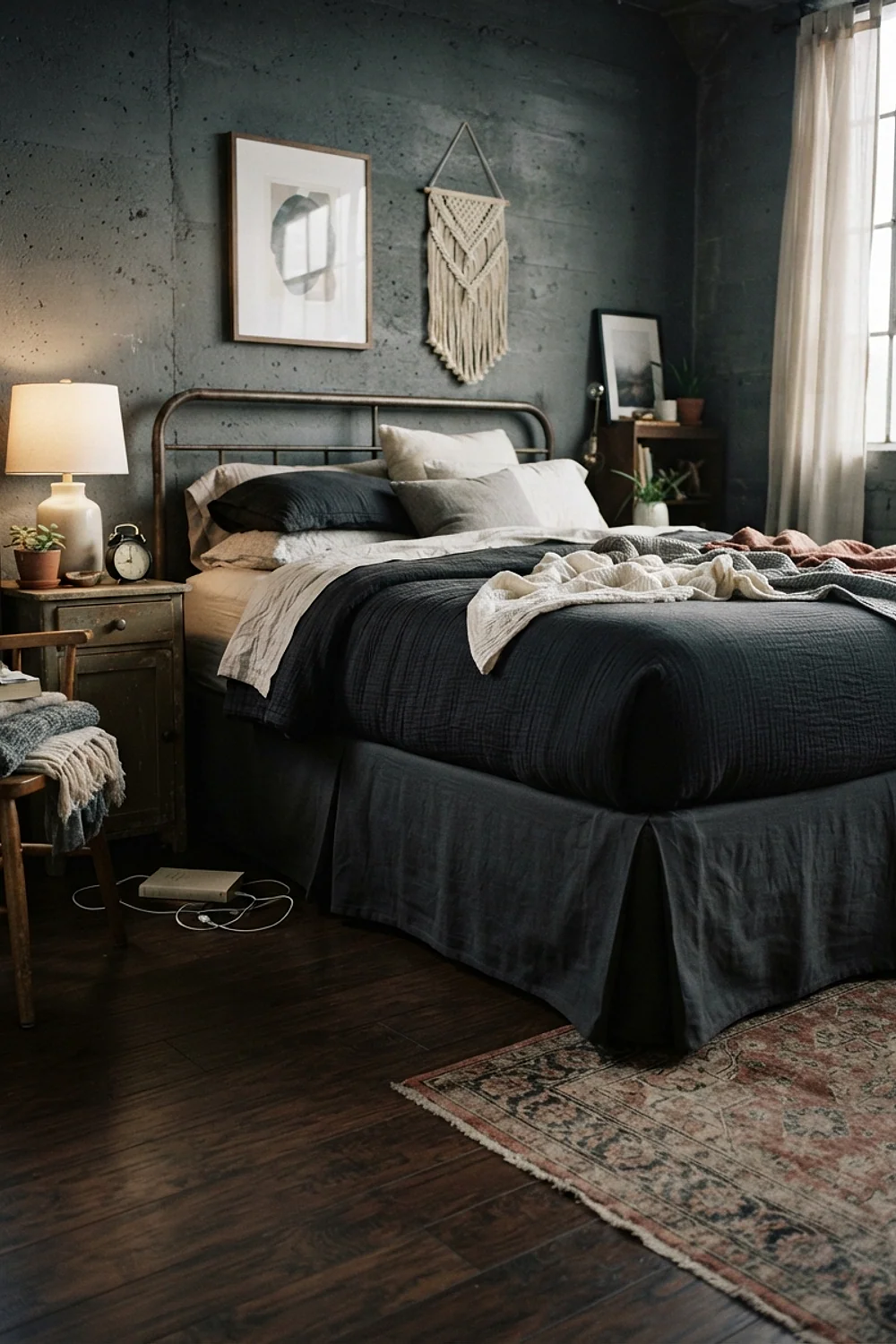
A tailored bed skirt hides under-bed storage and visually grounds the mattress. The most common mistake is a drop that’s too short. Measure from the top of the box spring to the floor, and aim for a drop of 14-16 inches that just brushes the boards.
Go for a split-corner design so it doesn’t bunch at the bed frame. Skip it on a platform bed, where the frame already finishes the edges.
24. Painted wood bed frame
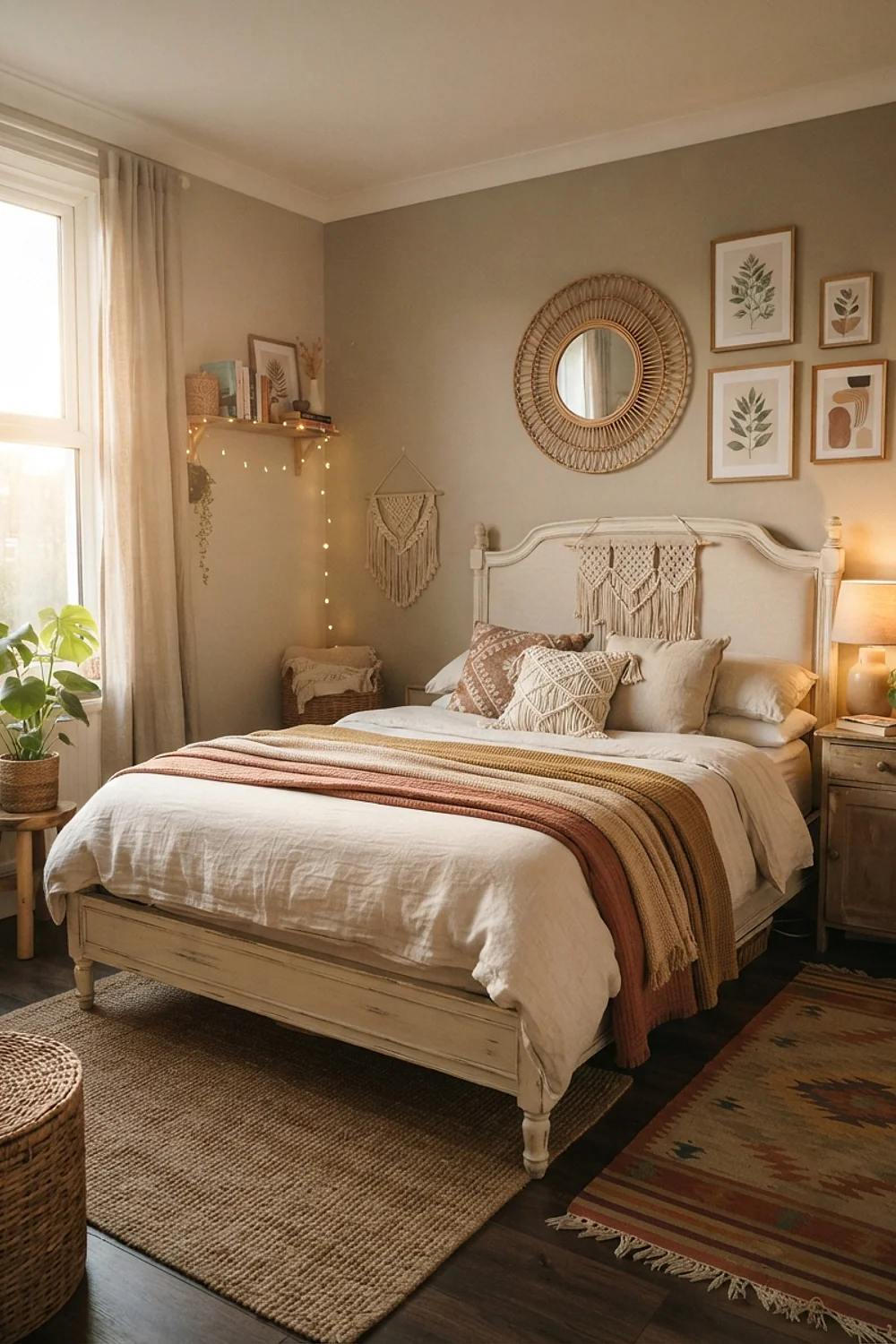
A bed frame painted in a muted gray-green, pale gray or off-white borrows from Swedish Gustavian furniture of the late 1700s. Milk paint or chalk-style paint over pine gives a flat, slightly chalky surface that looks old in the best way.
Choose it for rooms with limited natural light, where pale paint bounces light around. Seal with wax or a matte topcoat, because bare paint scuffs where legs meet the floor.
25. Dusty rose velvet cushion
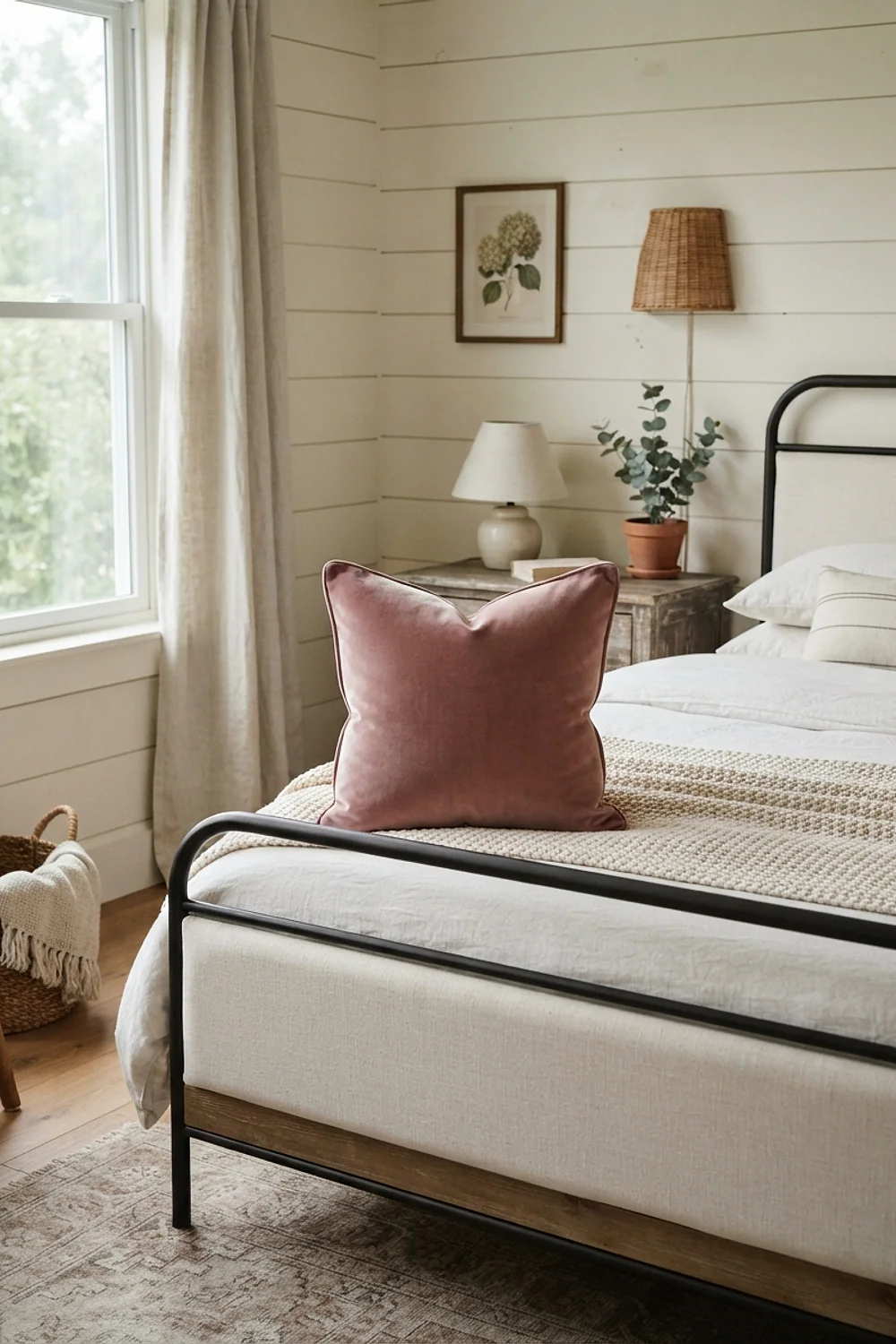
A velvet cushion in dusty rose, nearer to dried petals than bubblegum, adds a color that reads as a neutral against gray, cream and oak. Cotton velvet has a short, dense pile that feels cool under your hand and shifts shade when light crosses it.
Pick a 20-inch square so it sits clear of the sham in front. Avoid pure pink in rooms with cool white walls, where it can look sugary instead of soft.
26. Window seat cushion
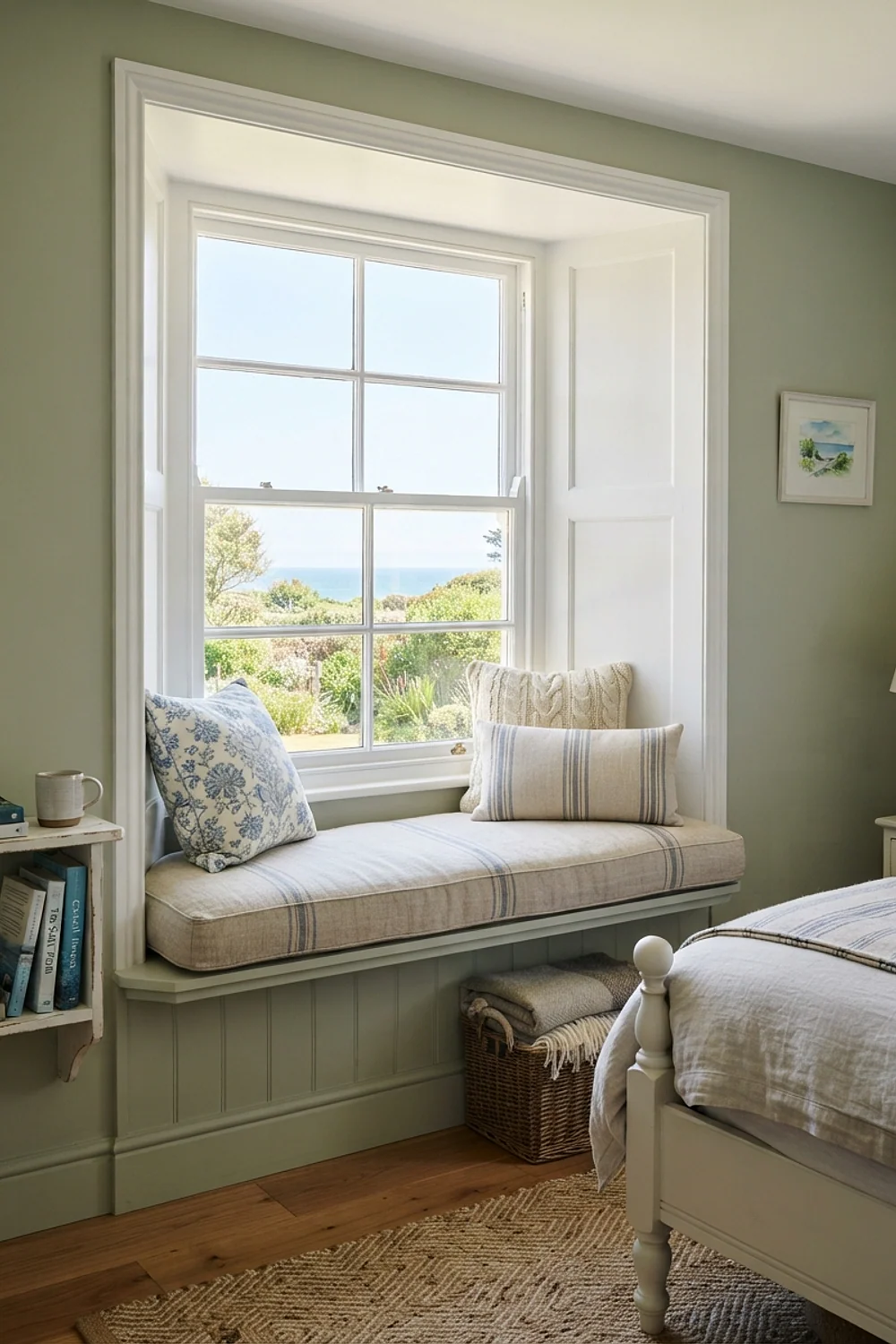
A window seat with a 3-4 inch foam cushion in washable canvas gives a room a second place to sit. The English bay window seat has been the reading spot of choice since the 1600s, and it suits anyone who wants a quiet corner at 4 p.m.
Use high-density foam, around 2 pounds per cubic foot, so the cushion keeps its shape. Pair it with a Roman shade, not a long curtain, so the fabric doesn’t pool onto the seat.
27. Shaker peg rail
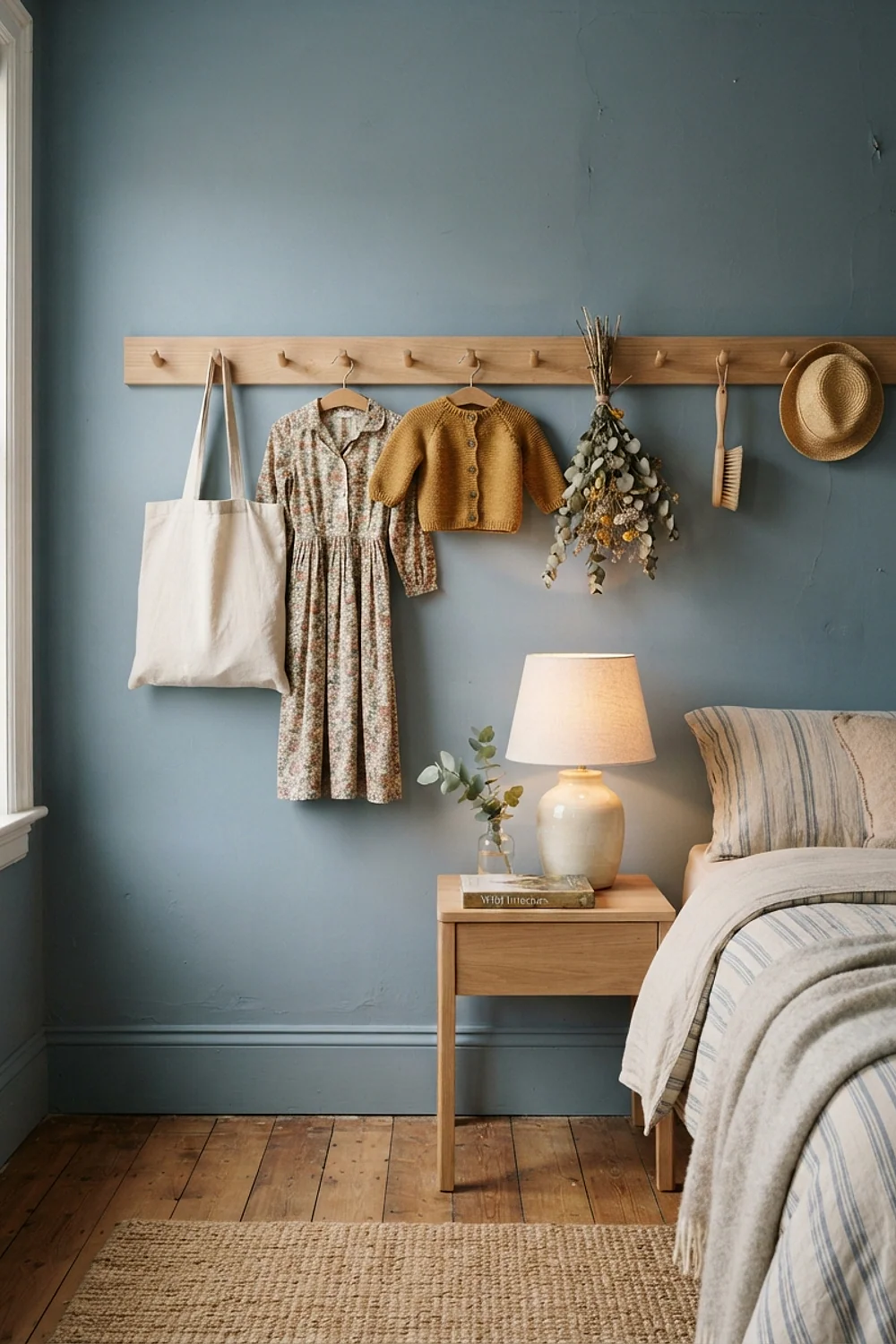
A Shaker peg rail, about 36 inches long with five pegs, handles bags, robes and one hat. Shakers installed rails at about 72 inches off the floor, even hanging chairs on them to sweep, and the design needs no hardware beyond itself. Expect $30-$70 for a solid maple or pine rail.
Screw into studs or use anchors rated for 25 pounds. Keep heavy coats elsewhere, since overloaded pegs pull loose from drywall.
28. Small writing desk by the window
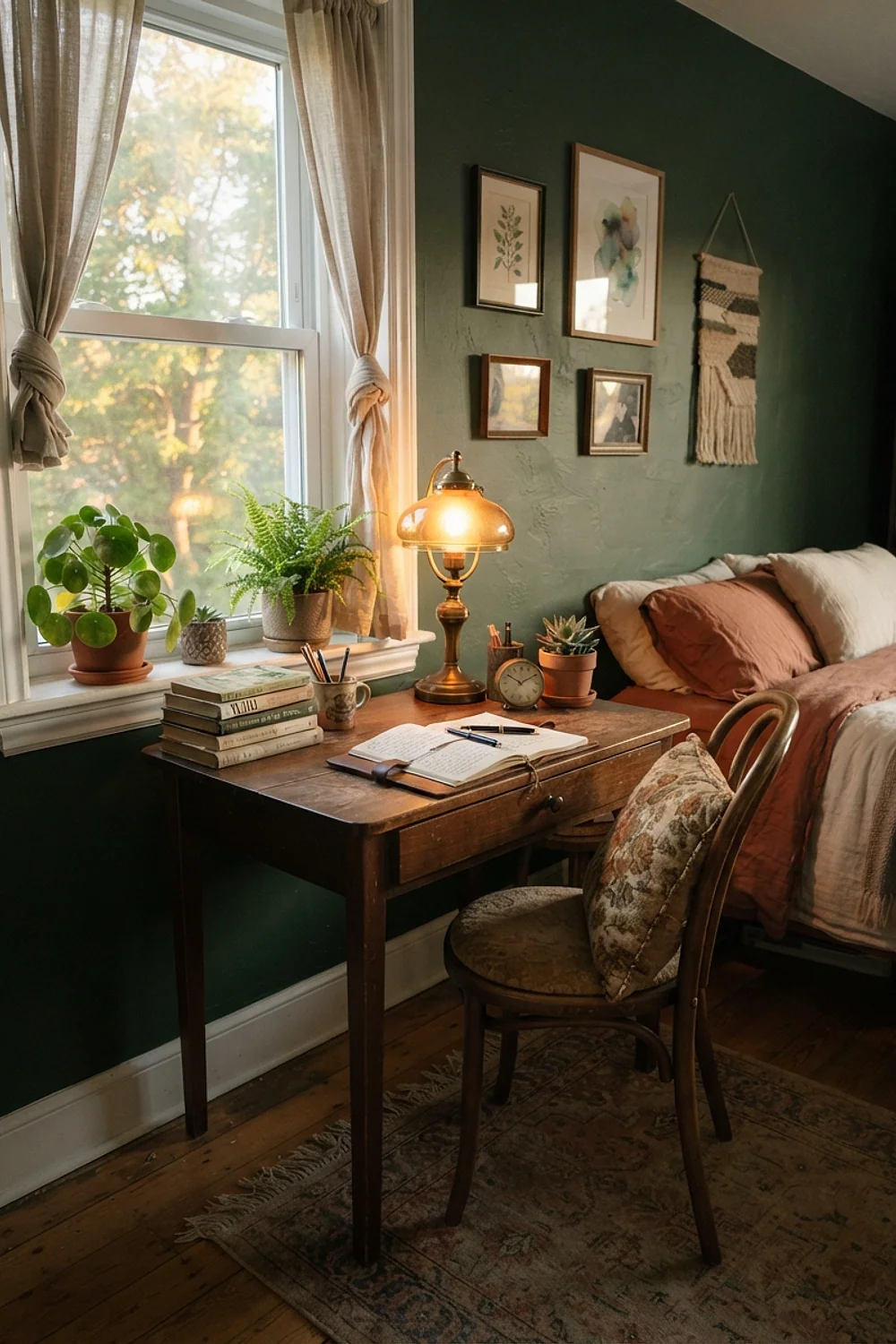
A writing desk 36-40 inches wide, with one shallow drawer, handles a laptop and a lamp without turning the bedroom into an office. The secretary form of the 1700s was designed for exactly this, a surface that tucks into a corner and holds what’s needed.
It suits people who work from home a few days a week. Choose a chair that slides fully underneath, or the legroom disappears and the bedroom reads as cluttered.
29. Taper candles in brass holders
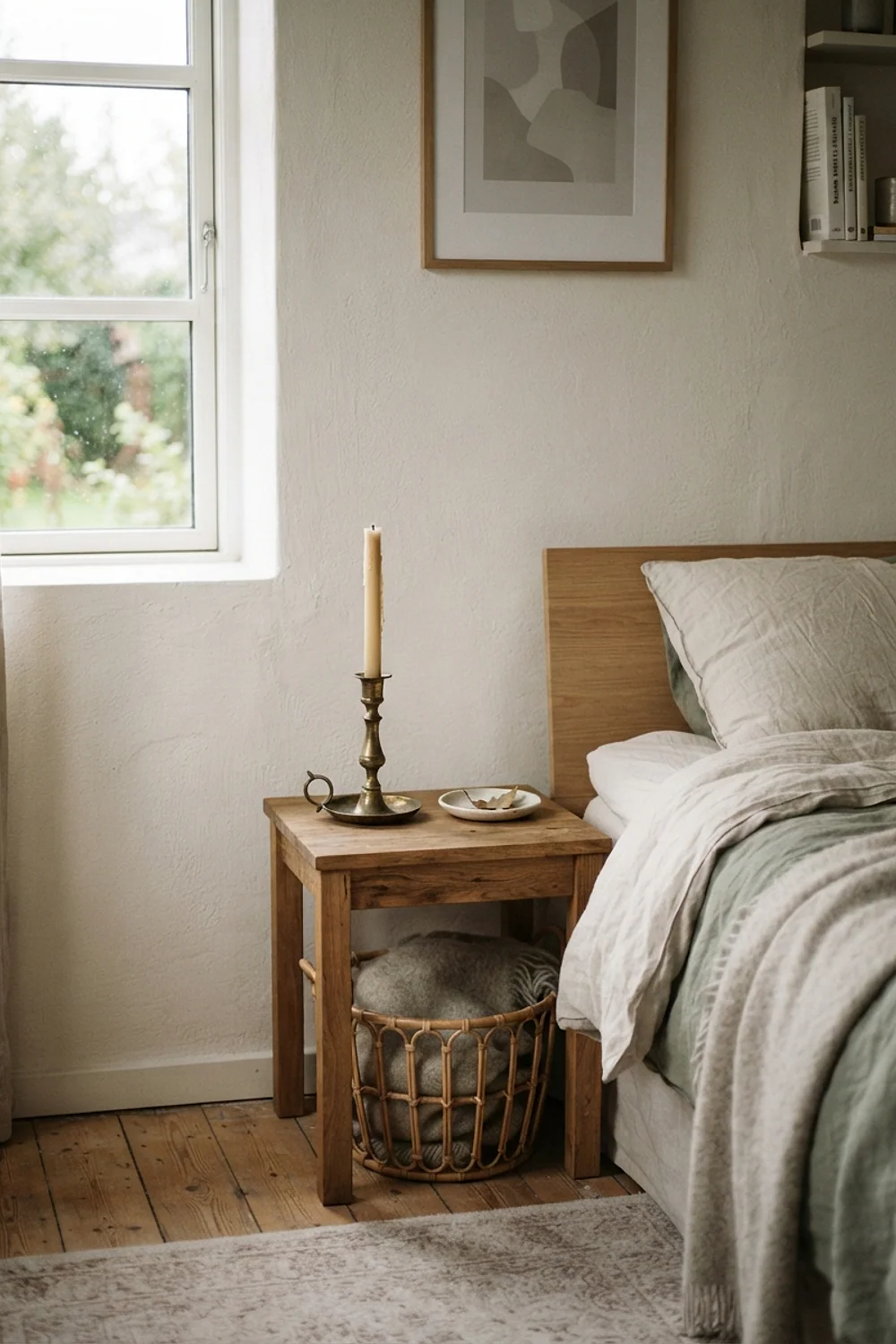
A pair of unscented taper candles in brass or ceramic holders gives a flickering, low light at about the height of a person lying in bed. Candlelight is the oldest bedroom light there is, and the flame moves in a way that no bulb can copy.
Use drip-free tapers about 10 inches long and never leave them lit while asleep. Pair them with a dimmable lamp for the days when matches aren’t practical.
30. Euro shams and sleeping pillows in rows
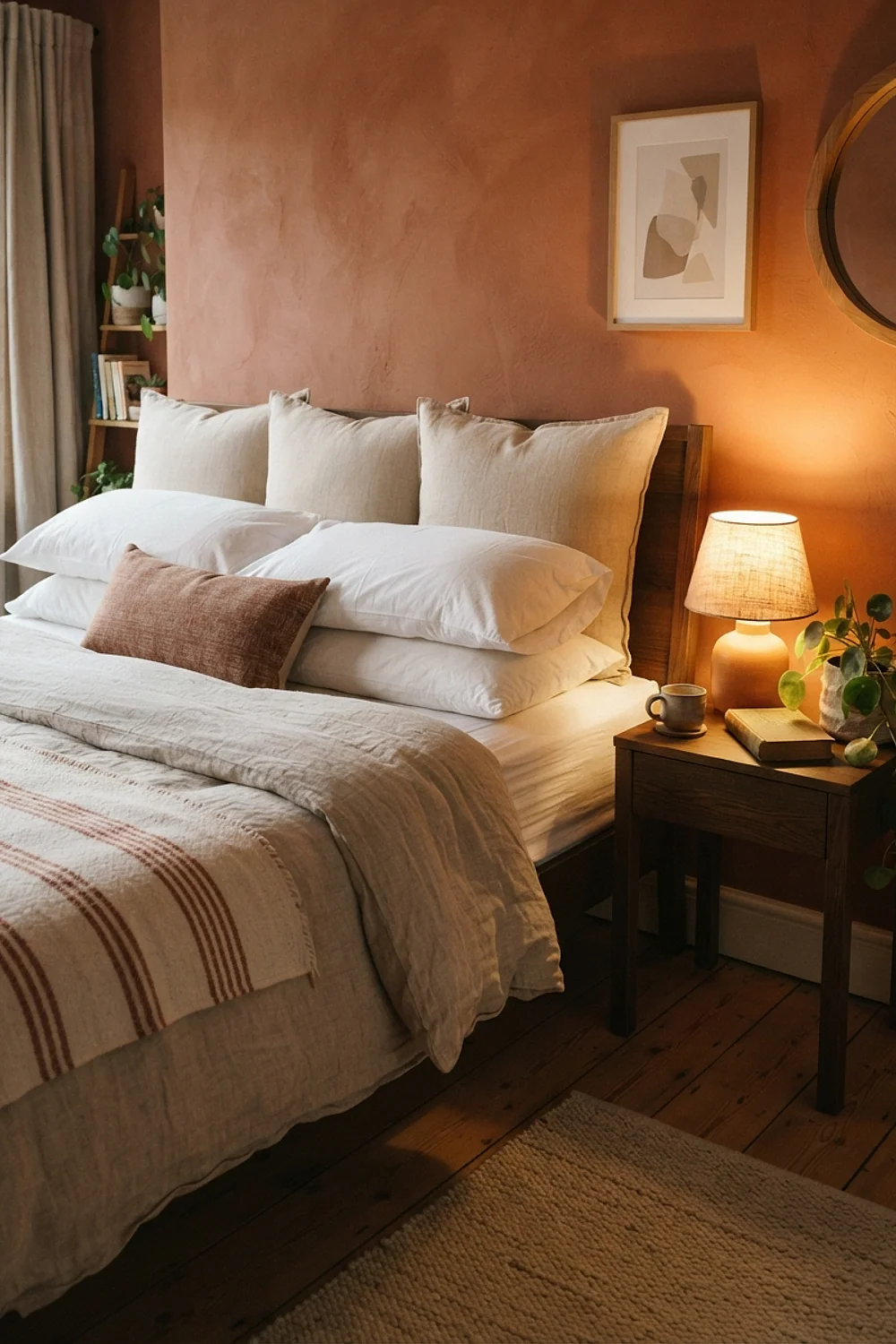
Two 26-inch Euro shams against the headboard, two standard sleeping pillows in front, and one 14-by-20 lumbar cushion on top is a pillow stack that works on a queen. The layers hide a bare headboard and give support for sitting up to read.
Stick to two patterns at most, one plain and one with texture. Anything more than five pillows on a bed turns bedtime into a nightly unpiling chore.
31. Pom-pom or ric-rac trim on a cushion
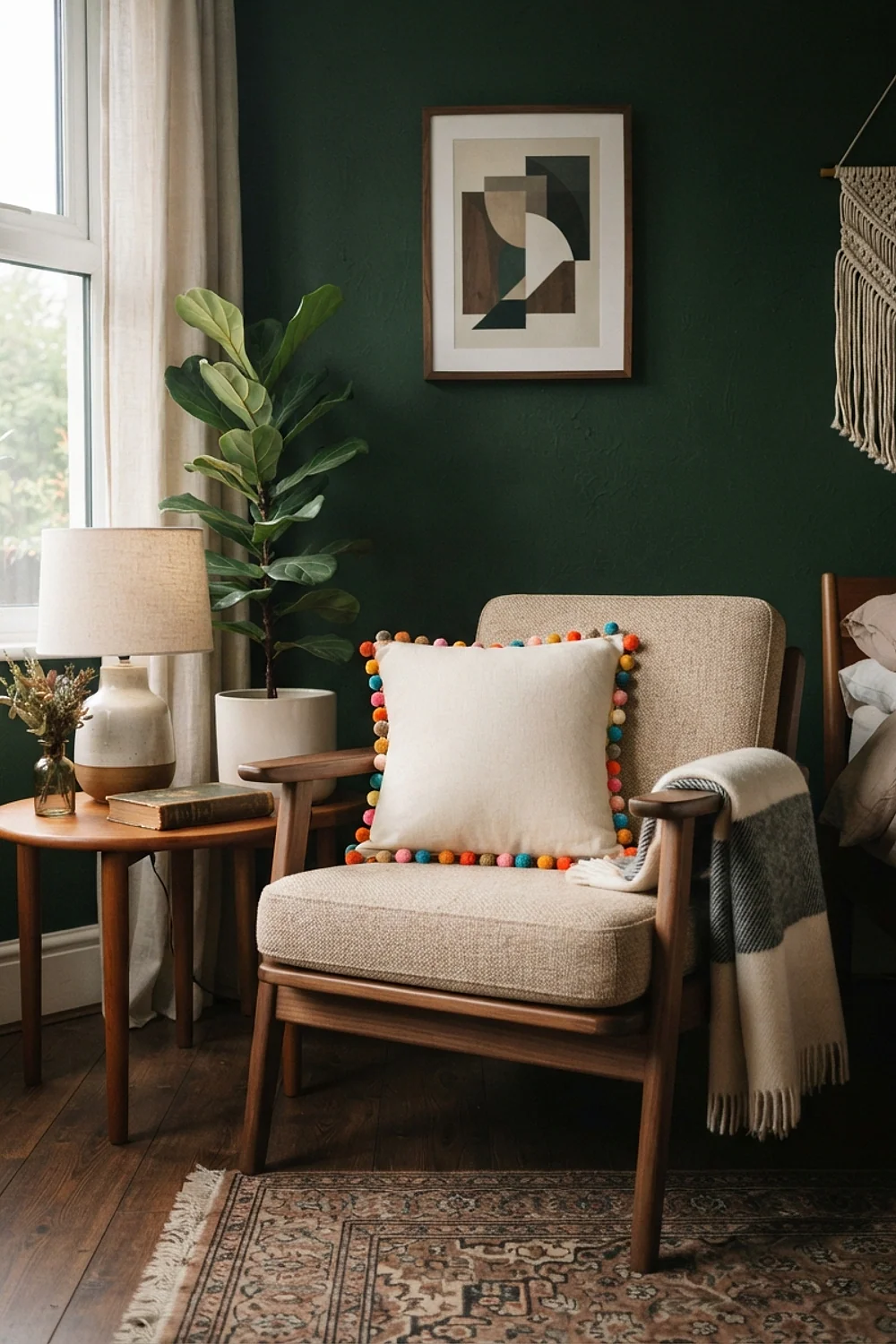
Trim in cotton pom-poms or ric-rac, about half an inch wide, adds a handmade detail to a plain linen cushion. Both trims came from 19th-century dressmaking, and they bring a little fun without filling the room with print.
Keep it to one cushion per bed. Check that the trim is sewn, not glued, since adhesive gives way after a couple of washes.
32. Antique armoire in a small room
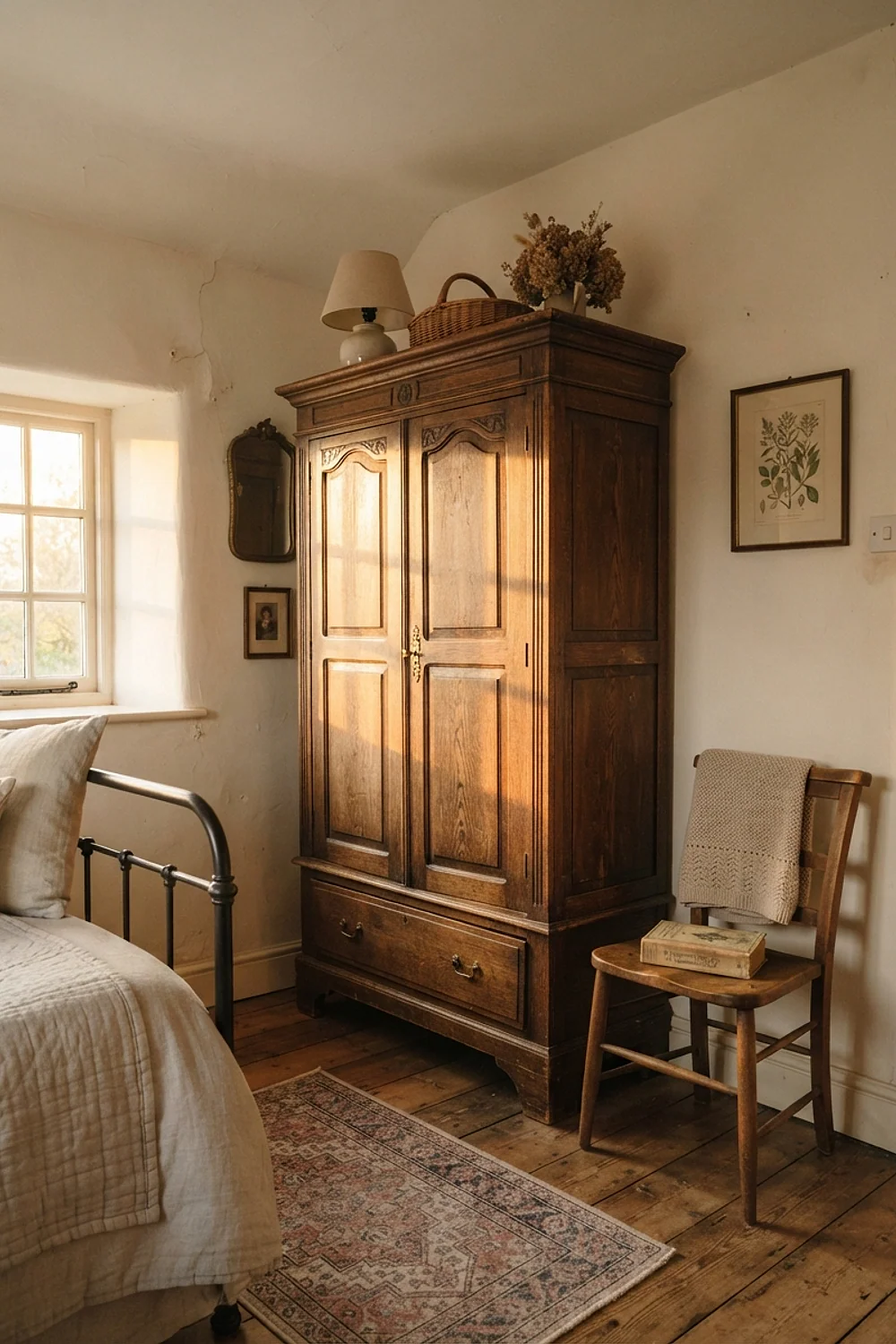
An armoire about 72 inches tall and 40 inches wide gives a closet-less bedroom hanging space and a strong vertical shape. Painted pine or oak armoires from the early 1900s turn up secondhand and usually have the sturdy joinery that modern flat-pack lacks.
Measure the stairs and doorways before buying, since many armoires break down into pieces and some don’t. Fit rails inside at 60 inches for shirts, and leave 2 inches clear on each side for air.
33. Heirloom-style quilt
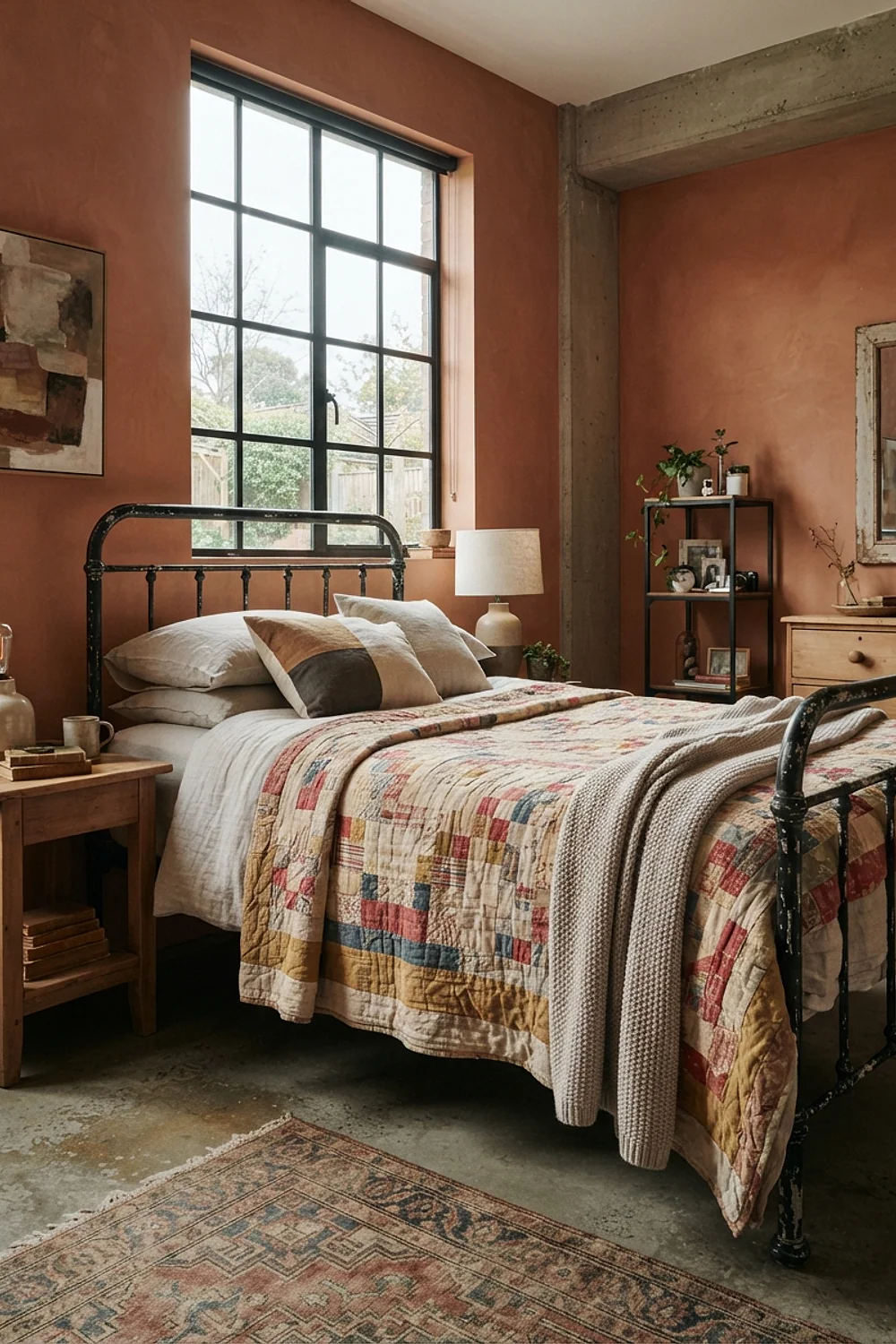
A hand-stitched or vintage quilt, even one that’s slightly worn, puts a piece of history on the bed in the form of tiny, uneven stitches. Cotton batting and pieced squares have been used on beds for over 200 years, and a quilt tends to look better as it softens. A secondhand one can run $60-$300.
The mistake to avoid is draping it where afternoon sun hits, because direct light fades dyes within a few seasons. Refold along different lines every few months so creases don’t set permanently.
Key pieces and where to find them
A cute bedroom decor aesthetic that lasts depends on where money goes. Spend on what gets touched or used daily, and save on what gets swapped when taste shifts.
- Spend on: the bed frame or headboard, bedding fabrics in linen or cotton, a solid wood nightstand, lamps with real ceramic bases, and curtains cut to the right length.
- Save on: throw pillows, vases, framed prints, trims, and anything in this season’s color.
- Skip entirely: novelty shapes, neon signs, and furniture with a short-lived finish that peels at the edges.
Fads fade; proportions don’t.
A headboard that’s the right width and height still looks right 20 years later, while a trending color on a cushion can be swapped for the price of one fabric remnant. And secondhand is a legitimate source for investment pieces, since old solid-wood furniture often costs less than new particleboard.
Updating classics without losing them
A cute bedroom decor aesthetic can drift into costume if every piece is period-correct. Mix eras on purpose and keep a plain surface next to each decorated one.
- Pair one antique piece with a modern one, such as an old trunk beside a clean-lined lamp.
- Limit the room to three colors plus wood tones, and repeat each one at least twice.
- Alternate textures: nubby linen against smooth ceramic, matte paint against brass.
- Leave one wall bare so the eye has somewhere to rest.
Seasonal swaps are the easiest refresh. In winter, a wool tartan and heavier curtains make sense, and in July, percale and a sheer panel do more. Rotating two or three items every few months keeps the room from feeling static without buying anything new.
Keeping the classics close
A cute bedroom decor aesthetic holds up when each piece has a reason to be there: a fabric that softens with washing, a lamp at the right height, a chair that gets used. Anything chosen for the sake of a trend tends to be the first thing to leave.
Save or pin this list so it’s ready when the next bedroom project starts, and begin with one step: measure the bed and the wall behind it, so the first thing you buy, whether headboard or sconce, is sized to fit.