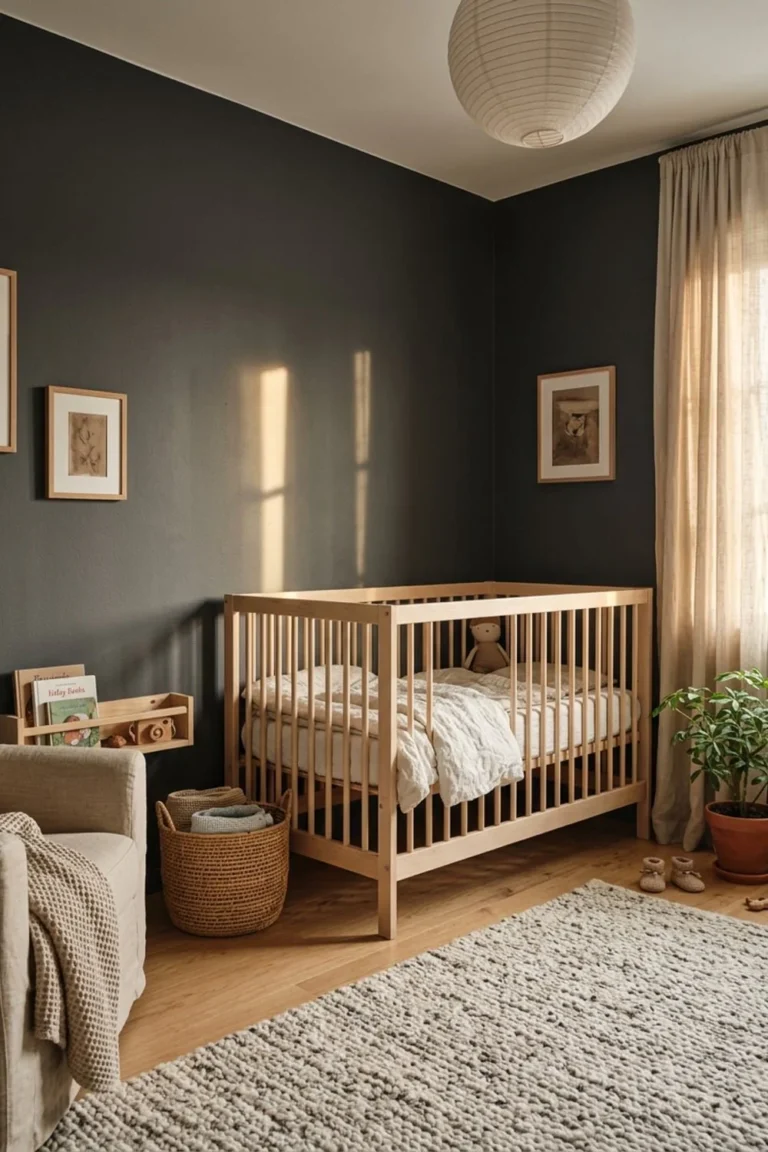

Wellness Sanctuary Bathroom Decor Ideas for Weekends
By Sunday evening, a builder-grade bathroom can hold a hand-sanded cedar mat, a mottled mid-tone wall and a shelf of amber glass, all made with a handsaw and a drill. That’s the promise of wellness sanctuary bathroom decor built by hand: quiet materials, low light and nothing that needs a workshop.
Below are 19 projects, each with a difficulty rating, a time estimate and the tools it calls for. Most are beginner level, and the cheaper route wins almost every time.
Wellness sanctuary bathroom decor projects you can build this weekend
A mottled greige wall from one sample pot

A quart of matte paint in a soft greige, something like Benjamin Moore Pale Oak, can be cross-hatched with a 3-inch brush to read like limewash. Difficulty: beginner. Time: about 3 hours plus overnight drying. Tools: brush, painter’s tape, drop cloth.
Mottled mid-tone walls blur the corners, which makes a small bathroom read deeper rather than smaller. The catch is sheen. Skip gloss, since it flags every brush stroke and steam streak, and choose a bathroom-rated matte or low satin.
A rolled-towel headrest for the tub

Two thick bath towels, rolled tight and tied with cotton twine at three spots, make a tub headrest about 14 inches long and 5 inches across. Difficulty: beginner. Time: 10 minutes. Tools: scissors.
It suits anyone who soaks weekly in a standard 60-inch tub with a sloped back. Skip microfiber, which holds water and turns musty in a day. Heavy waffle-weave cotton dries between uses when it hangs over a rail.
A floating pine shelf above the toilet

A 1×8 pine board cut to 30 inches runs about $11 at a lumberyard, while a boxed floating shelf in the same size lands near $70. Difficulty: intermediate. Time: 1 hour. Tools: drill, level, stud finder, sandpaper.
Hang it 24 inches above the tank so the lid stays easy to lift. Finish the board with two coats of water-based polyurethane. (Hollow-wall anchors will hold towels but not a stack of ceramic jars, so find studs if the shelf will carry weight.)
Amber bulbs inside a paper lantern

On a gray November afternoon around 4pm, a bathroom with 5000K bulbs looks as flat as the side of a toaster. Swap in 2200K amber LEDs and the tile goes honey-toned. Difficulty: beginner. Time: 15 minutes. Tools: stepladder.
A clip-on rice-paper lantern over a bare bulb diffuses the glow further. Use LEDs only, because an incandescent bulb inside paper is a fire risk.
A sealed bath tray from a 1×6 board

The common mistake with a wooden bath tray is stopping at oil. Raw pine swells within weeks of steam, so the tray needs three coats of spar urethane, sanded lightly with 220-grit between coats. Difficulty: beginner. Time: 2 hours plus drying. Tools: handsaw, sandpaper, brush.
Cut a 30-inch length, glue two 1×2 cleats underneath, and the tray suits anyone who reads in the bath. Measure the rim first, since tub rims range from 4 to 7 inches wide.
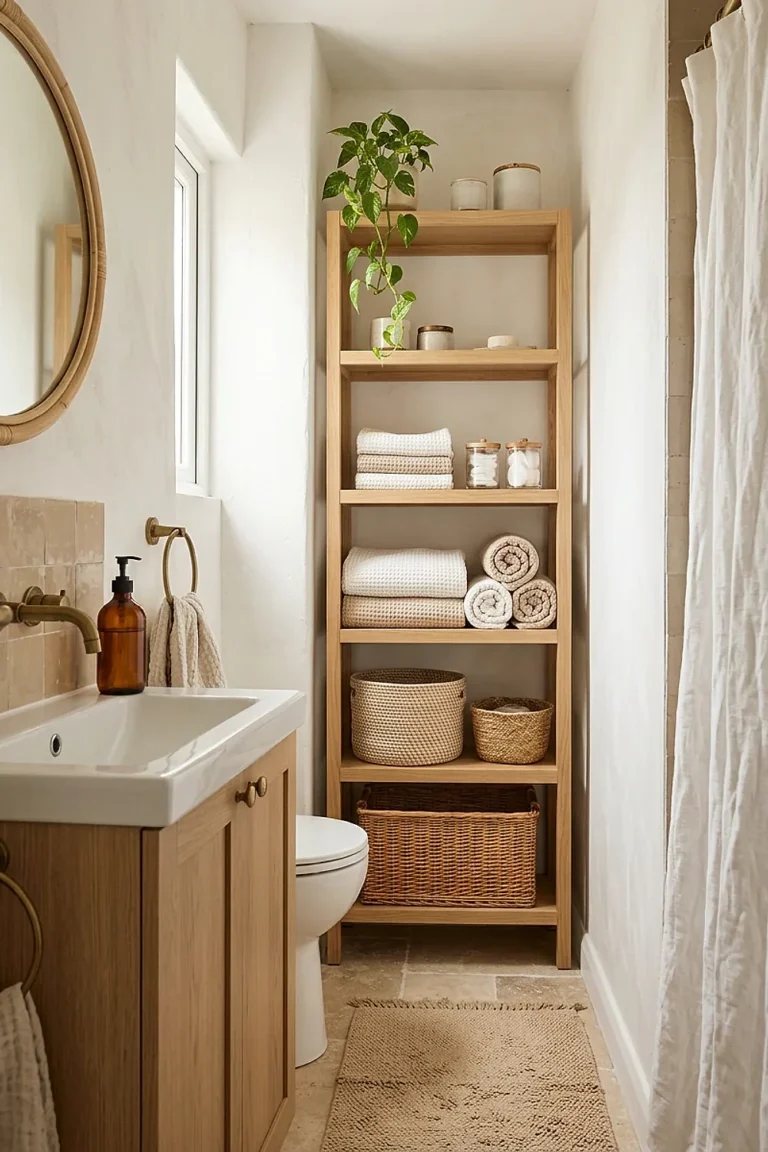
A thrifted wine crate turned into towel cubbies

A wooden wine crate found secondhand for about $8 holds six rolled hand towels when mounted on its side, against roughly $60 for a ladder shelf. Difficulty: beginner. Time: 30 minutes. Tools: sandpaper, screwdriver, two heavy-duty screws.
Rolled towels in a 12-inch-wide crate show their texture and take less depth than folded ones. Check for stamped ink on the wood, which can bleed into damp cotton. A coat of clear sealer blocks it.
Eucalyptus hung from the shower head

Six to eight eucalyptus stems, tied with twine and hung about 7 inches from the shower arm, release scent as steam rises. Difficulty: beginner. Time: 5 minutes. Tools: twine, scissors.
Trim the bundle to 14 inches so it looks deliberate. The color fades from silver-green to gray in about three weeks, so replace it on a schedule. It fits small bathrooms best, where one hanging bundle is the only decoration.
A cedar duckboard bath mat

Cedar slats resist rot better than pine and smell clean when wet. Cut seven 1×2 slats to 24 inches, space them a quarter inch apart on two cross cleats, then glue and screw. Difficulty: intermediate. Time: 2 hours. Tools: handsaw, drill, sandpaper.
It suits a walk-in shower where water pools on tile. Lift it for a rinse once a week, because a mat left flat traps damp and grows black spots at the cleats.
A grooved air-dry clay soap dish

A fist-sized slab of air-dry clay, rolled to 3/8 inch and pressed with five shallow grooves, drains water off the bar instead of letting it pool. Difficulty: beginner. Time: 30 minutes plus 24 hours of drying. Tools: rolling pin, butter knife, sandpaper.
Air-dry clay is not waterproof on its own. Two coats of water-based sealer on every surface, underside included, stop it from going soft after a month of wet soap.
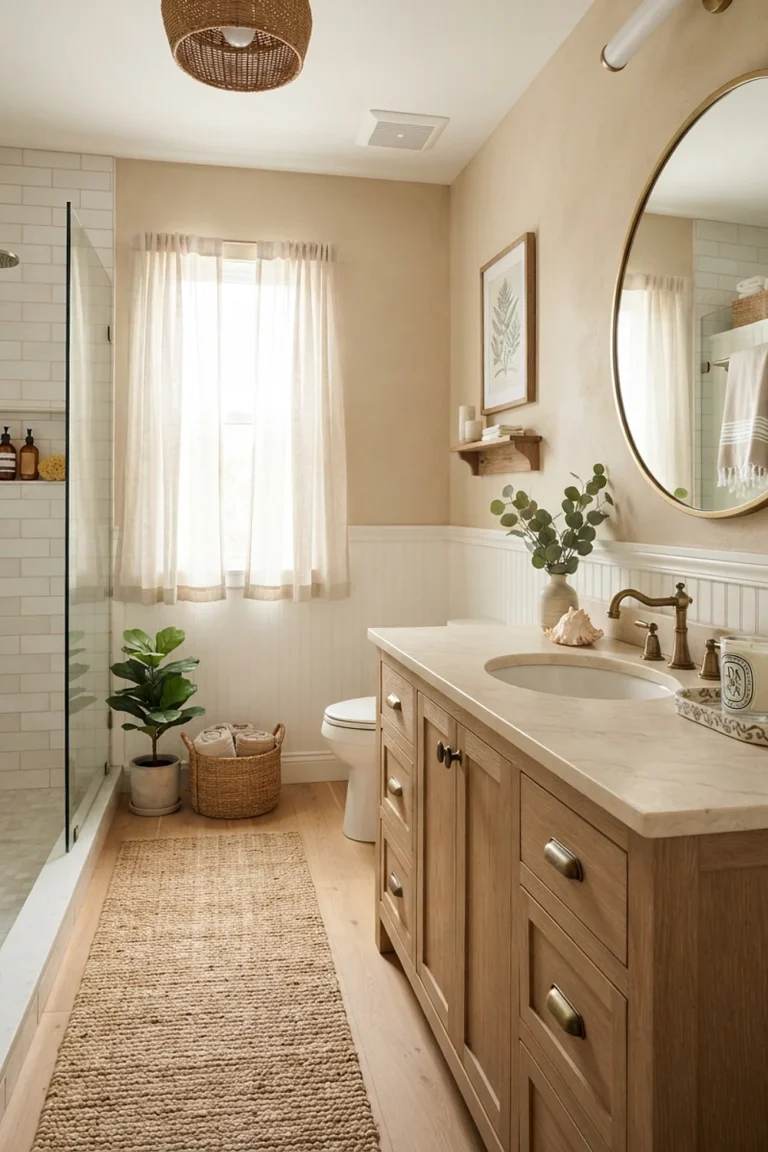
A builder mirror framed in oak

A plain 36-by-30-inch builder mirror wrapped in 1×2 oak trim costs about $25 in lumber, against $200 and up for a framed version. Difficulty: intermediate. Time: 3 hours. Tools: miter box, handsaw, wood glue, mirror mastic.
In a bathroom narrower than 6 feet, keep the frame under 2 inches wide, since a chunky border eats visible glass. Attach it with mastic rather than wood glue, and tape the miters while they cure.
White cotton towels dyed to clay or sage
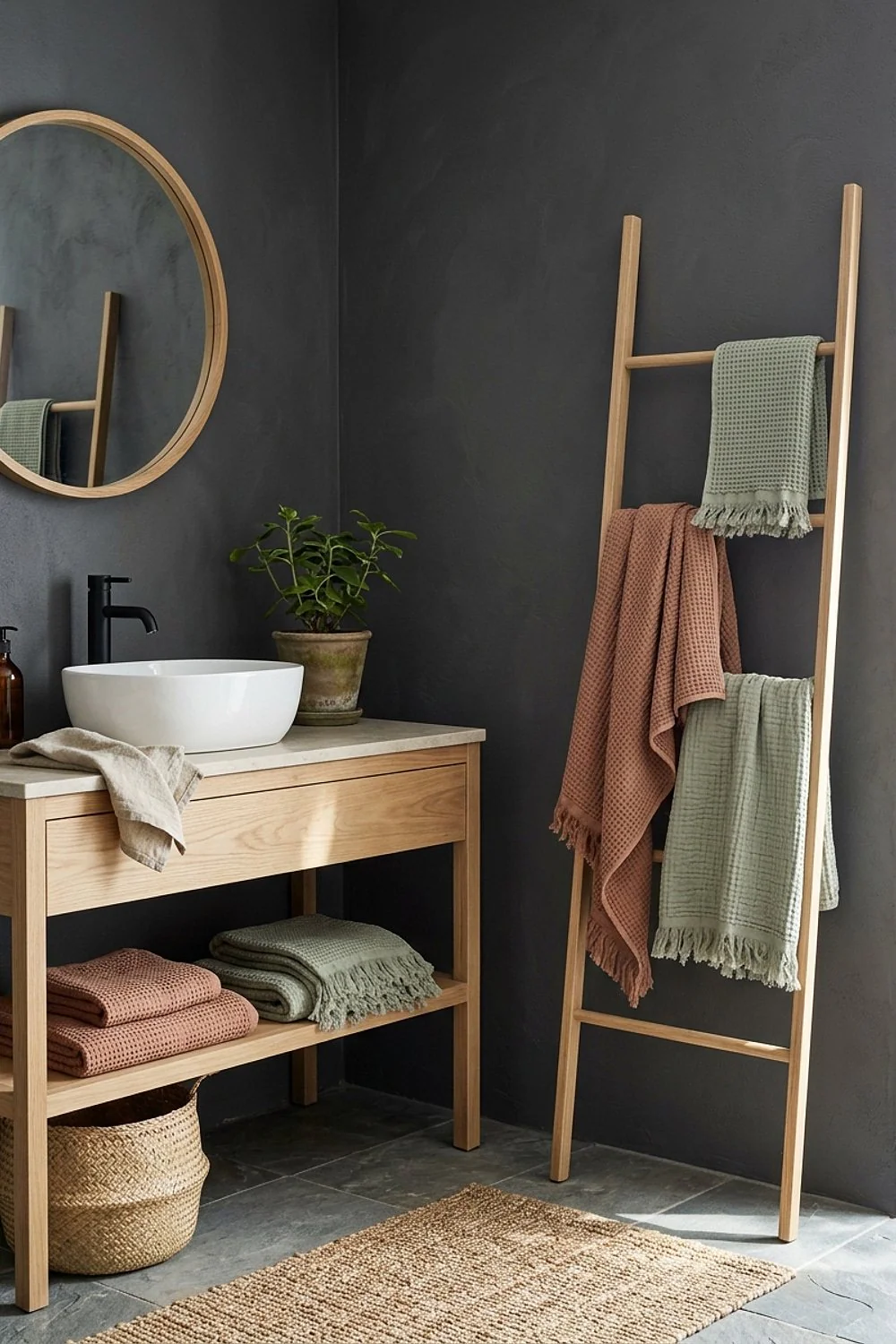
White cotton towels dyed in the washing machine to a muted sage or clay look like a boutique set. Difficulty: beginner. Time: 90 minutes. Tools: powdered fabric dye, 1 cup of salt, hot water, washer.
Natural fibers take dye while polyester blends stay patchy, so check the tag for 100 percent cotton. Test one hand towel first and run it through two washes to see how the color fades.
A teak stool sanded and oiled
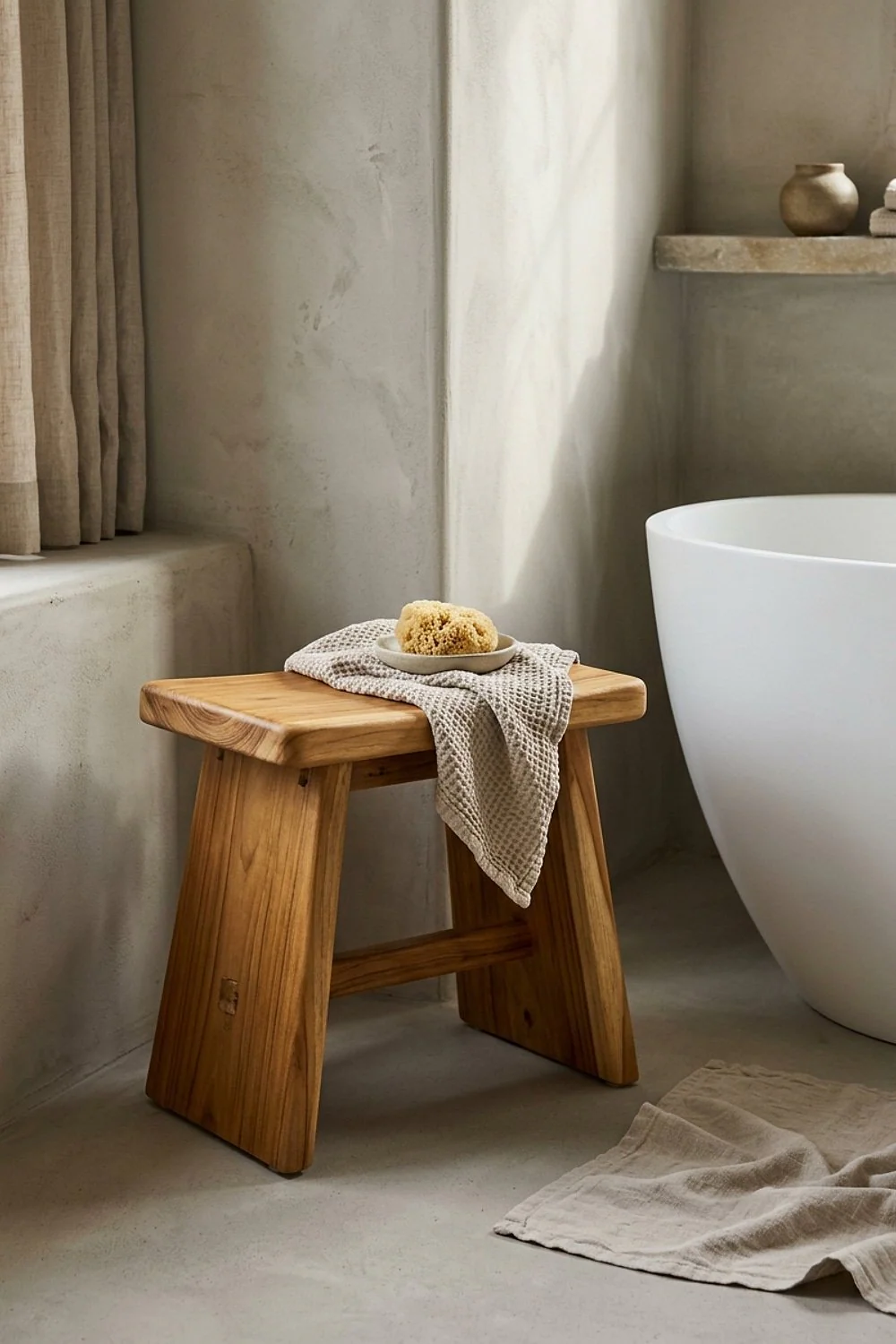
An 18-inch teak or acacia stool from a thrift shop gives a place to sit while drying off and a landing spot for a folded towel. Difficulty: beginner. Time: 45 minutes plus an hour of absorption. Tools: 120-grit sandpaper, lint-free rag, Danish oil.
A slatted top sheds water while a solid top holds it. Wipe off excess oil after 15 minutes, otherwise the surface stays tacky for days and marks towels.
A three-hook oak rail behind the door

A 24-inch oak rail with three hooks, spaced 8 inches apart and mounted 66 inches off the floor, costs about $18 in parts versus $90 for a boxed set. Difficulty: beginner. Time: 40 minutes. Tools: drill, level, pencil.
The spacing lets bathrobes hang without overlapping so each one dries. Put the rail on the wall the door swings against, out of the sightline from the tub, where hanging fabric reads as clutter.
An LED strip under the vanity edge

A 2700K LED strip rated IP65 for damp rooms, stuck under the vanity lip, throws a low glow across the floor. Difficulty: beginner. Time: 30 minutes. Tools: scissors, rubbing alcohol, plug-in adapter.
It suits midnight bathroom trips, when an 800-lumen overhead bulb wakes the whole house. Wipe the surface with alcohol before sticking, because dust is why strips peel in a humid room.
A soy candle poured into a thrifted teacup
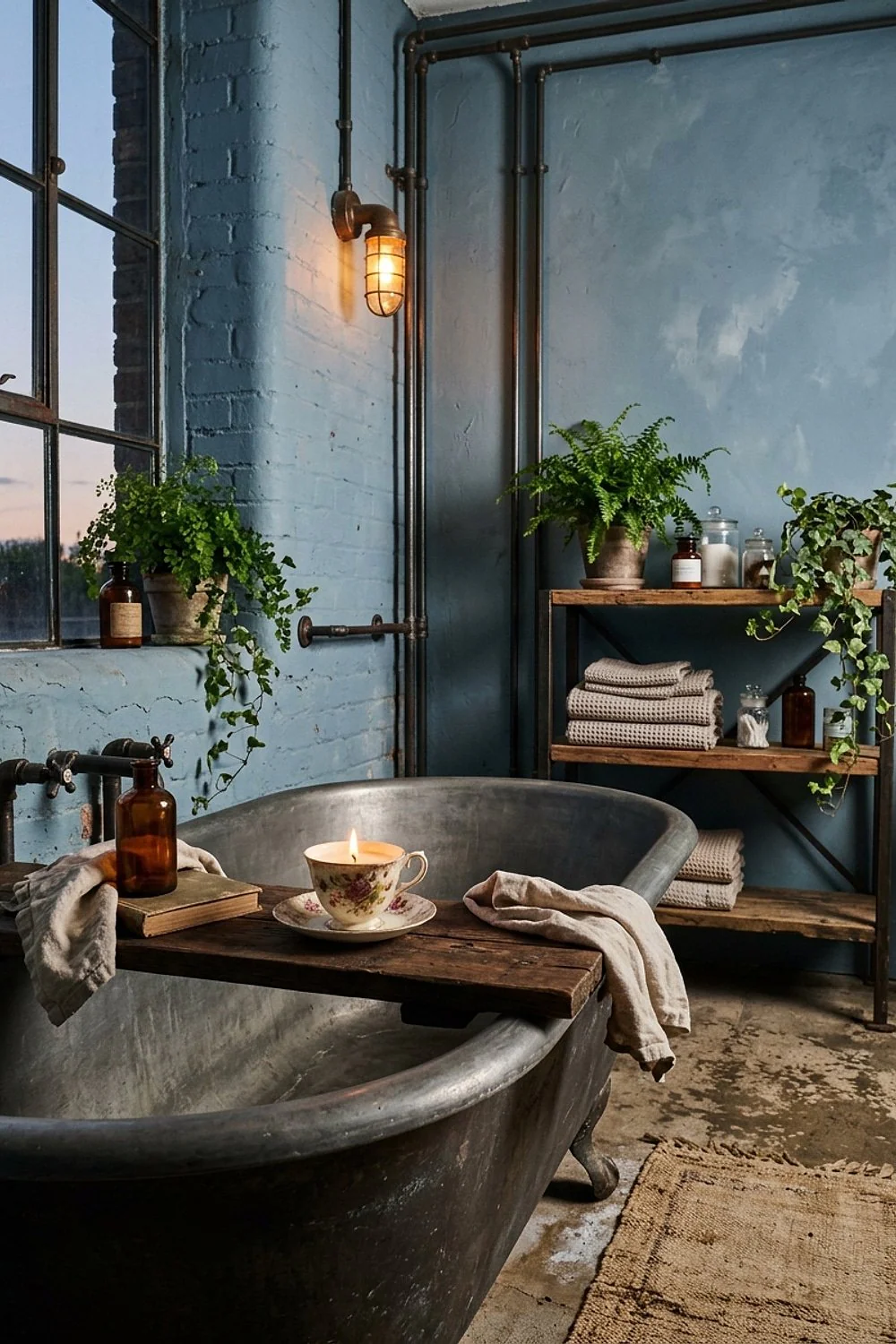
Pouring soy wax into thin glass is the usual mistake, because the heat can crack it. A thick ceramic teacup holds up. Difficulty: intermediate. Time: 1 hour plus 24 hours to set. Tools: pouring pitcher, wick sized for a 3-inch diameter, clothespin.
Melt flakes in a pitcher set in hot water to about 135°F, stir in scent at 6 percent by weight, and pour. Trim the wick to a quarter inch before every burn, and keep the flame 12 inches from the eucalyptus bundle.
Thrifted glass jars for cotton rounds

Glass jars with cork or wood lids, found secondhand in sets of three, hold cotton rounds, swabs and bath salts at eye level. Difficulty: beginner. Time: 20 minutes. Tools: warm soapy water, razor scraper for old labels.
Pick jars 4 to 6 inches tall in matching glass tones so the shelf reads as one unit. Avoid metal lids, since steam rusts them within a season.
A pressed fern in a thrift-store frame

An 8×10 frame found secondhand for about $4, a fern pressed from the yard and a sheet of cream cardstock deliver the botanical print look that retails for $40 or more. Difficulty: beginner. Time: 20 minutes plus 7 days of pressing. Tools: heavy book, tape, scissors.
Hang it with its center at 57 inches. Keep it out of the shower spray, because steam curls paper and fades the fern. Pick a frame with real glass and a sealed back.
A marble floor tile as a vanity tray

A single 12-inch marble or limestone floor tile, with four felt pads stuck to the underside, corrals soap pumps and a toothbrush cup. Wiping the underside with rubbing alcohol first helps the pads grip. Difficulty: beginner. Time: 10 minutes. Tools: felt pads, rubbing alcohol.
It suits a small vanity or a rental where shelves are not possible. Honed stone hides water spots better than polished stone, which shows every ring.
Seal it once, because marble stains from toothpaste and etches from vinegar cleaners.
Amber pump bottles with handwritten labels

Amber glass pump bottles, 8 ounces each, hold hand soap, lotion and body wash decanted from loud plastic packaging. Difficulty: beginner. Time: 15 minutes. Tools: funnel, chalk marker or label tape.
It suits shared bathrooms where three bottles in the same color confuse everybody. Fill to 80 percent, since pumps need air space, and label the bottle shoulder so contents are readable from the doorway.
The pieces that earn their place
Most wellness sanctuary bathroom decor builds draw on the same dozen supplies, so one trip covers a full weekend. Buy a $6 handsaw and a miter box before even looking at a power miter saw, which costs forty dollars more and gets used twice.
- Handsaw, miter box and a cordless drill
- 120-grit and 220-grit sandpaper
- Water-based polyurethane and spar urethane
- Wood glue and mirror mastic
- Painter’s tape, 3-inch brush, drop cloth
- Stud finder and a 24-inch level
- Danish oil and lint-free rags
- Felt pads, twine and rubbing alcohol
Expect the full haul to land around $45 if the lumber, thrifted jars and crates are the only new spending. Thrift stores and lumberyard offcut bins beat big-box shelves on both price and character.
Room by room breakdown
Order matters more than budget when several projects share one small room. Work from messy to delicate.
- Paint the wall first and let it cure overnight.
- Mount the shelf, hook rail and crate.
- Seal all wood, then keep it out of the room for 24 hours.
- Swap bulbs and stick the LED strip.
- Style last: candles, jars, eucalyptus and the framed fern.
Stop at three or four projects per weekend. A bathroom with nineteen handmade objects reads like a craft fair, and quiet is the whole point.
When DIY isn’t worth it
Wellness sanctuary bathroom decor stops being a DIY job the moment water or wiring is involved. Anything behind the wall belongs to a licensed pro.
- Hardwired fixtures, since an electrician swap runs roughly $150 and costs far less than a tripped breaker or a fire.
- Shower waterproofing and tile, where one failed seam rots the subfloor.
- Moving plumbing, even a vanity drain by 3 inches.
Cheap wins on decor, not structure. A thrifted frame beats a new one, but a bargain waterproofing membrane applied wrong costs thousands to rip out.
Wellness sanctuary bathroom decor, one weekend at a time
Wellness sanctuary bathroom decor works best when each piece is made slowly and sealed properly. Start with the tub headrest or the pump bottles if building feels intimidating, and move to the cedar mat once the first one dries well.
Save or pin this list for the next free weekend, and measure the tub rim and the wall above the toilet before buying a single board.
Frequently Asked Questions
How much does wellness sanctuary bathroom decor cost to DIY?
Most projects land between $5 and $30 each when thrifted pieces and lumberyard offcuts are used. A four-project weekend usually costs under $100.
Can wellness sanctuary bathroom decor work in a rental?
Yes, if the projects avoid drilling and paint. The tub headrest, tile tray, jars, bottles, LED strip and teacup candle all leave the walls untouched.
Will wood and paper decor survive a bathroom with no window?
It will if the exhaust fan runs for 20 minutes after every shower. Sealed cedar and spar-urethaned pine handle steam well, while unsealed paper and raw wood fail within weeks.
Which project should a first-timer start with?
The rolled-towel headrest and the amber pump bottles take under 15 minutes and need no skills. They give an immediate sense of the finished mood before any sawing starts.