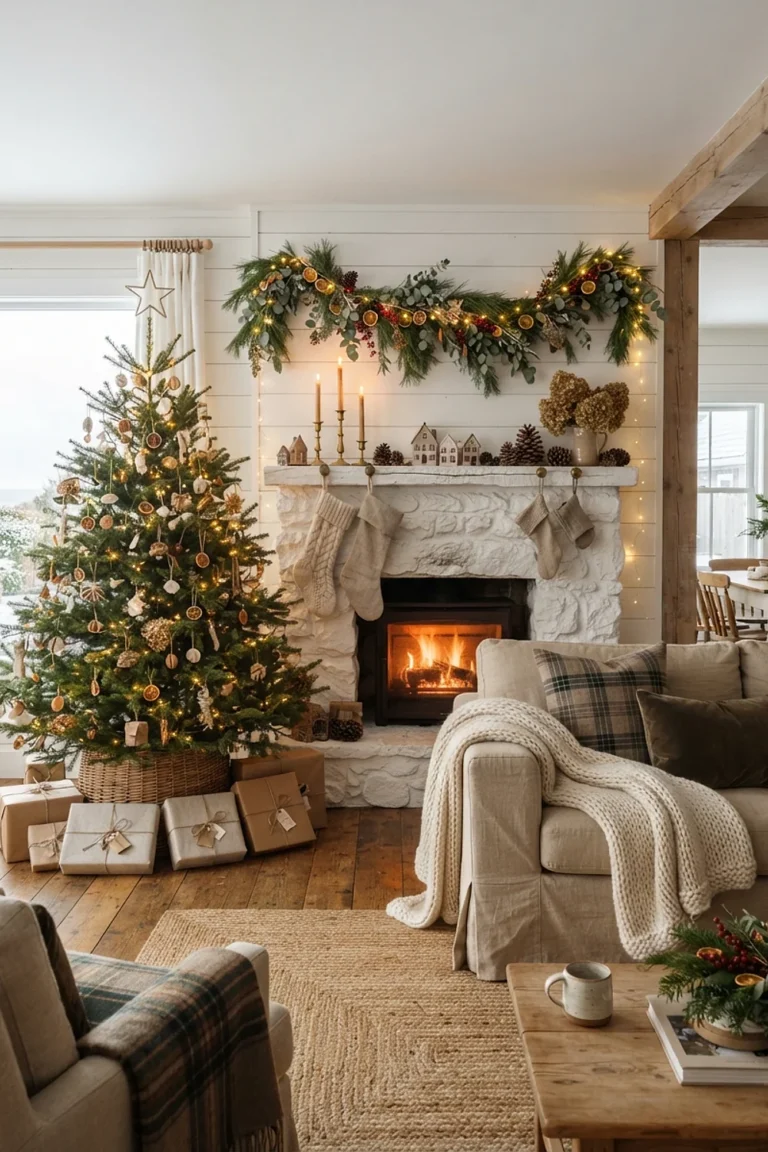
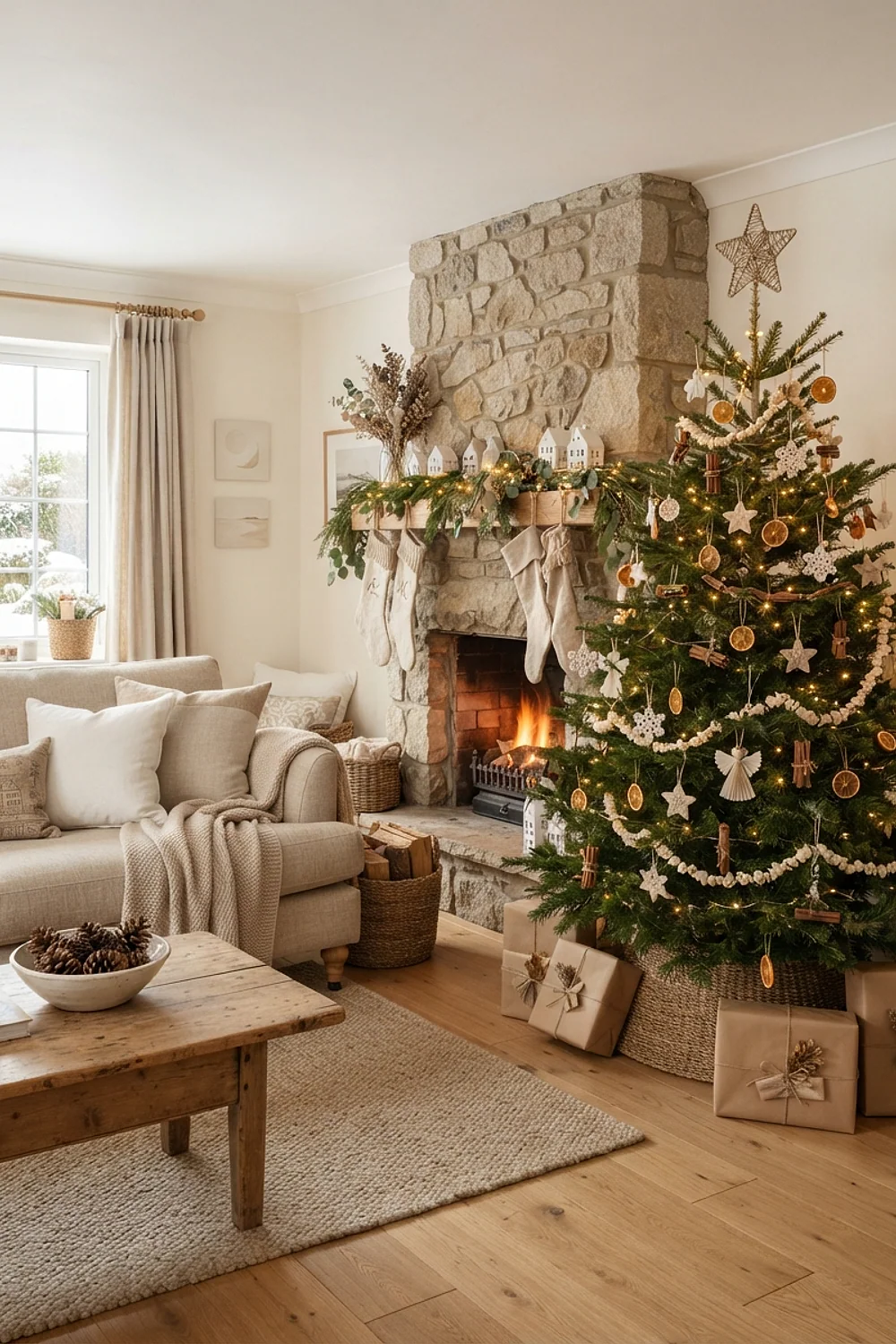
34 Homemade Christmas Decorations That Look Collected
Start with scraps. Homemade christmas decorations earn their place when the materials are honest (paper, wool, clay, twigs) and the maker’s hand shows a little.
This list gives 34 ideas with real sizes, materials, and the mistakes that make handmade pieces look like a school project. Pick five, ignore the rest, and the house will still feel finished.
Understanding the homemade christmas decorations look
The handmade holiday tradition is old and specific. Victorian households cut paper cornucopias and strung popcorn, German families made flat Dresden paper ornaments, and Scandinavian homes built straw goats and himmeli mobiles from rye stalks. Nobody was chasing a trend. They used what the farm and the sewing basket had on hand.
That history explains the look. A good handmade room is built on a few traits:
- Natural or recycled materials with visible texture, like wool, kraft paper, clay, dried citrus, and twigs.
- A restrained palette of three or four tones, with one color allowed to misbehave.
- Repetition of one shape or material so the pieces read as a family.
- Honest imperfection. A slightly wobbly star beats a flawless plastic one.
The items below are grouped by nothing but good sense. Mix freely.
1. Dried orange slice garland
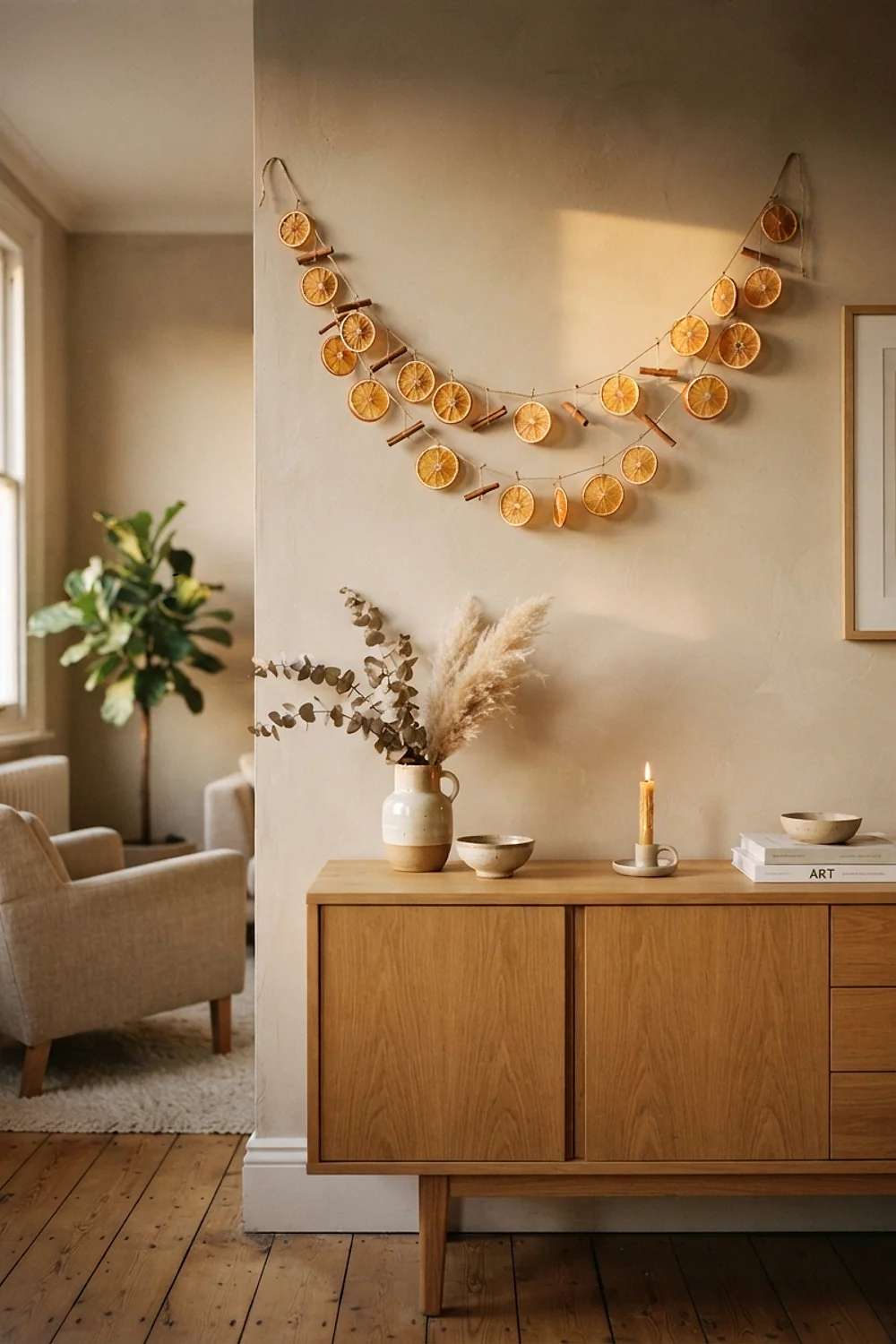
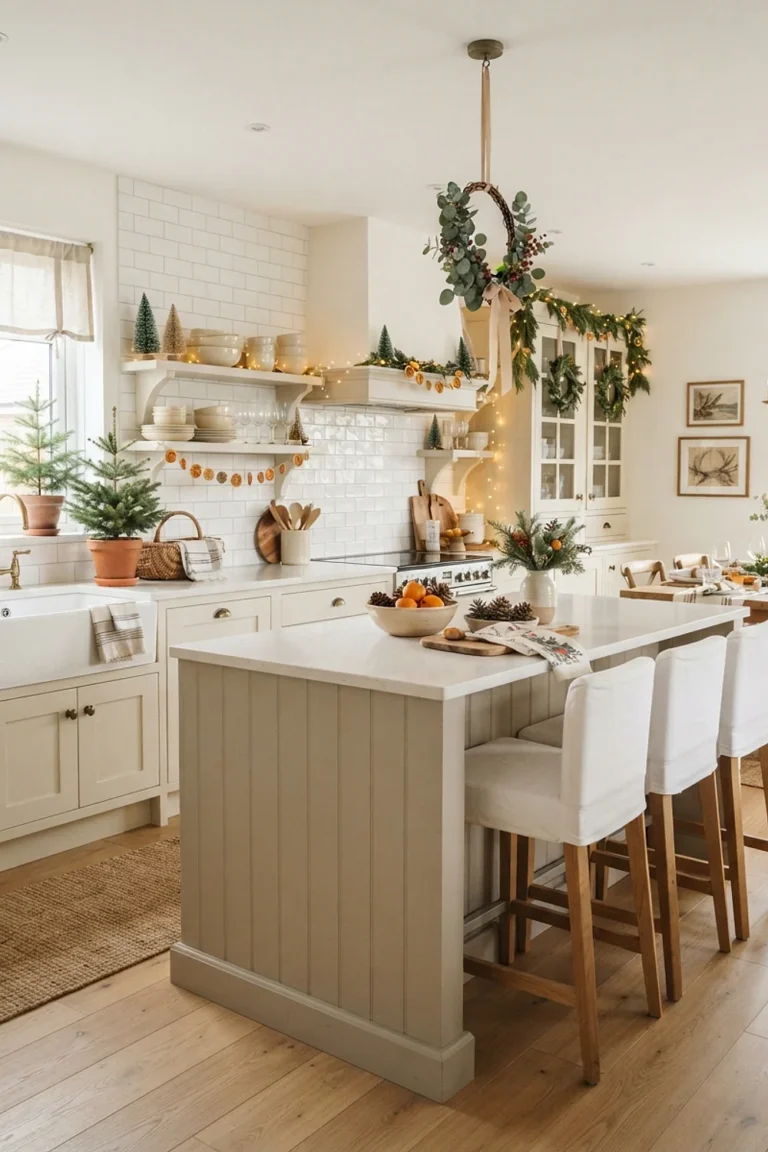
Orange rounds cut 1/4 inch thick dry evenly, while thinner slices curl and scorch before they’re done. Dried slowly at 200°F for about three hours, they turn translucent, and a window at 4pm lights them up like amber glass.
A 6-foot strand needs about 14 slices spaced 5 inches apart on jute twine, and three navel oranges cost around $4. Hang it where sun reaches, and keep it away from a steamy sink window, because moisture makes the slices tacky and moldy within a week.
2. Wool felt stockings
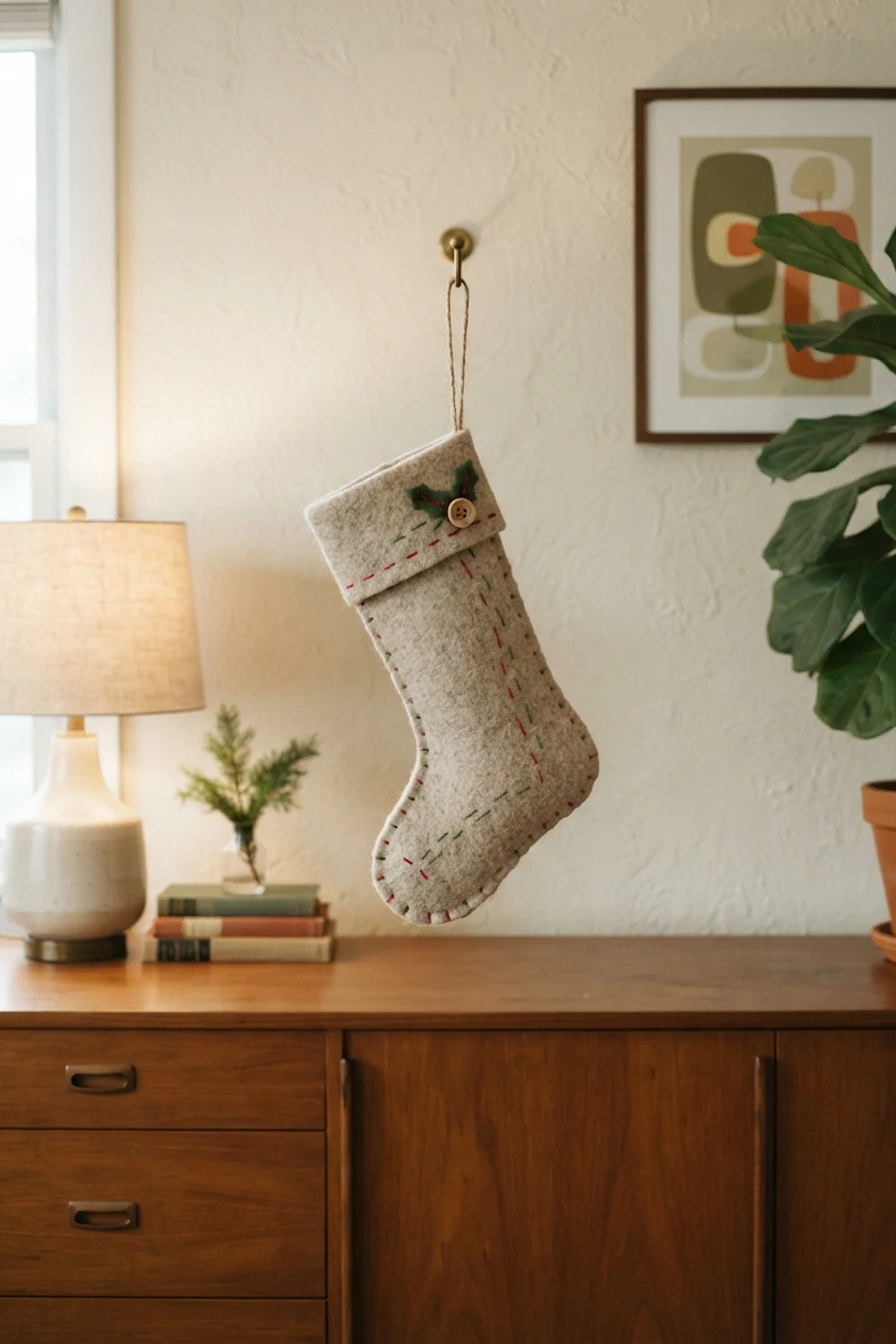
A stocking cut from a 12 by 18 inch pattern holds its shape under a pile of small gifts only if the felt is wool or a high-wool blend. Blanket-stitch the edges with six-strand embroidery floss, and the seam looks hand-sewn instead of glued.
These suit households that leave stockings on a mantel for weeks. Skip acrylic craft felt, which pills and stretches the moment anything heavier than a candy cane goes inside.
3. Salt dough ornaments
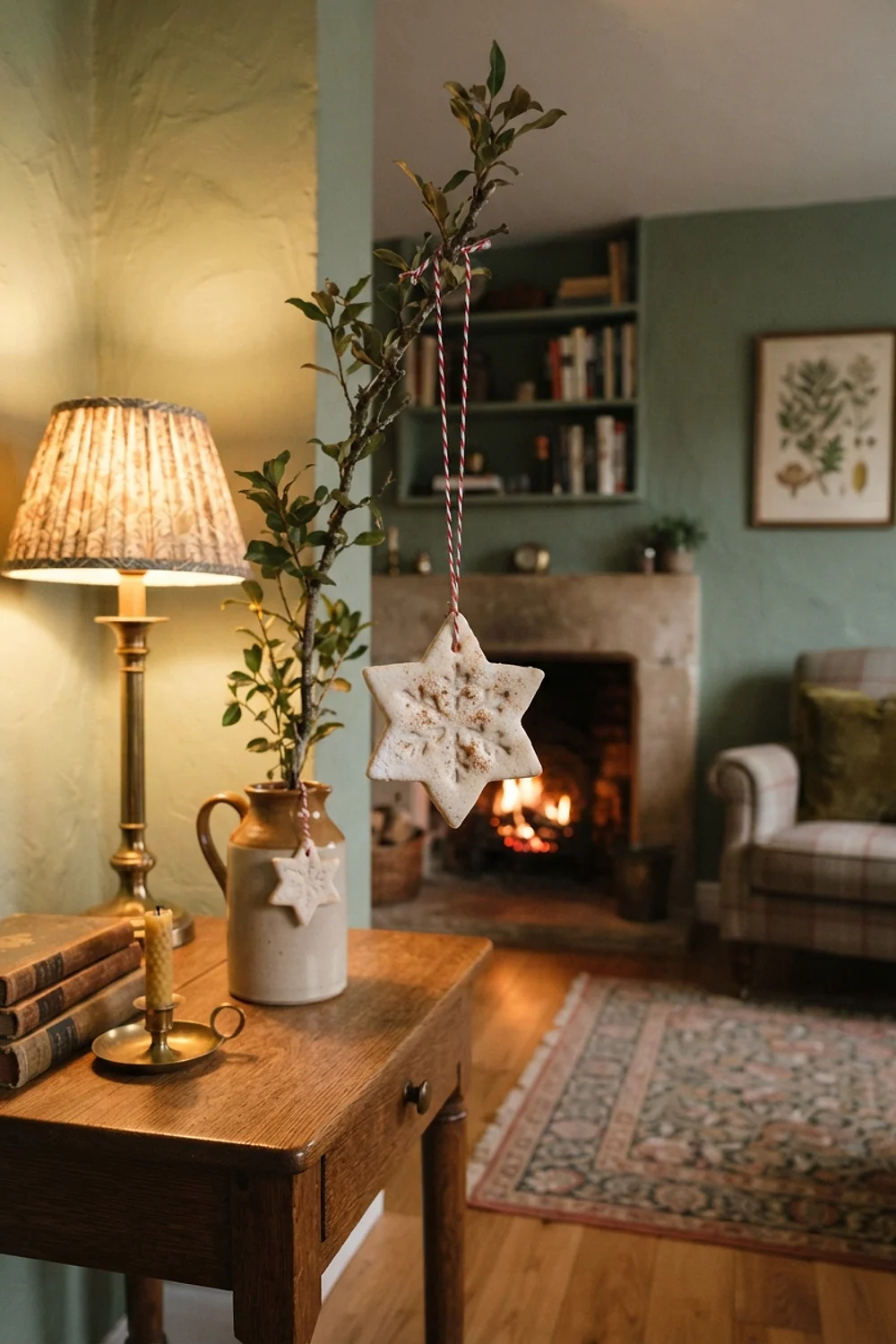
Two parts flour to one part salt to one part water makes a dough that rolls to 1/4 inch and takes a cookie cutter cleanly. Cure the shapes at 250°F for about two hours until they ring when tapped, then seal with matte varnish to keep humidity out.
They’re the best starting project for kids, and a sealed set can last decades. Unsealed ones soften and crumble in a damp attic, so skip the shortcut. A jar of varnish runs about $8.
4. Paper star pendant cluster
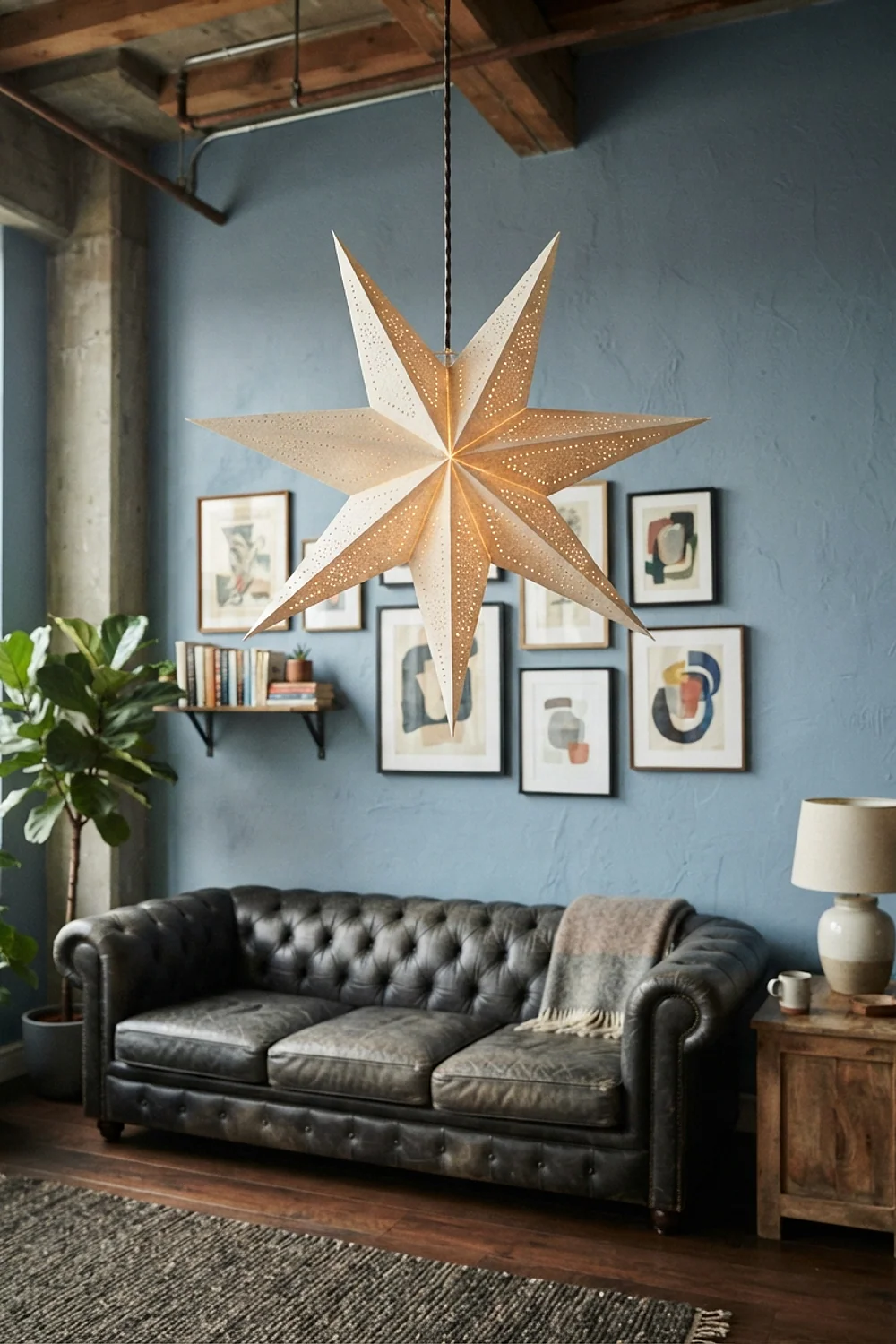
Five folded-paper stars hung at staggered heights between 18 and 40 inches read as a constellation, while stars hung at one level read as laundry. Use 100 gsm kraft or lightweight cardstock, which folds crisply and still floats in a draft.
The cluster fits a stairwell or a corner above a reading chair. Keep the drop cords thin (clear fishing line or 1 mm waxed thread), because thick string draws the eye away from the stars.
5. Red thread-wrapped baubles

A plain clear glass ball wrapped in cotton embroidery thread turns into a deep tomato-red sphere with a texture like a baseball seam. Red against a dark green tree is the oldest pairing there is, and it still holds up in a room full of beige.
Dab white glue on a 2-inch patch, wind the thread, and repeat. Rushing the glue is the trap: a wet, over-glossy coat dries tacky and picks up dust all season.
6. Oversized paper snowflakes
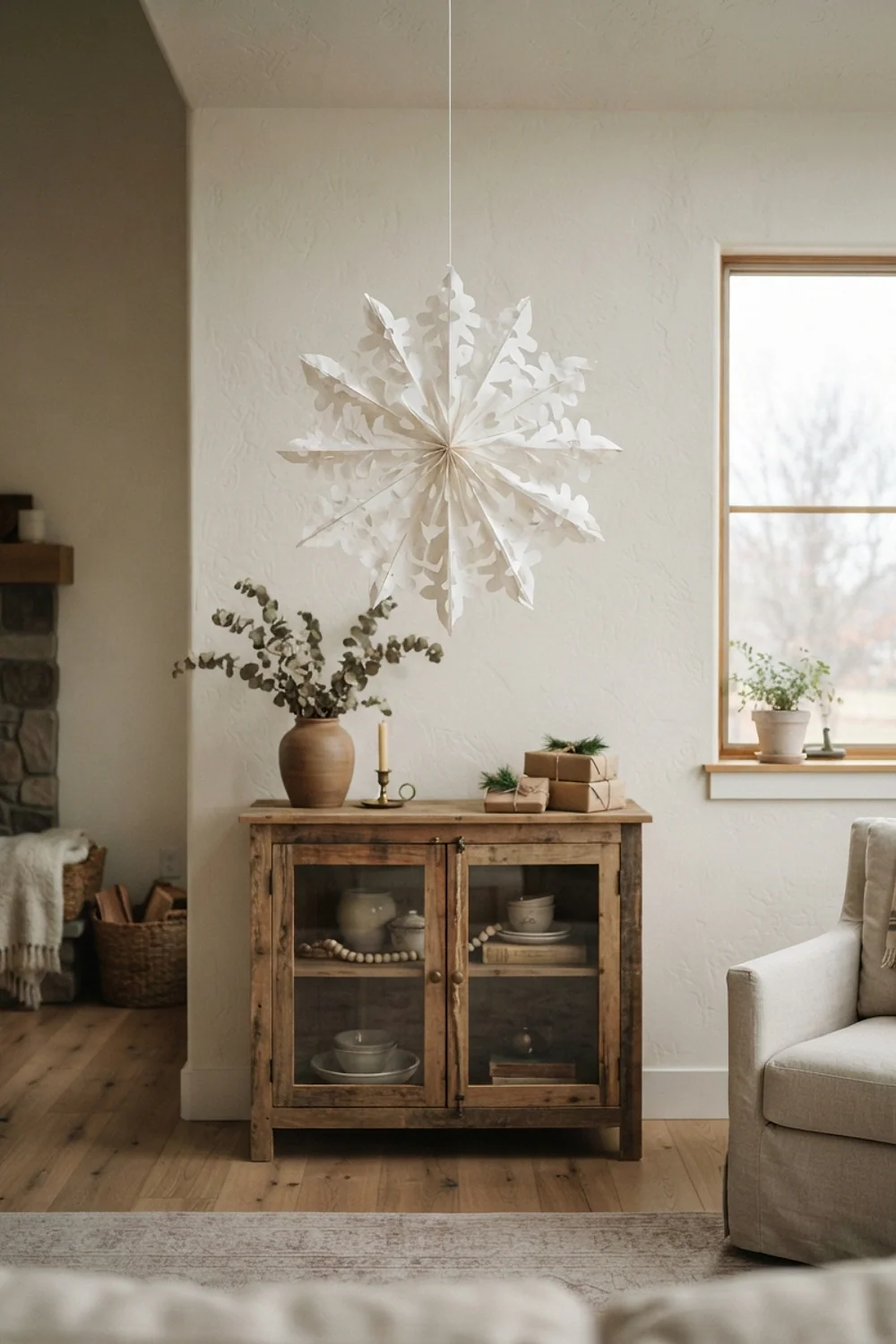
A snowflake cut from a 24-inch square of white paper looks like a deliberate piece of wall art, while the standard 6-inch version looks like a classroom window. Fold the square into sixths, and keep cuts bold because fine slivers tear.
Dark walls (deep navy or forest green) make white paper look sharp, but on cream walls it disappears. Use removable poster putty at the corners in a rental.
7. Wax-dipped pinecone fire starters
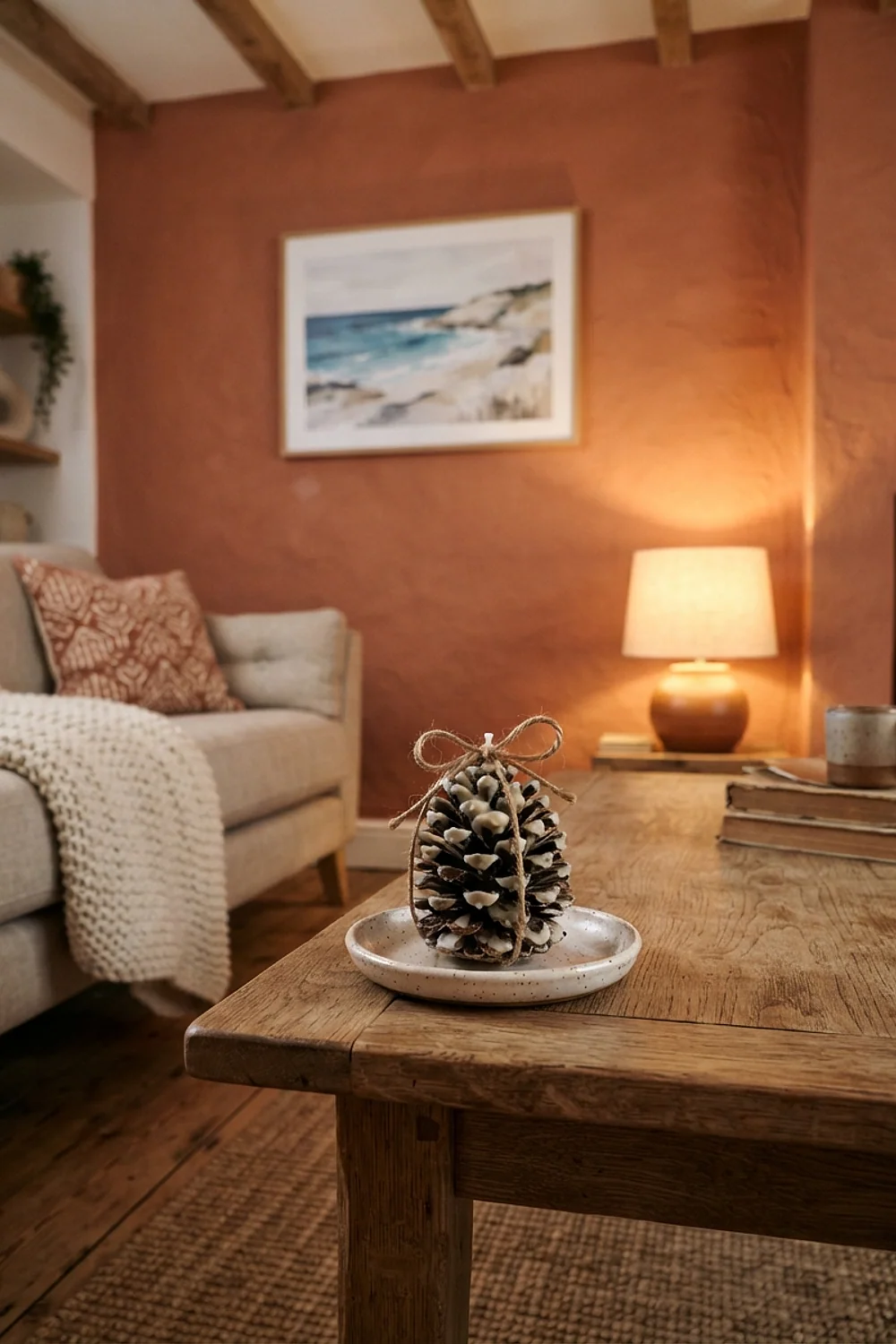
Pinecones dipped in melted soy wax and tied with a wick of twine do double duty as a bowl centerpiece and as the best kindling a fireplace owner can have. Wax gives the scales a pale, frosted edge that looks like first snow.
They suit homes with a working wood stove or fireplace. Keep the bowl at least three feet from the hearth when it’s lit, since wax-coated cones catch fast.
8. Glass jar luminarias
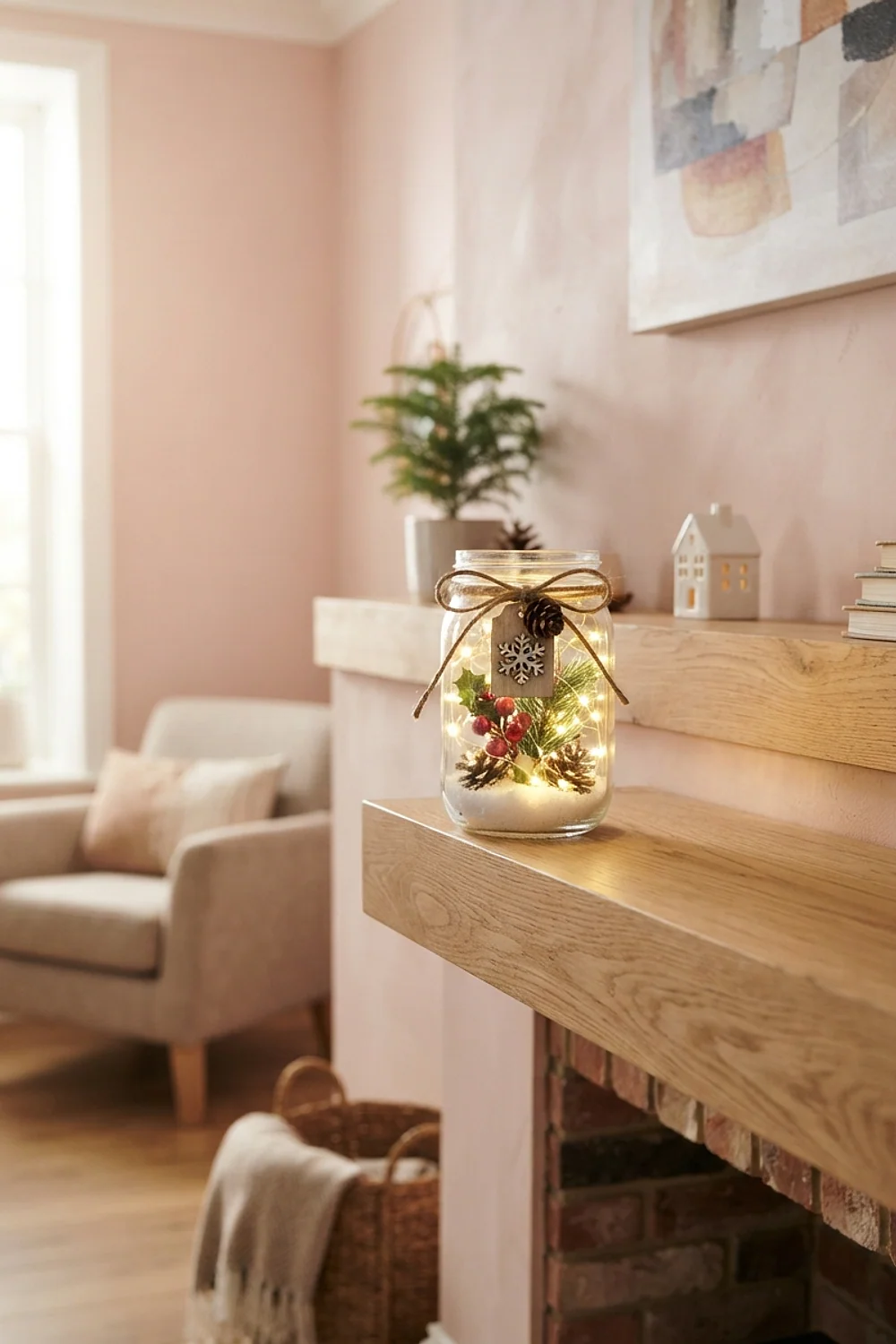
A 16-ounce jar wrapped in a band of torn white tissue and fitted with a battery tea light throws a soft, speckled glow across a table, which no store-bought lantern copies. Real candles flicker prettier, but LED versions are safer around paper and dry greenery.
Set three jars on a mantel in a cluster instead of a line, since odd groupings look natural. A set of 12 warm-white LED tea lights costs about $7.
9. Muslin advent pouches on a branch
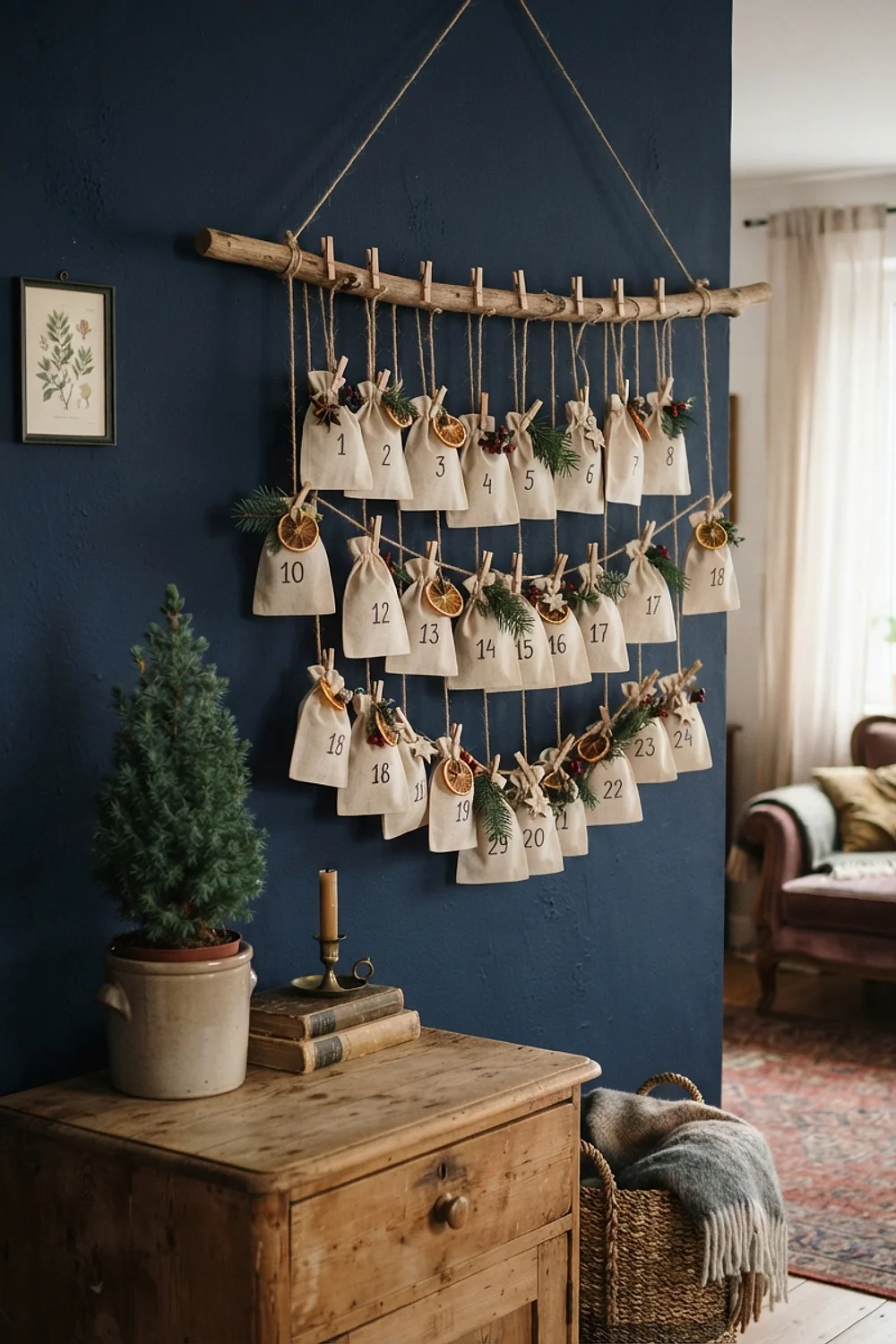
Twenty-four muslin bags, each about 3 by 4 inches, tied to a bare branch turn a countdown into a piece of sculpture. Muslin takes a stamped number well, and the branch stores flat when December is over.
This works for households who want an advent that holds small gifts without a bulky cabinet. Use a branch at least 1 inch thick at its base, because a thin one bows under the weight by day 15.
10. Glitter pinecones
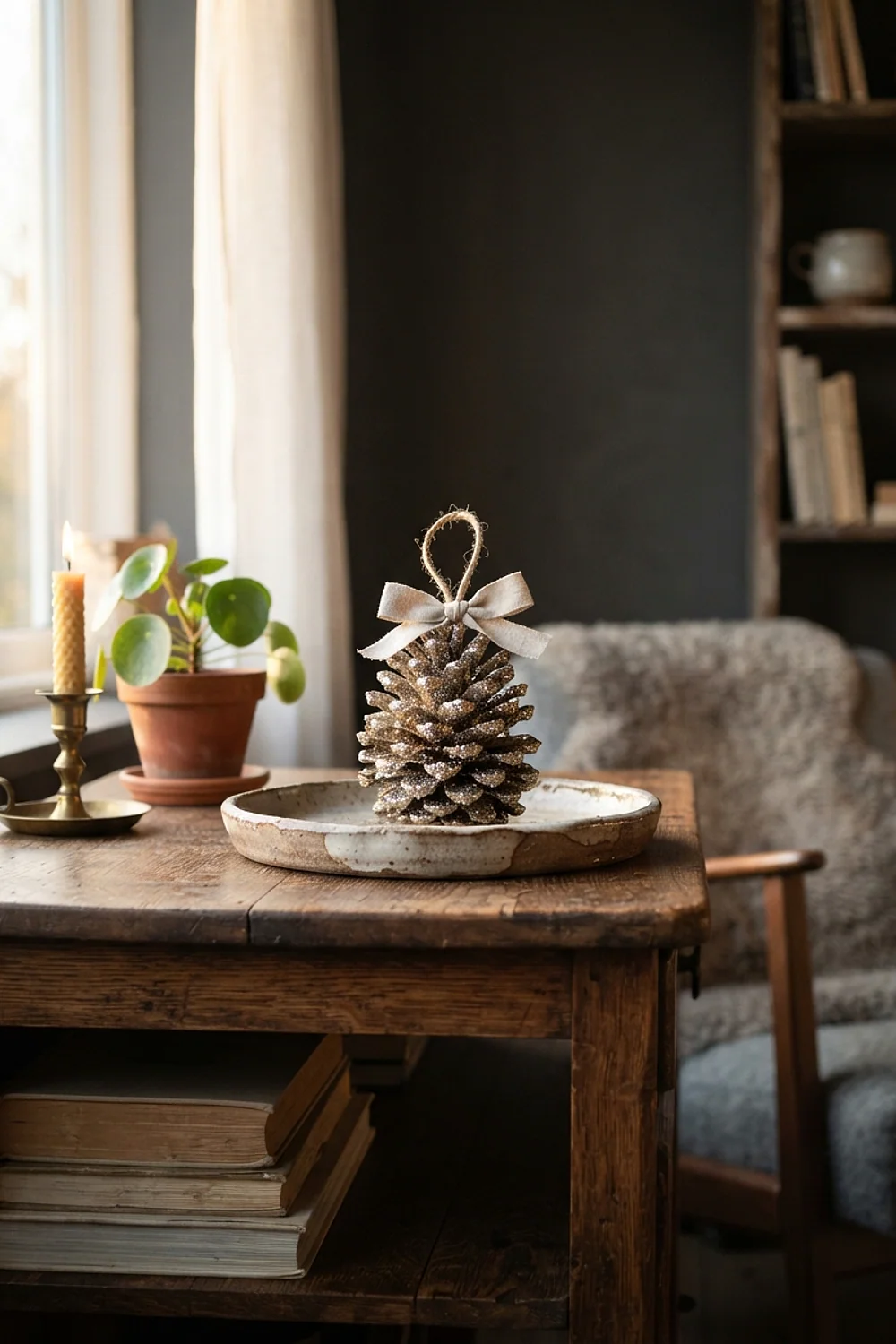
A glittered pinecone is the project that most often goes wrong, because loose glitter sheds onto every surface for months. Seal each cone with a coat of clear acrylic spray after the glue dries, which locks the sparkle and stops it migrating to the carpet.
Use fine-grain glitter in one color, such as champagne gold, rather than a rainbow mix. A bowl of ten cones looks intentional only if the finish matches.
11. Eucalyptus and dried citrus wreath
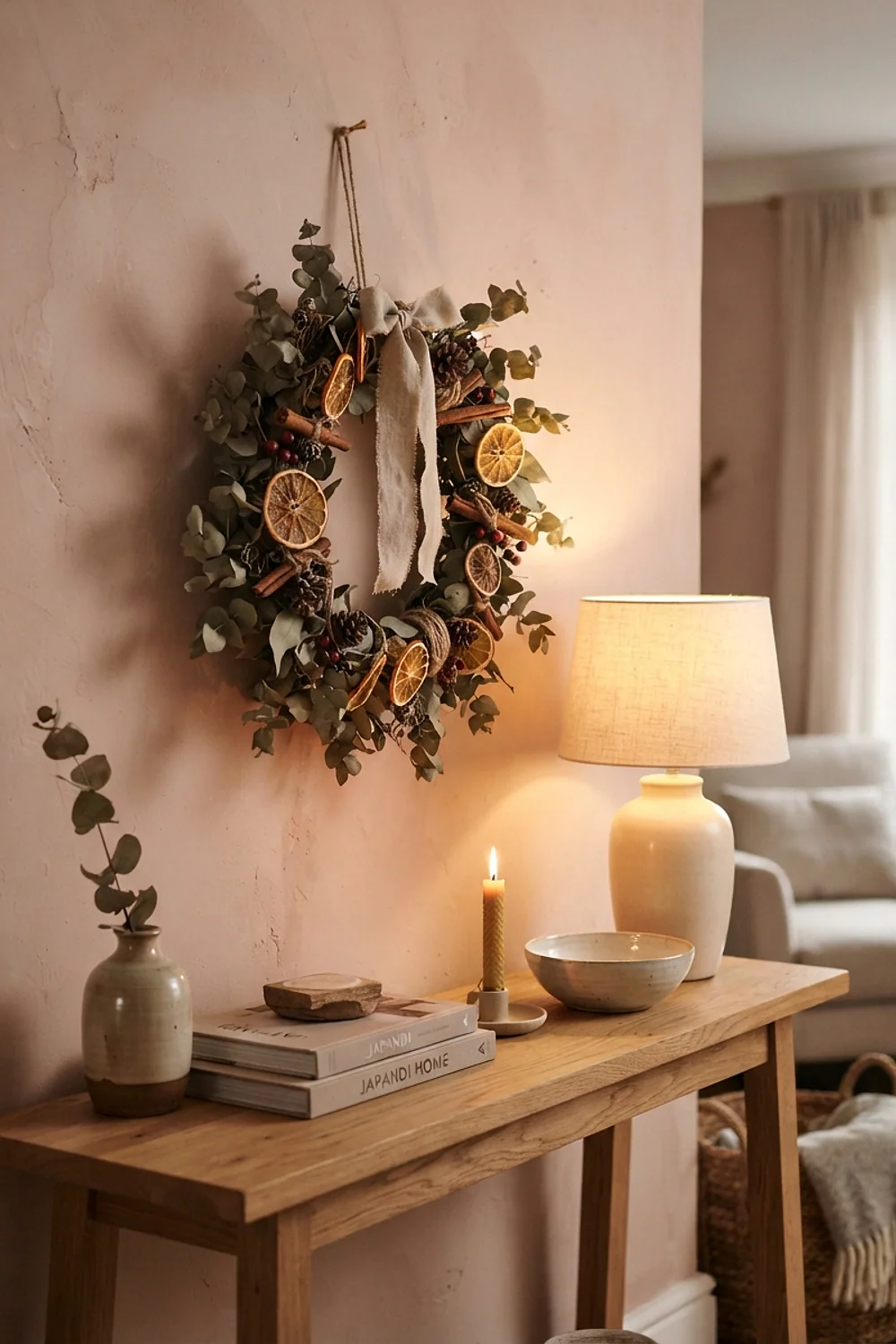
A 14-inch grapevine base wired with eucalyptus stems and four dried grapefruit slices gives a wreath that smells like a spa and holds a blue-green color all month. Silver dollar eucalyptus dries well, though it turns a dusty gray after about three weeks.
It fits a front door sheltered from rain, and it suits people who dislike red. Don’t hang it in direct sun, which bleaches the leaves to straw in days.
12. Chunky knit tree skirt
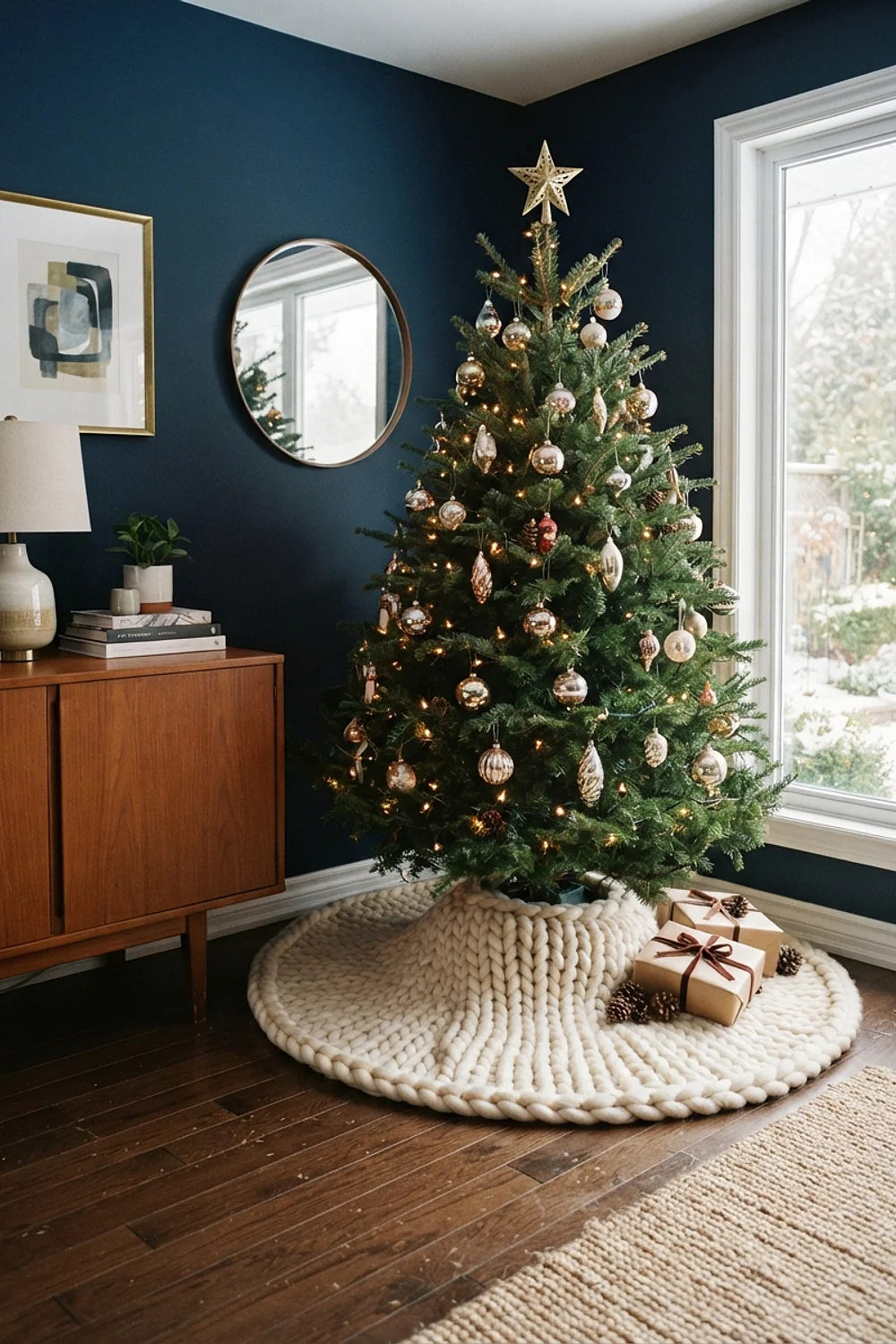
A tree skirt knitted from super bulky wool on 25 mm needles takes a weekend and feels like a blanket under a tree. Thirty-six inches across covers most stands, and the weight keeps it flat instead of curling.
It’s a good pick for homes with cats or toddlers who love to sit under the branches. Wool sheds a little the first month, so leave out the dark colors if the floors are pale.
13. Birch log candle holders
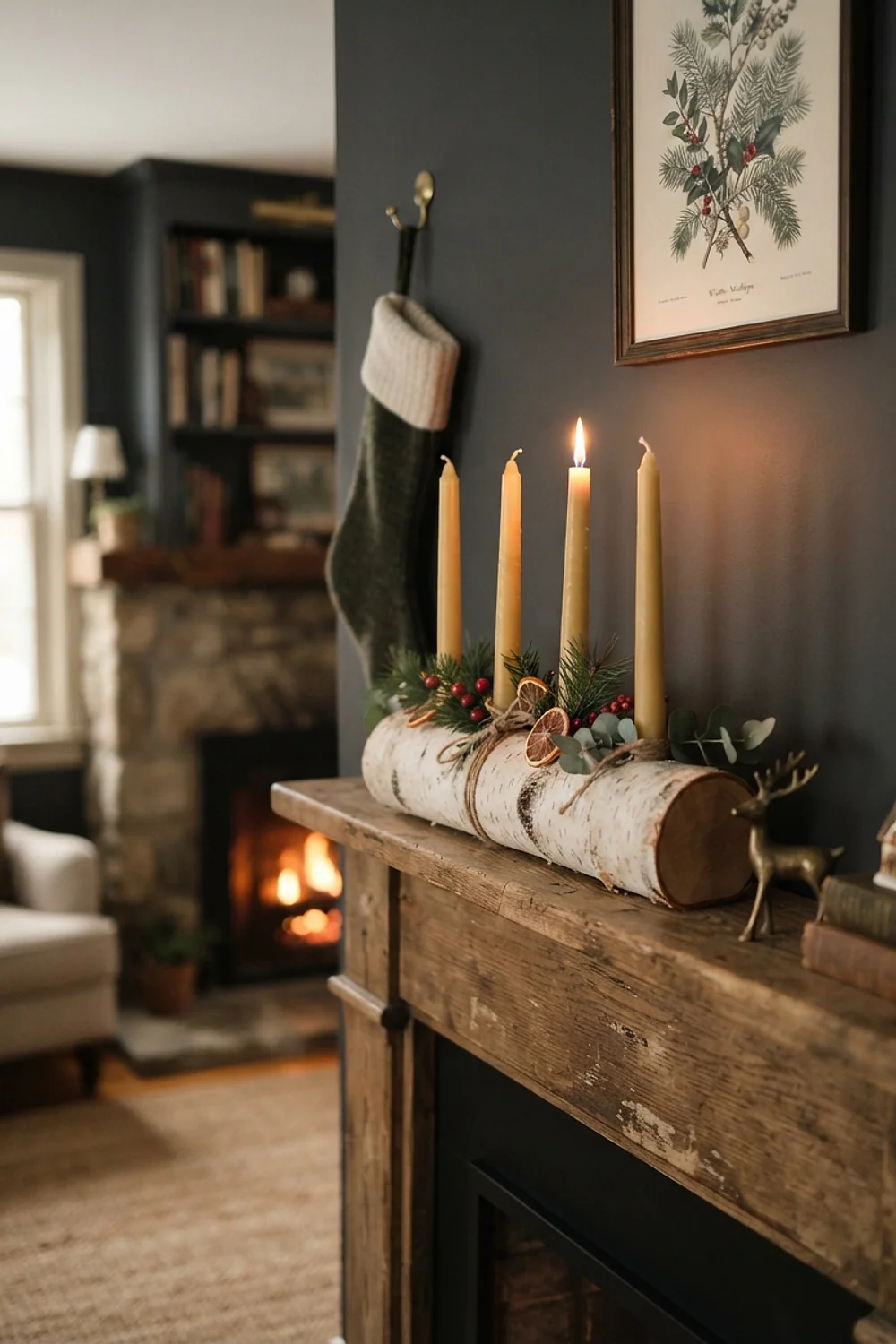
A 4-inch-diameter birch log, sawn to 3 inches tall and drilled with a 1.5 inch Forstner bit, holds a tea light with its white bark showing like a frozen forest. The drilled depth should be just 3/4 inch, so the flame sits well below the rim.
Use them on a dining table in groups of three, with LED lights if a child can reach them. Dry birch burns, so skip real flames and let the bark carry the look. A bit and a log from a hardware store run about $14 total.
14. Mantel garland with staggered clusters

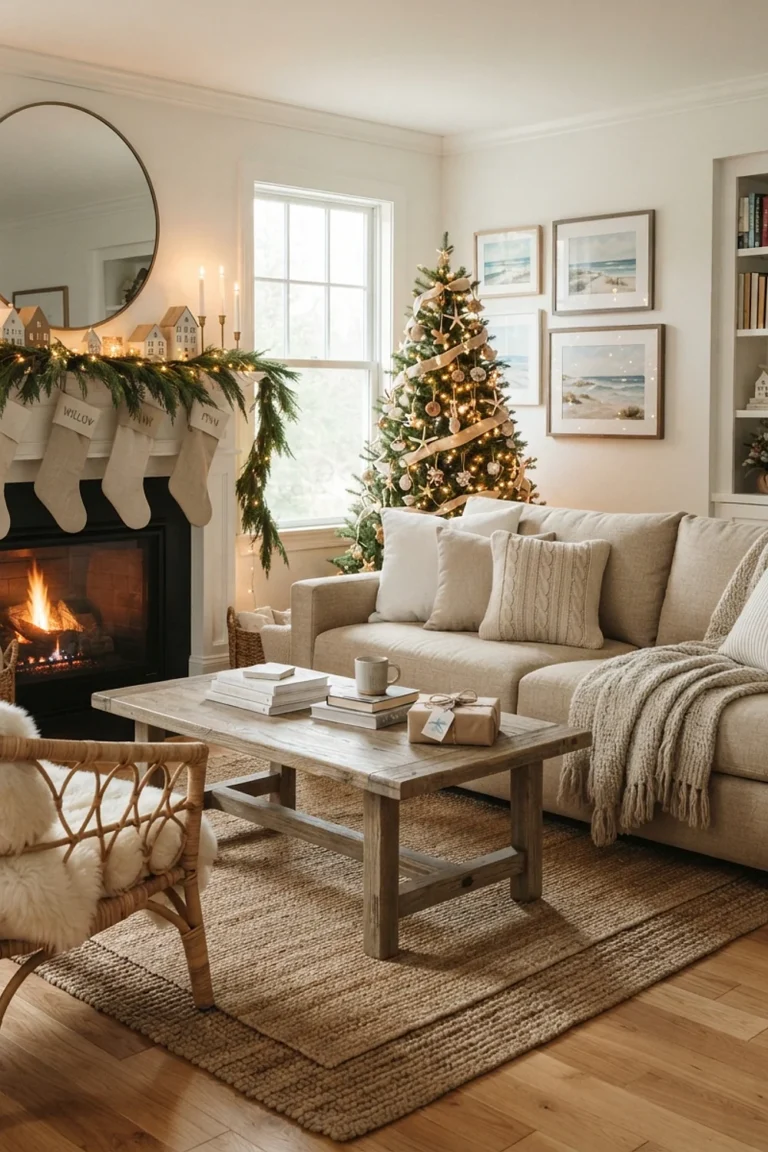
Greenery on a 5-foot mantel looks best when it swags in two or three loose clusters rather than a straight tube. Let the garland dip 6 to 8 inches below the shelf at the low points, and tuck in pinecones and dried orange slices at the clusters.
Use real cedar or fir if the fireplace is cold, and faux if it’s lit. The dip gives the garland weight and depth, while a flat line looks like a stripe of green plastic.
15. Terracotta pot Christmas trees
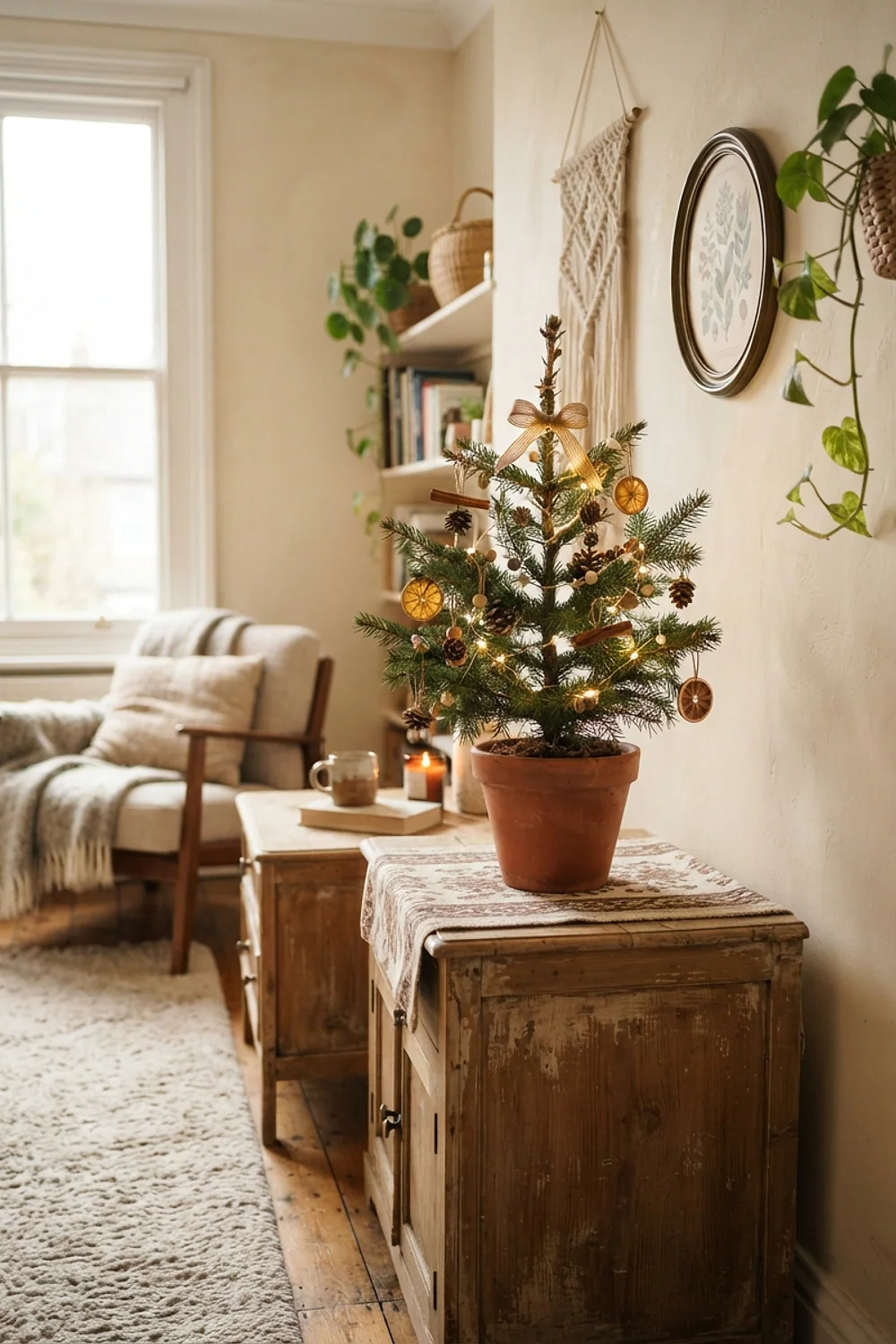
Two stacked terracotta pots (a 6-inch upside down on a 4-inch) topped with a small cone make a tabletop tree that looks like a rust-colored folk piece. Paint the pots in cream and sage with a dry brush so the clay glows through.
They suit sunrooms or kitchens already leaning toward earthy tones. Seal the paint with a matte spray, or the porous clay will stain from the first damp cloth.
16. Birch branch tree in a floor vase

Five or six branches, each about 5 feet long, set in a 20-inch floor vase fill a corner as tall as a small spruce. Weight the base with river stones to stop it tipping, and hang lightweight ornaments only, since each twig tolerates under 2 ounces.
This is the right move for small apartments where a full tree eats the floor. Branches from a florist run about $25 for a bundle, and they last the whole season without dropping needles.
17. Kraft cardboard gift tags
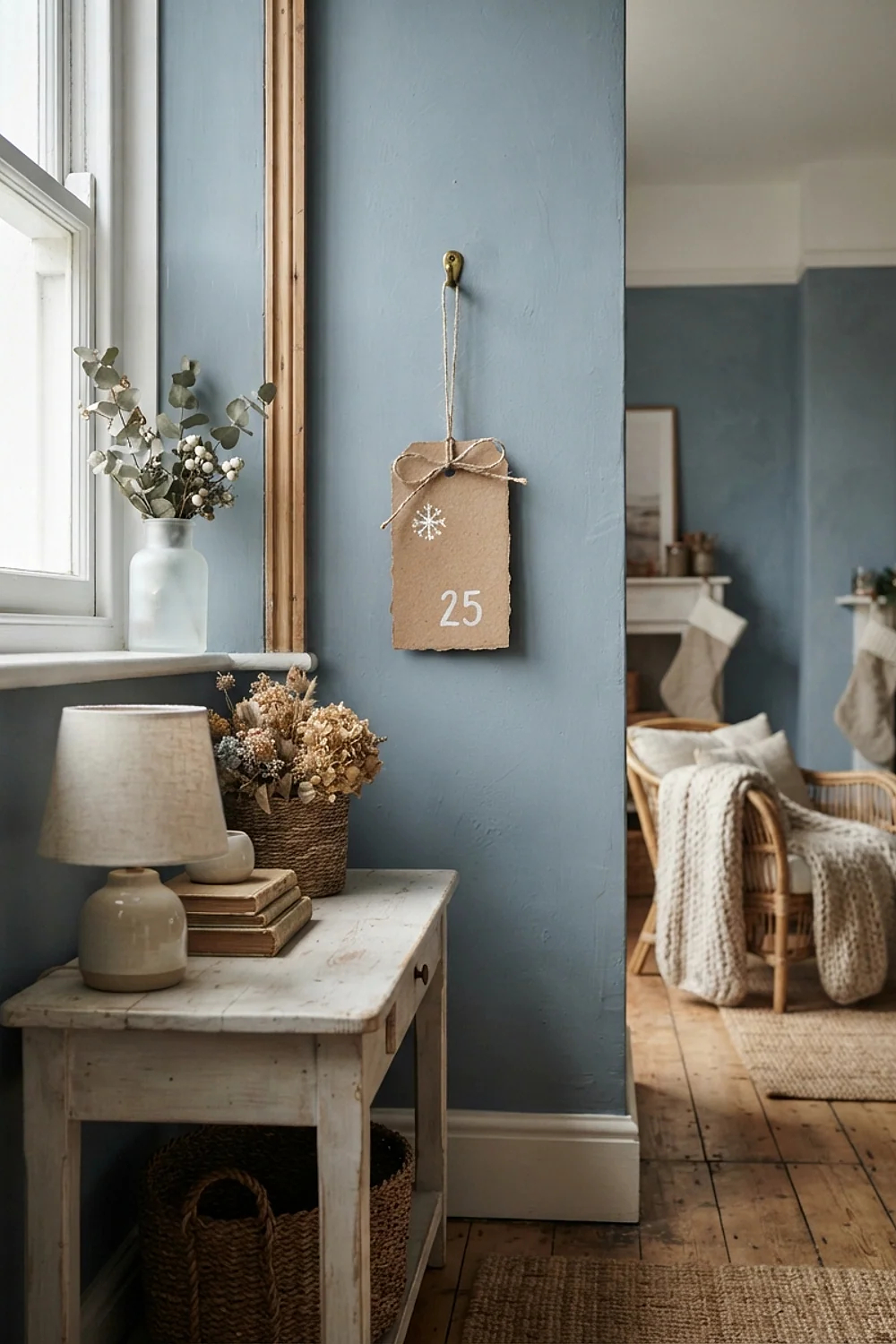
Tags cut from a cereal box and covered with kraft paper are sturdy enough to survive a week under the tree. A 2 by 3.5 inch rectangle with a punched corner holds a name legibly in a fine-tip marker.
They work for anyone wrapping dozens of gifts and wanting a consistent finish. Use a hole punch rather than scissors, because a ragged hole tears out under the weight of the string.
18. Fairy lights in a glass cloche

A 10-inch glass cloche holding a 3-foot string of micro LED lights and a few pine sprigs makes a lit centerpiece that stays cool to the touch. Warm white at 2700K looks like candlelight, while cool white looks like a freezer aisle.
It suits a sideboard or a bedside table where an open flame would worry anyone. Tuck the battery pack under the base so no cord shows, which is what separates it from a clearance bin find.
19. Wall-hung twig ladder for cards
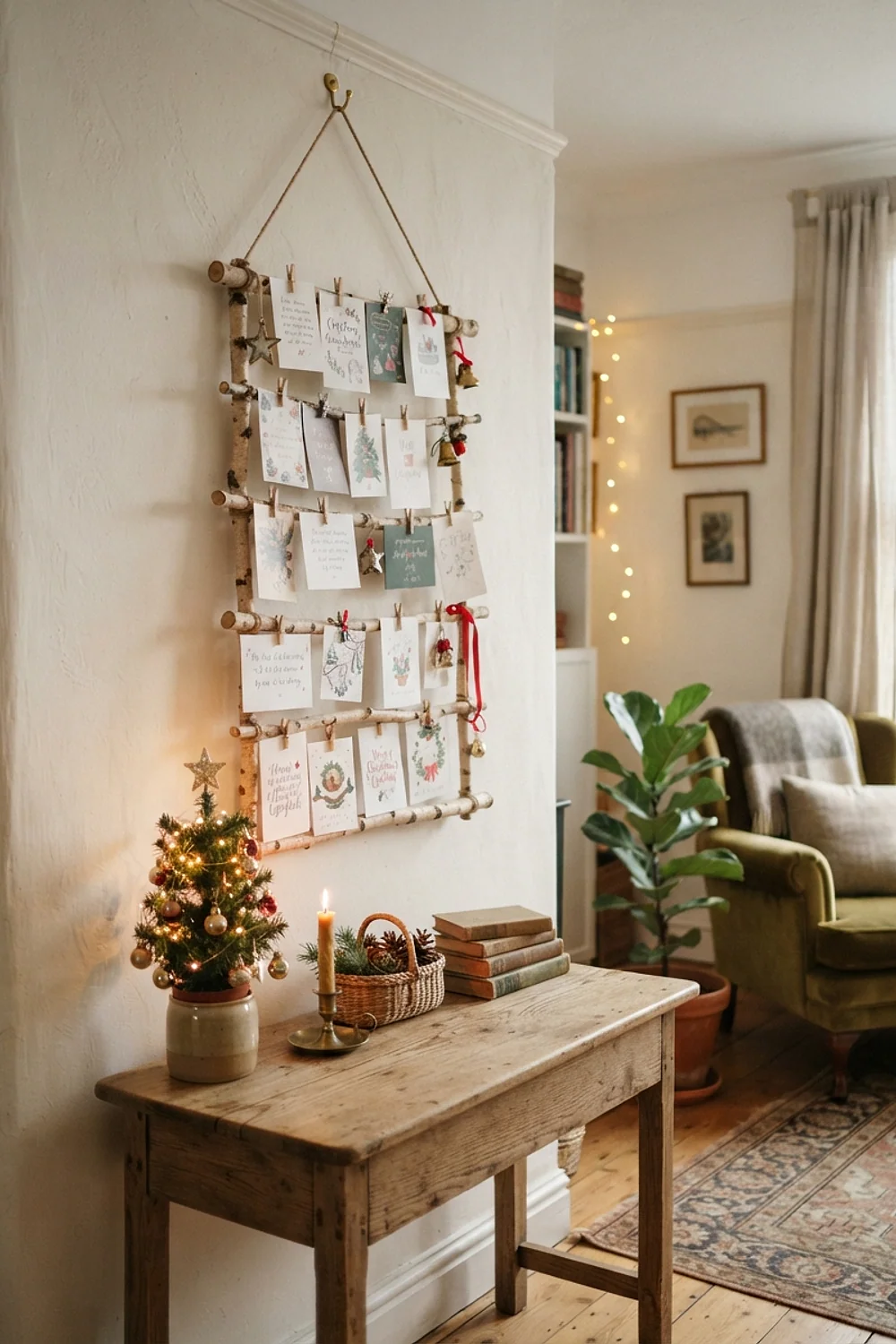
Two straight 36-inch branches joined by five crosspieces of thinner twig, lashed with jute, make a ladder that holds holiday cards with mini clothespins. It keeps the mantel clear and puts cards at eye level.
It suits busy hallways where cards arrive daily and pile up on a counter. Lash each joint twice and add a dot of wood glue, because the ladder loosens as green twigs dry.
20. Cotton batting snow drift
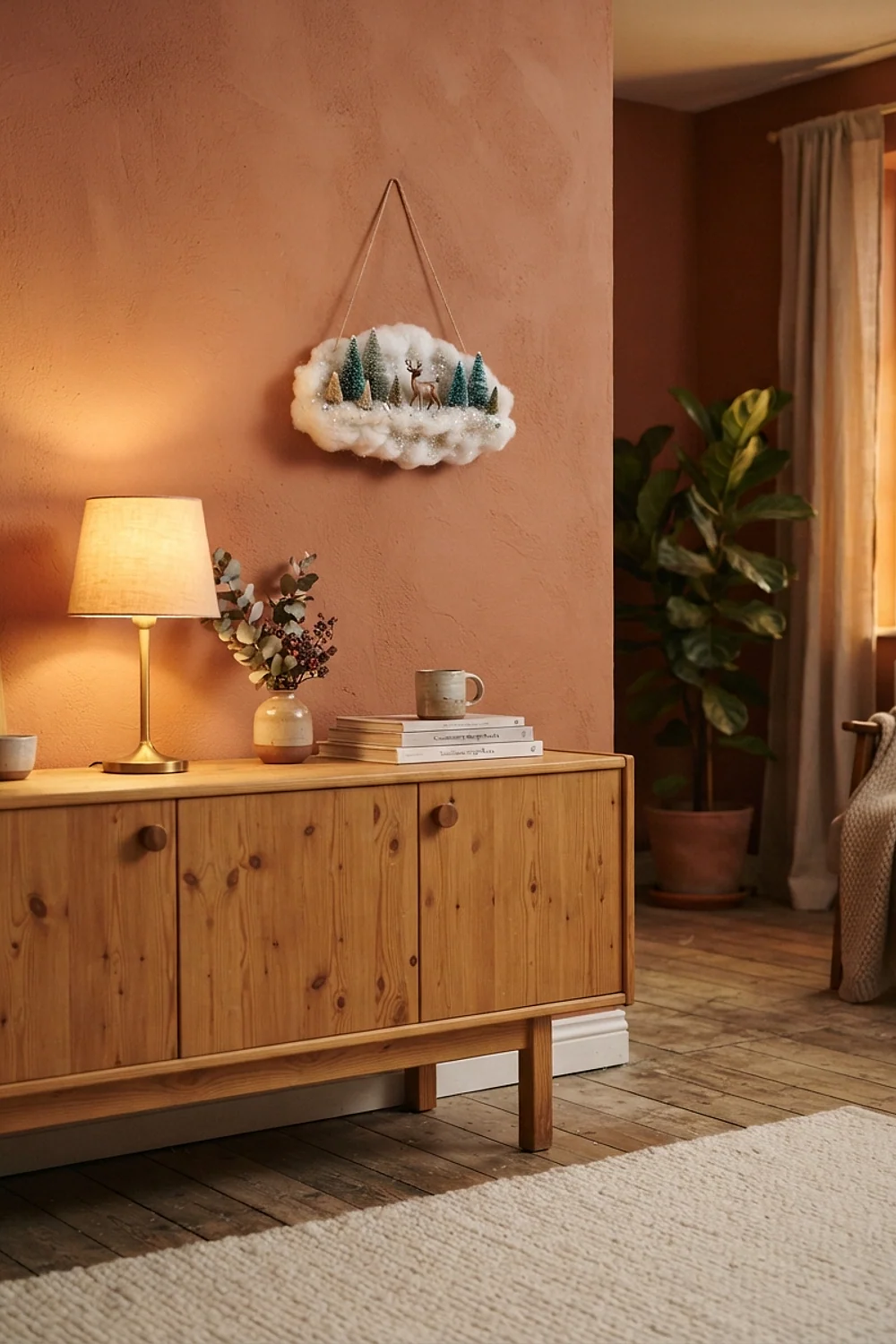
Rolled cotton batting spread across a mantel looks like fresh snow around a small village, but it’s also highly flammable. Keep it at least 12 inches from any candle or lit hearth, and choose a flame-retardant batting if one is available.
This one suits shelves and bookcases far from heat. Use a thin layer, about 1 inch, because a thick pile looks like loft insulation.
21. Embroidery hoop wreaths
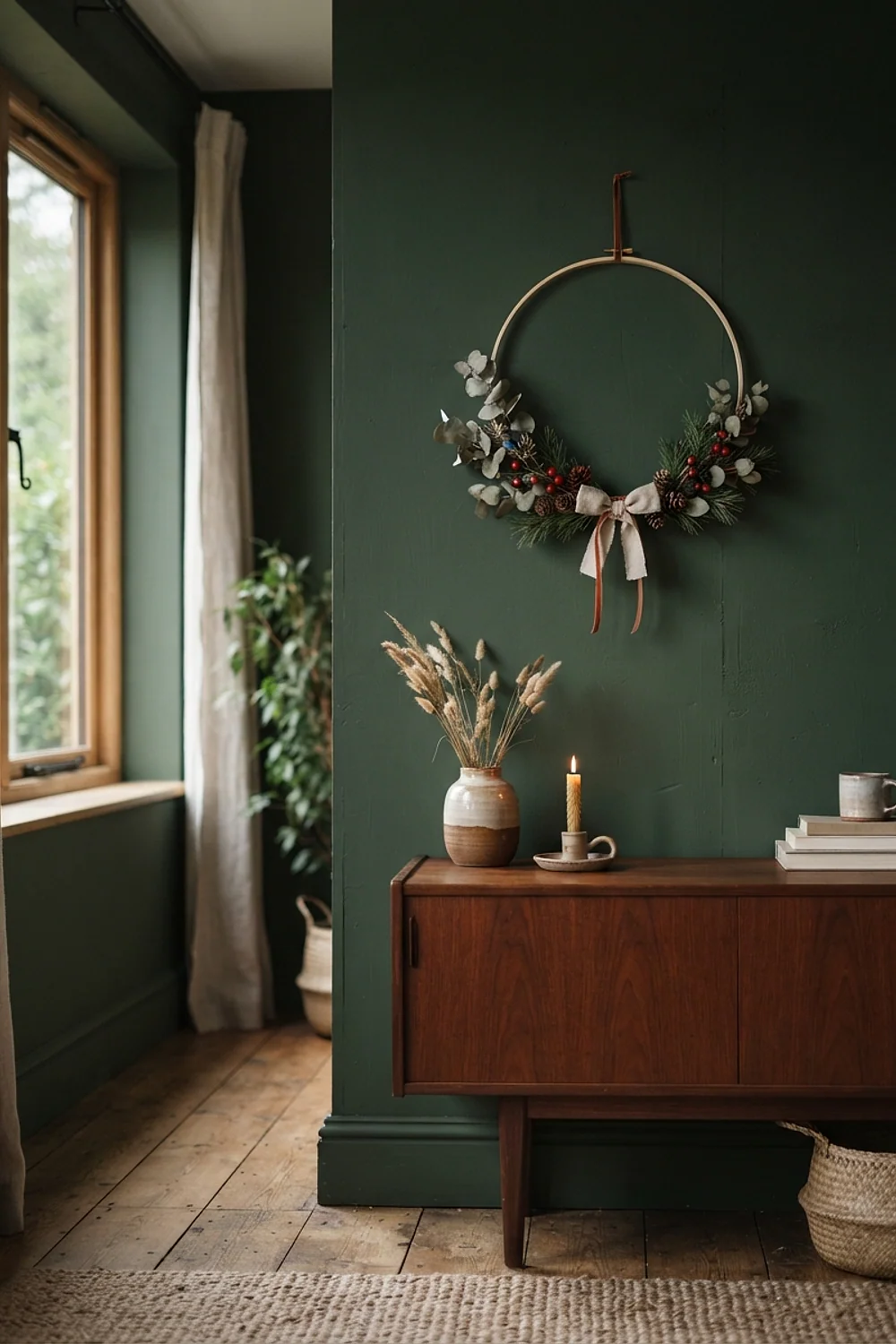
An 8-inch wooden embroidery hoop stuffed with a handful of dried foliage looks like a botanical illustration and hangs flat on a wall. The hoop’s screw clasp doubles as a hidden hanging loop, and the double ring holds fabric or leaves with no glue.
Try a grouping of three in different sizes (6, 8, and 10 inches) above a console. Dried stems should stay under an inch past the hoop edge, otherwise the piece looks shaggy.
22. Flannel pillow covers with appliqué trees

A 20-inch pillow cover in brushed cotton flannel feels like a sweater against the back, which matters more than any pattern when someone is curled on the sofa. Appliqué a simple triangle tree in felt, and stitch it down with a running stitch.
These work for living rooms that get real use over the holidays. Pre-wash the flannel on hot, because it shrinks about 5 percent and puckers the appliqué if washed later.
23. Twig stars bound with linen thread
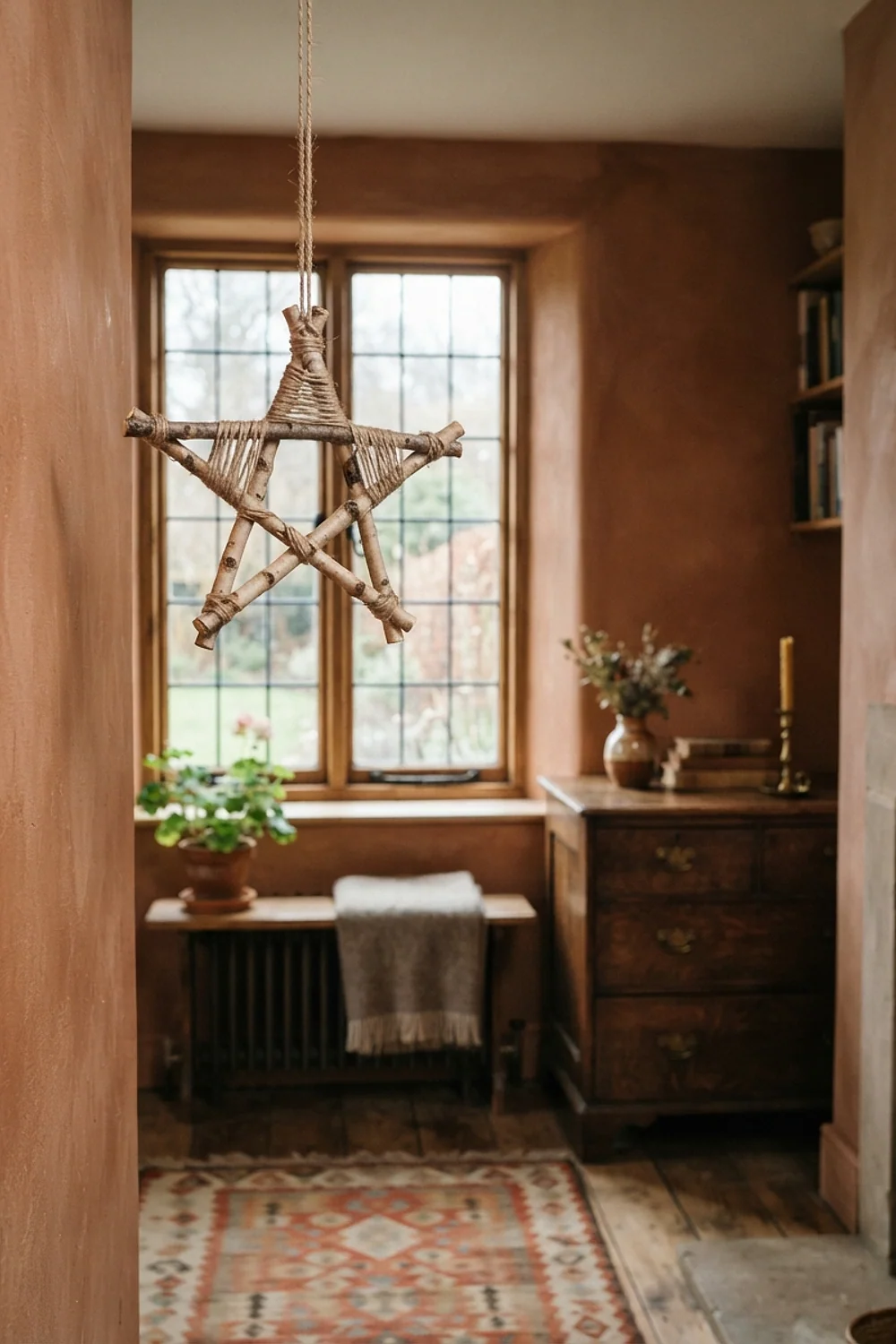
Five straight twigs about 6 inches long, overlapped at the ends and bound with linen thread, make a rough five-point star. The wood’s gray-brown bark pairs well with whitewashed walls and dark green foliage.
They fit a Scandinavian or farmhouse scheme and hang lightly on a tree. Gather twigs after a rain, when they’re flexible enough to handle, and let them dry flat for two days before binding.
24. Banister swag with ribbon drops
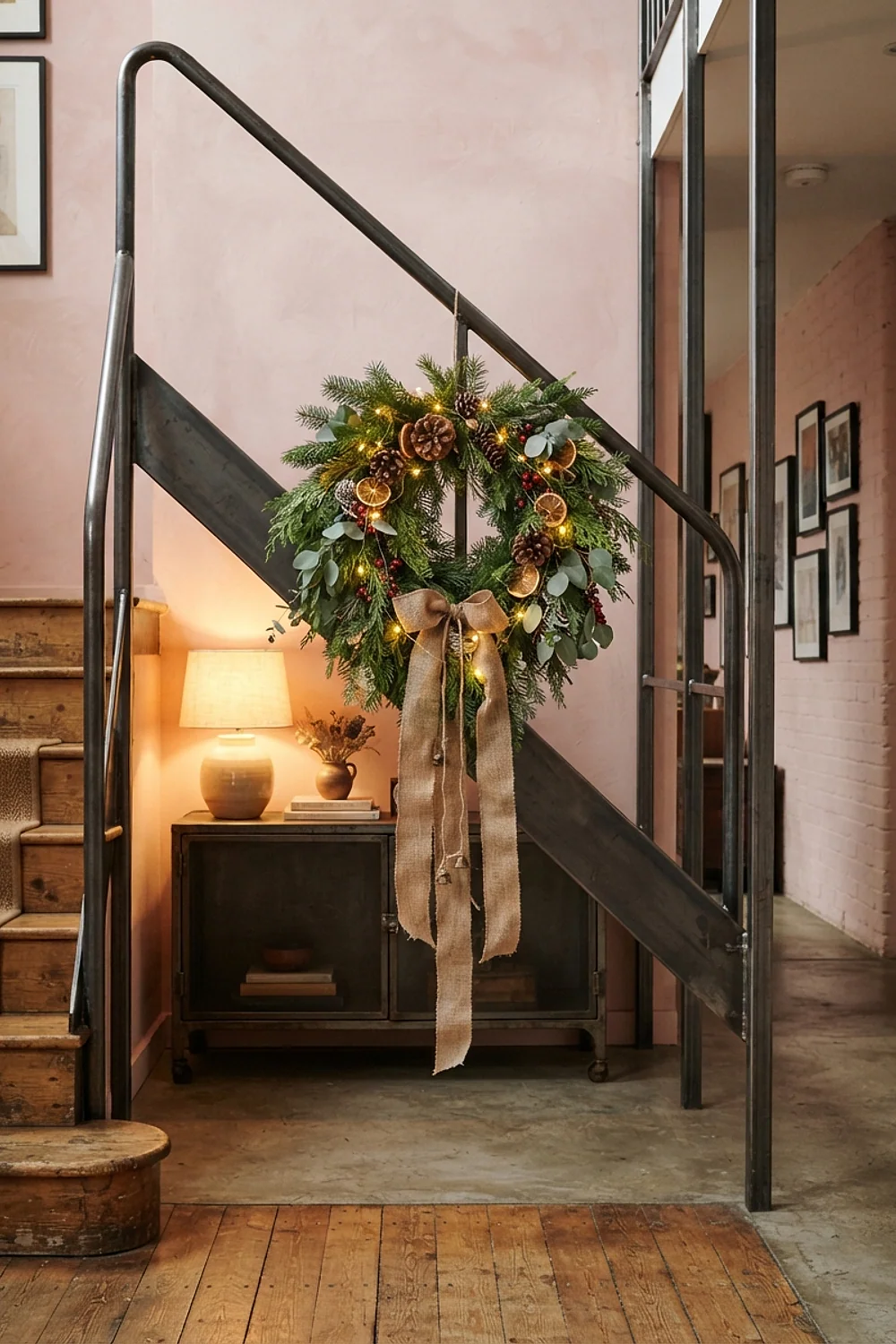
A garland on a 12-foot banister reads better when it’s swagged in loops every 3 feet, with a bow at each peak. Use 2.5 inch wired ribbon, since thin ribbon sags and looks sad within a day.
It suits entryways and stairs where guests pause. Secure each swag with a floral wire loop rather than tape, because tape peels paint on a painted rail.
25. Sage felt ball garland
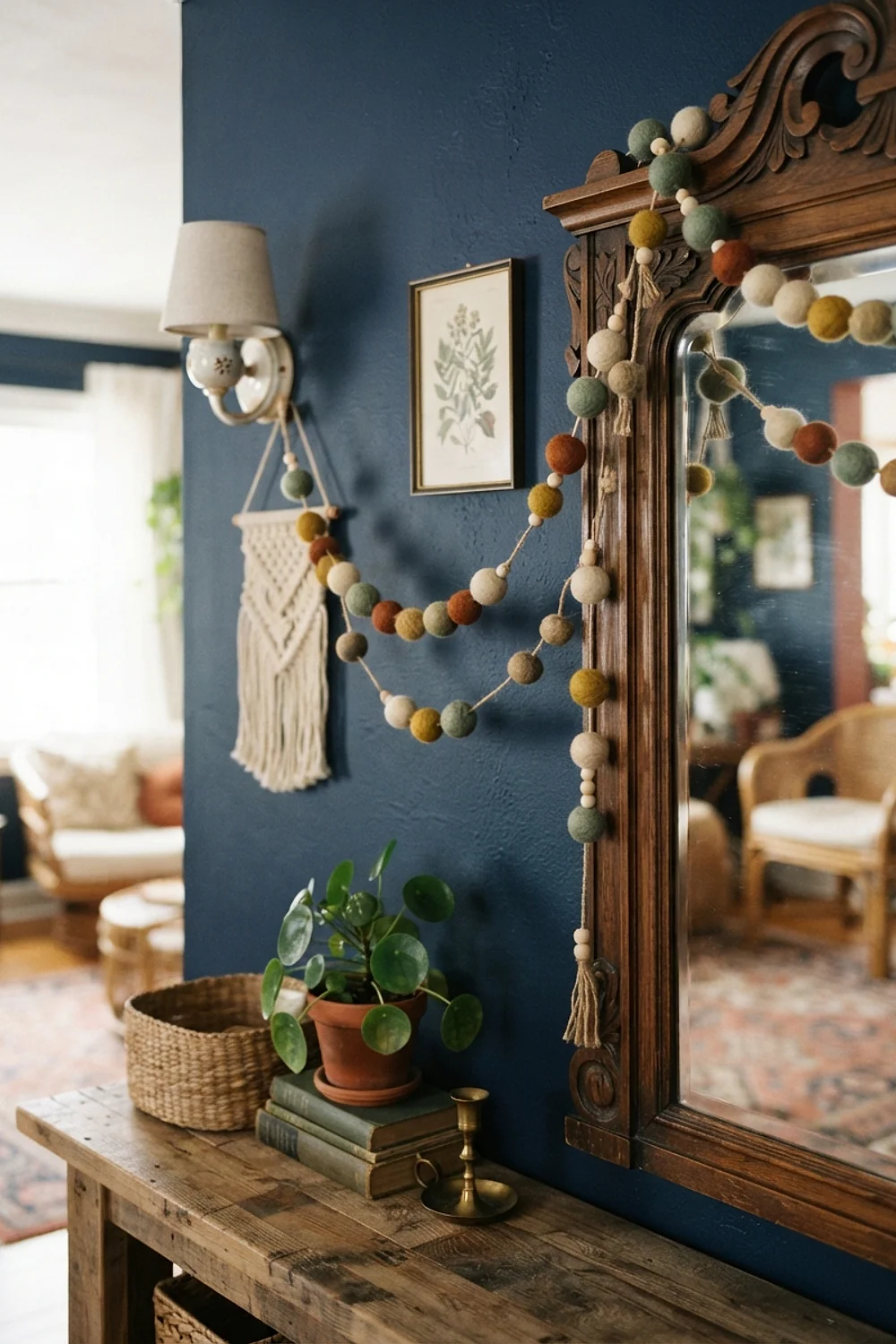
A 6-foot strand of 1-inch wool felt balls in sage green, strung on a heavy thread, adds a muted color that sits between the usual red and gold. The matte wool absorbs light, so the strand looks calm against a white mantel.
It suits modern rooms that find red too loud. Mix three shades (sage, moss, and cream) for depth, but keep them within a single color family or the garland turns confetti.
26. Cardboard cone tabletop trees
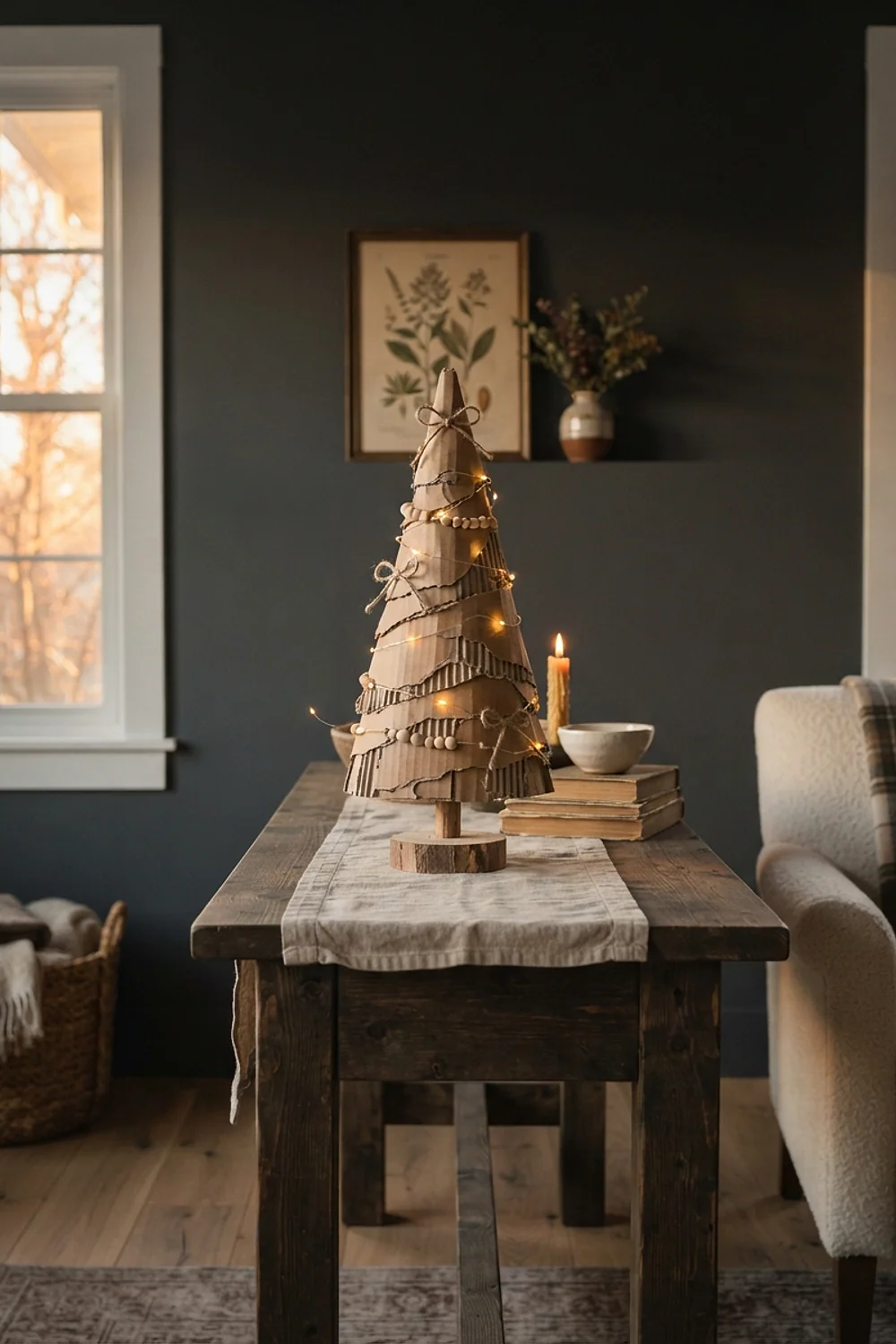
A cone rolled from a sheet of 12 by 18 inch cardstock stands about 10 inches tall and takes a wrap of torn book pages or green wool. Pages in a grouping of three, at heights of 6, 10, and 14 inches, make a village that fits on a 30-inch console.
They fit shelves that can’t take a full tree. Reinforce the seam with double-sided tape, because a cone held by a single glue line springs open in dry winter air. A sheet of cardstock costs under $1.
27. Pinecone place card holders
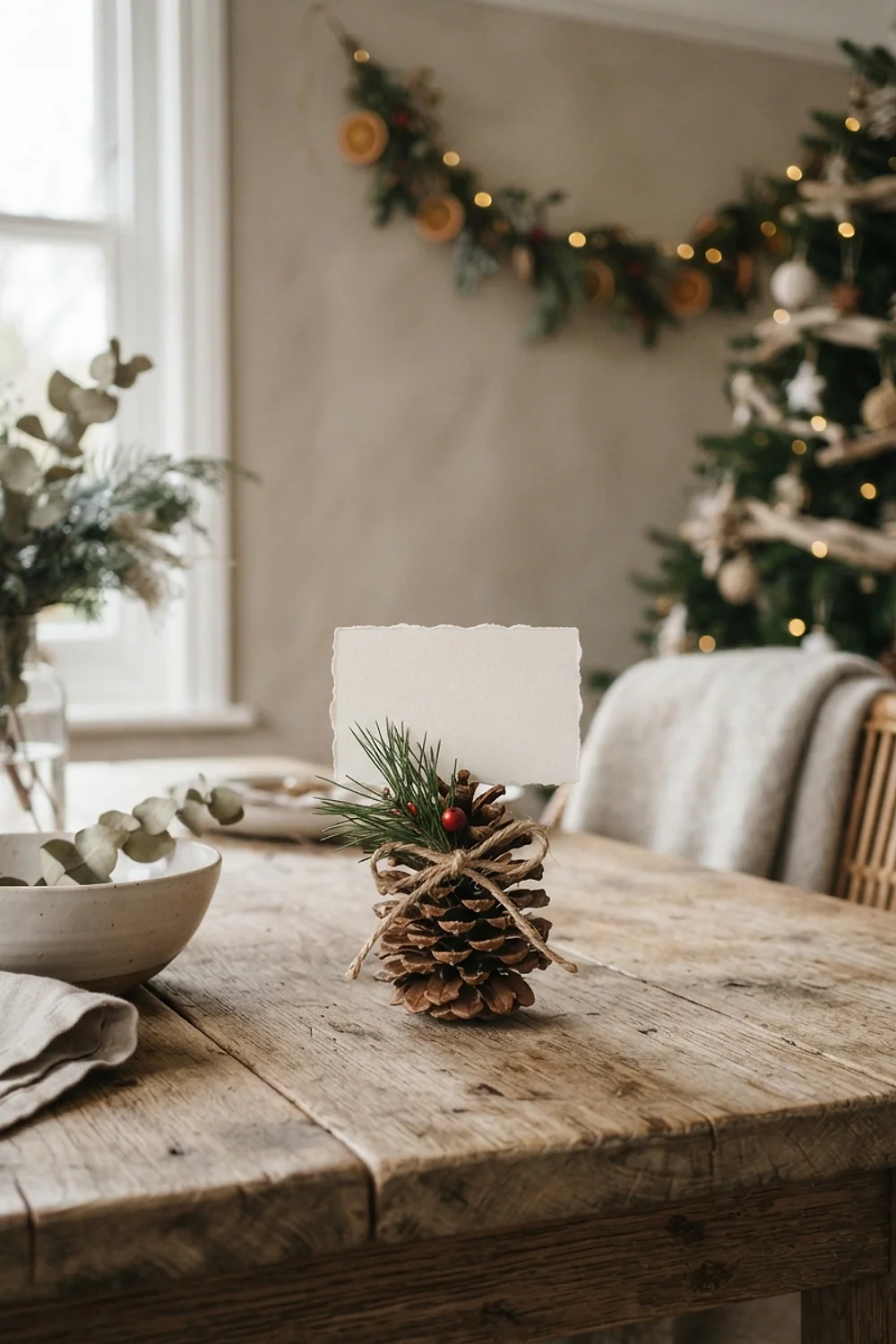
A small pinecone, about 2 inches tall, with a folded paper tag tucked between two scales, gives each dinner guest a name at the plate. The scales grip the card, and the cone sits upright without any glue.
They’re a fit for dinner tables of eight to twelve, where each setting needs a small marker. Bake nothing and glue nothing; just shake the cones outdoors first to dislodge any bugs.
28. Rolled beeswax candles

A sheet of beeswax 8 by 16 inches, wrapped around a cotton wick, makes a taper in about five minutes with no melting. Warm the sheet with a hair dryer for ten seconds and it rolls without cracking, and the honey scent stays faint and clean.
They suit anyone who wants a real flame without a chemical smell. Keep the wick about 1/4 inch tall when lit, since a long wick smokes, and expect 6 hours of burn per taper. A pack of sheets costs about $15.
29. Drawer dividers turned ornament trays
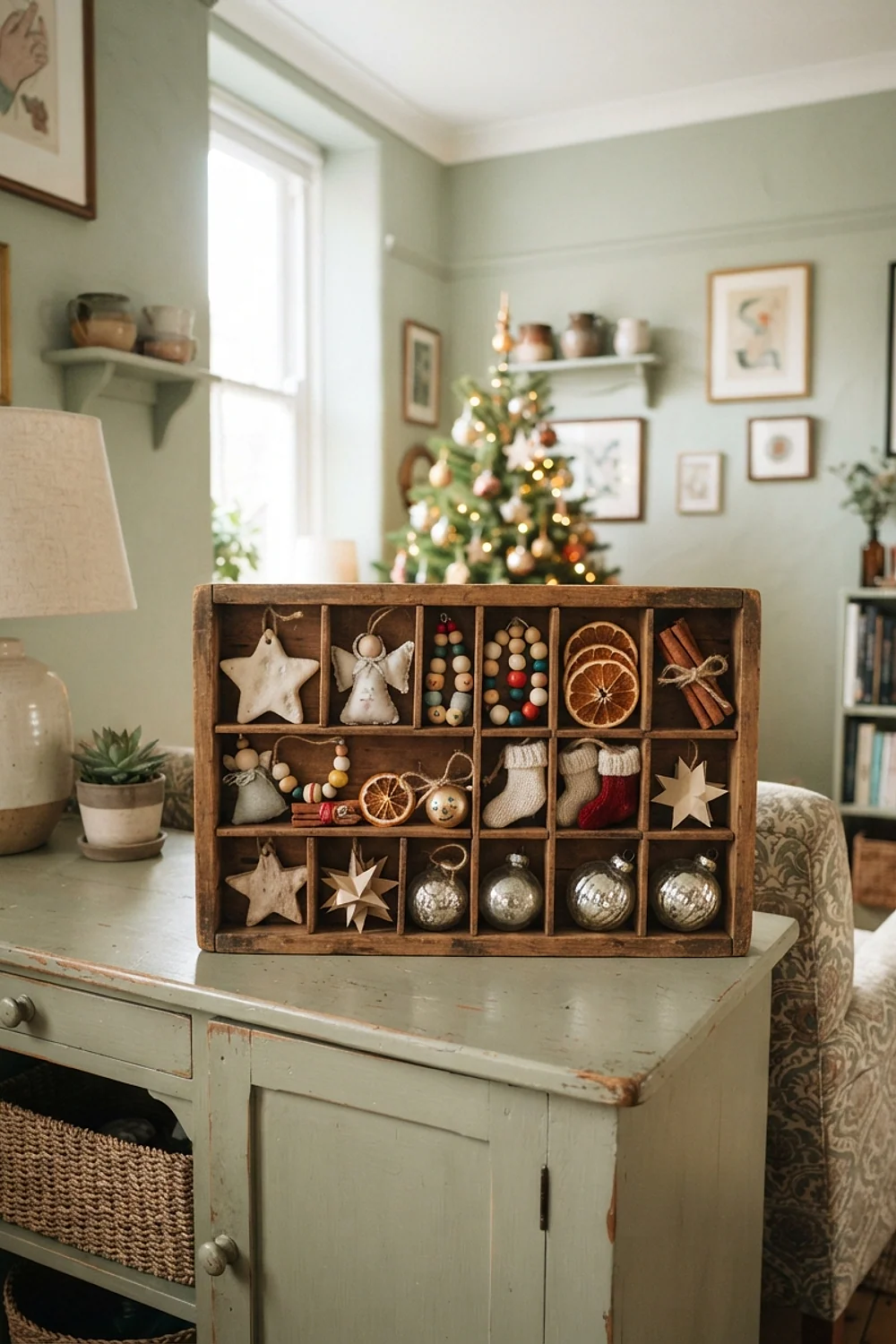
A wooden drawer divider with six to eight compartments makes a display tray for small ornaments on a shelf in December and a storage box in January. The slots stop glass balls from rolling, and the open top lets the colors show.
It’s the right pick for people with a collection of fragile baubles. Line each slot with a scrap of felt or tissue, because bare wood scratches painted finishes in storage.
30. Tissue paper pom-poms

Eight layers of 20 by 30 inch tissue, folded accordion-style and fanned open, make a pom-pom about 14 inches wide. Hung at staggered heights, they give a party-ready look, in blush or cream rather than neon.
Don’t hang them near bulbs, since incandescent lights run hot enough to scorch thin tissue. Use LED strings, and keep a 4-inch gap between the lights and the paper.
31. Hand-stamped wrapping paper
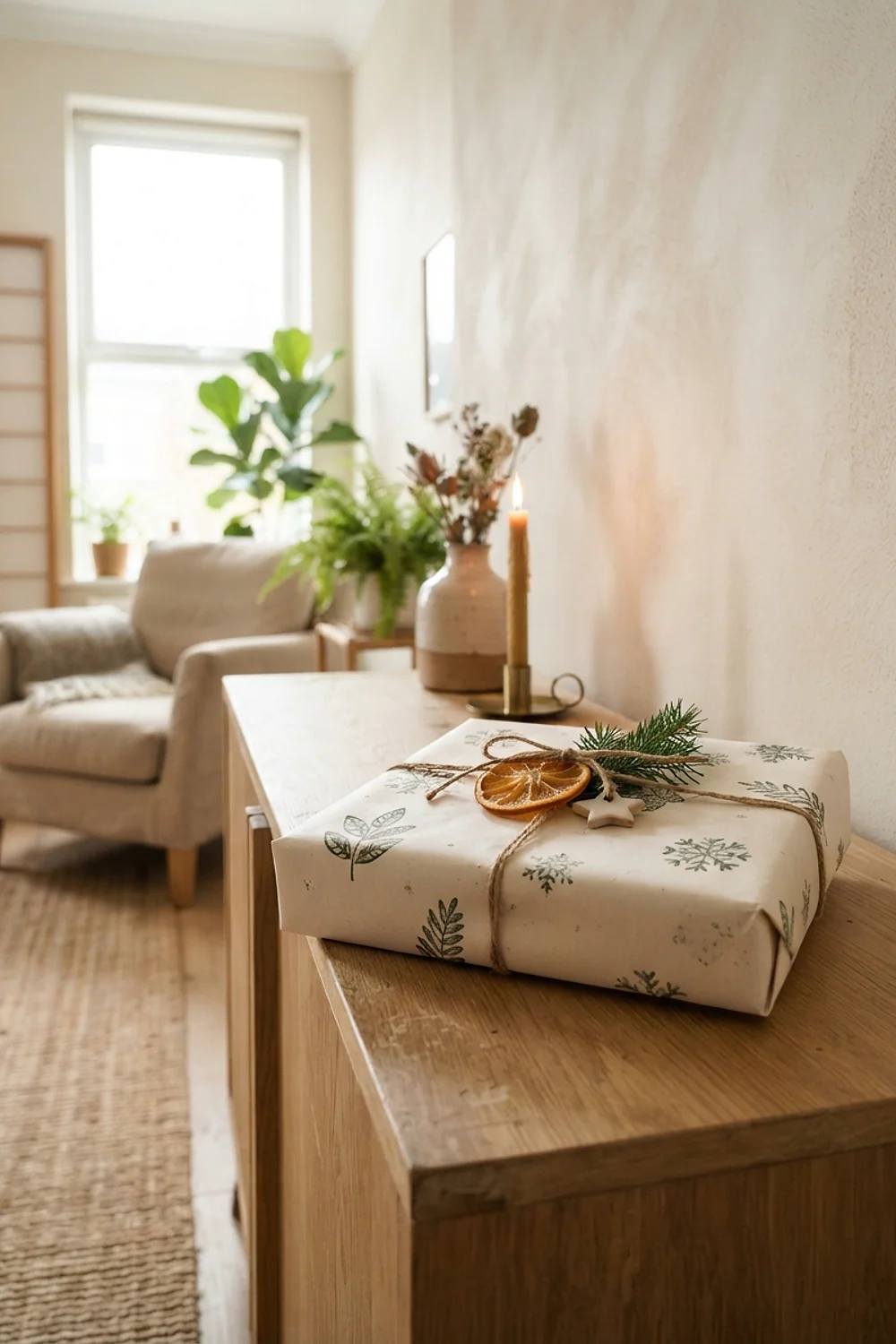
A potato or a rubber eraser cut into a simple tree shape and pressed in dark ink onto plain kraft paper creates a repeat pattern in about 10 minutes. The irregular ink density is the charm, since it looks printed by a person and not a factory.
It suits anyone wrapping a dozen or more gifts who wants a unified look. Test the stamp on scrap first, because too much ink bleeds and blurs the shape.
32. Needle-felted wool baubles

A 2.5-inch ball of wool roving, stabbed repeatedly with a felting needle, shrinks to a dense, bouncy sphere that feels like a firm peach. The dense wool bounces if it falls, which makes it the best option for homes with toddlers or a pet who bats at low ornaments.
Work over a foam pad and wear a thimble on the holding hand, since the barbed needle bites hard. Plan about 20 minutes per ball.
33. Air-dry clay village houses

Houses shaped from air-dry clay at about 3 inches tall dry in 24 to 48 hours and hold a small LED tea light behind a cut window. White clay glows when lit, and the soft edges make them look like old porcelain.
They suit a bookshelf or window ledge and make a good winter project for slow weekends. Roll walls to 3/8 inch, because thinner clay cracks as it dries. A 2-pound block of clay costs about $12.
34. Christmas card gallery on twine

Incoming Christmas cards become a wall display that grows through December when hung from twine, pinned at each end, six feet long and fitted with 12 to 15 small wooden clothespins. Hang it at eye level, about 60 inches from the floor, and leave 3 inches between cards.
It’s the best fix for homes that run out of mantel space. Anchor the ends with removable hooks and keep the strand under 8 pounds of paper, or the twine bows in the middle.
The step-by-step process
Homemade christmas decorations only look collected when a few decisions repeat. Pick one dominant material, such as paper, wool, or clay, and let it show up in at least five places around the house.
Then add a second material as contrast: wood against paper, or wool against glass. Three layers is plenty.
Here’s a quick order of operations that works in most rooms:
- Choose the focal point (a tree, a mantel, or a window).
- Hang the largest handmade pieces first, so scale is settled early.
- Fill gaps with small items in odd numbers.
- Step back at dusk with the lights on and remove one thing.
Now for some deliberate heresy. The usual advice says to limit a tree to three colors. With handmade pieces, that backfires, because every wobbly hue difference between a hand-dyed felt ball and a store-bought one gets magnified by the strict palette.
A looser rule hides variation better: keep one family of texture (all matte, all natural) and let the colors wander. The eye forgives a slightly different green when the finish matches.
It’s not foolproof. But it works.
Styling tips
Honestly, the basics get repeated everywhere, and most of the mistakes still come from the same few places. The fixes are small once the problem is named.
- Hanging everything at the same height. Vary drops between 18 and 48 inches so the eye travels.
- Using five different materials at once. Two or three read as a plan; five read as a clearance sale.
- Skipping the sealant. Clay, dough, and glitter all need a clear coat before they hit a humid room.
- Placing paper near heat. Keep it 12 inches from any flame, vent, or bulb that runs hot.
- Crowding. Leave blank wall around each cluster; empty space is what makes a piece look chosen.
One more: scale. A 1-inch ornament on a 7-foot tree disappears, so mix at least a few pieces over 4 inches.
Gradual layering vs instant makeover
Homemade christmas decorations suit gradual layering better than a single weekend blitz. Salt dough needs two days to cure, clay needs 48 hours, and dried citrus needs an afternoon, so the schedule forces a slow build.
Instant makeovers still have a place. A branch tree, a cloche of lights, and a twine card line can all go up in under an hour, and they anchor a room while slower projects finish.
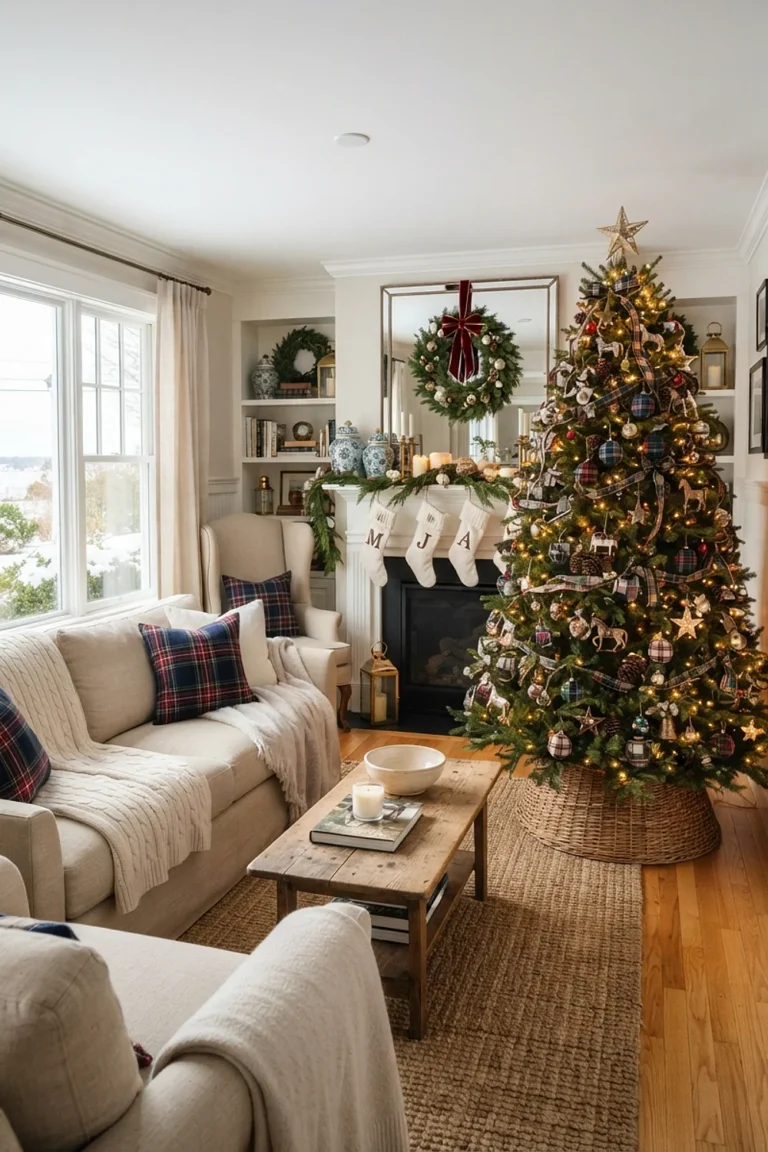
Here’s the counterintuitive part: a tree with 30 handmade ornaments mixed with plain glass looks more handmade than a tree with 100 handmade ones. The plain pieces give the eye a place to rest, so each handmade one reads as special.
Storing and refreshing your pieces
Seasonal storage rotation matters more for handmade work than for shop-bought sets, because nothing here is factory sealed. Wrap clay and dough in tissue, felt in cotton, and dried citrus in paper bags, never plastic, which traps moisture.
A quick daily refresh helps too. Fluff garlands, straighten swags, and wipe dust off wreaths with a dry makeup brush.
Weekend rearranging keeps things lively. Swap the mantel cluster for a different grouping halfway through December, and the same pieces will look new.
Where to start this weekend
Don’t try all 34. Pick based on time and materials already on hand:
- Under an hour: kraft gift tags, a twine card gallery, or a branch tree in a vase.
- A relaxed afternoon: paper stars, felt ball garland, or tissue pom-poms.
- A weekend project: salt dough ornaments, a knit tree skirt, or clay village houses.
Measure the spot first, whether it’s the mantel width, the window height, or the tree base. That one number decides how many pieces to make.
Wrapping up your homemade christmas decorations
The best homemade christmas decorations are the ones that look slightly imperfect and entirely deliberate. A repeated material, a handful of odd-numbered clusters, and one bold handmade statement are enough to make a room feel lived in and loved.
Save or pin this list so it’s easy to find when the first cold weekend arrives, then start with one idea and measure the mantel or window it’s meant for before buying a single supply.
Frequently asked questions
How far ahead should homemade christmas decorations be started?
Start four to six weeks before December. Salt dough, air-dry clay, and dried citrus all need days to cure properly, and a late start forces rushed, cracked results.
Are homemade christmas decorations safe around pets?
Salt dough is dangerous for dogs and cats because of its high salt content, so hang those ornaments above reach. Cinnamon sticks, essential oils, and some dried greenery can also irritate pets, so wool, paper, and wood pieces are safer choices.
Can homemade christmas decorations work in a rental with no nail holes?
Yes. Use removable adhesive hooks rated for the weight, poster putty for paper, and tension rods for garlands across windows. Branch trees and cloches need no wall contact at all.
How many handmade ornaments does a 6-foot tree need?
About 30 handmade pieces mixed with 20 to 30 plain glass or metal ornaments looks balanced. Fewer handmade pieces make each one stand out, while more tends to look crowded.